
Dietary Supplement FDA Inspection Checklist: 21 CFR Part 111 Readiness Guide
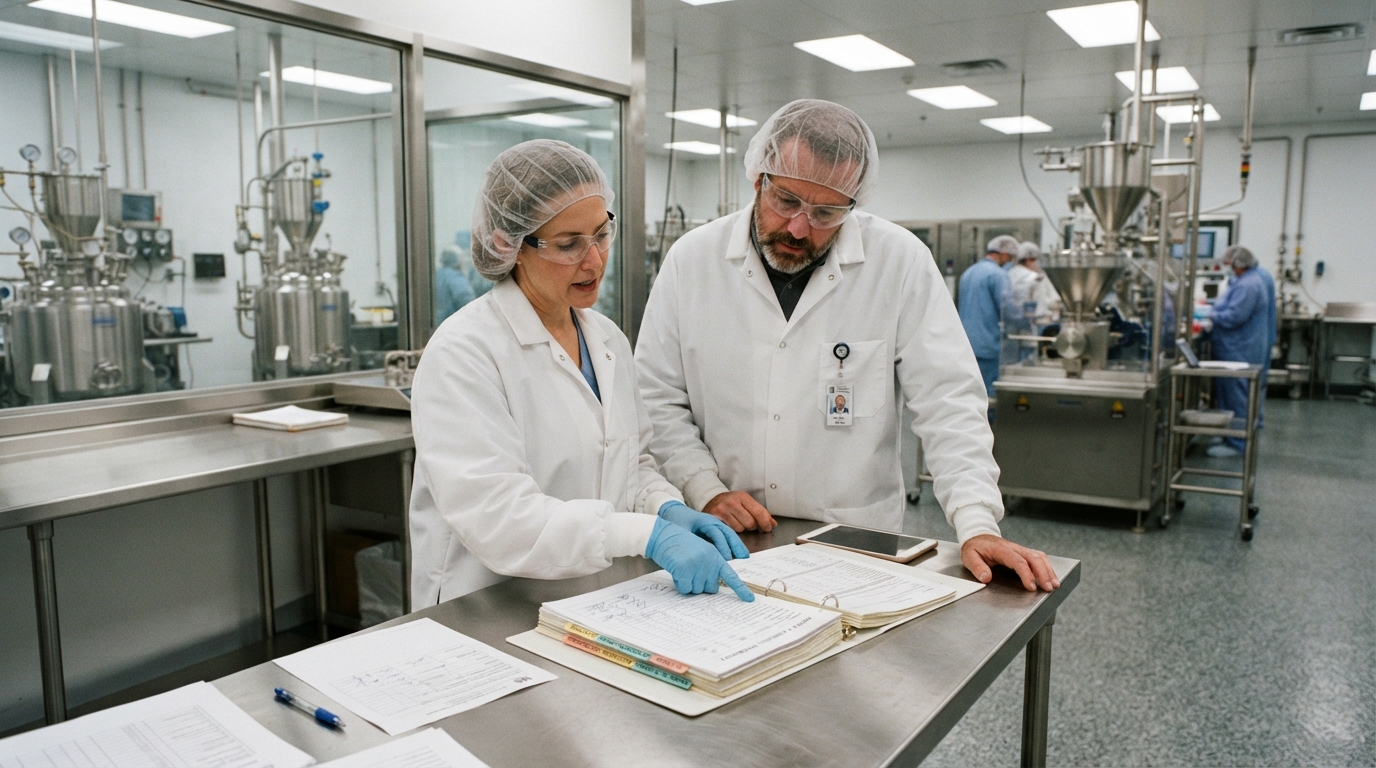
Operating a commercial nutraceutical facility, brand packaging plant, or dietary ingredient processing suite requires continuous compliance under federal law. When federal Consumer Safety Officers (CSOs) arrive at your facility, they evaluate your physical manufacturing spaces, analytical testing protocols, and technical batch documentation. Waiting for an investigator to arrive before auditing your own files creates unacceptable regulatory exposure. Maintaining a proactive dietary supplement FDA inspection checklist ensures your production team identifies and corrects compliance vulnerabilities before an official audit begins.
Under 21 CFR Part 111, the United States Food and Drug Administration enforces Current Good Manufacturing Practices (cGMP) tailored specifically to dietary supplements. The agency holds brand owners, contract packagers, and ingredient fabricators to strict standards of identity, purity, strength, and composition. When investigators evaluate your plant, they scrutinize raw material verification, Master Manufacturing Records, analytical testing logs, and Quality Control oversight. Structuring your facility for immediate audit readiness protects your commercial contracts and prevents severe regulatory enforcement.
Take Immediate Control of Your Regulatory Posture
Audit your 21 CFR 111 cGMP compliance, verify your Master Manufacturing Records, and train your team before federal investigators arrive.
1. Statutory Architecture: Understanding 21 CFR Part 111 Mandates
Federal oversight for dietary supplements stems from the Dietary Supplement Health and Education Act (DSHEA) and the statutory mandates codified in 21 CFR Part 111 (eCFR Official Statutory Text). Understanding how federal investigators apply these specific regulations allows your quality unit to maintain compliant operations.
       ┌──────────────────────────────────────────────────────────┐
       │                21 CFR PART 111 cGMP REGULATION           │
       └────────────────────────────┬─────────────────────────────┘
                                    │
           ┌────────────────────────┴────────────────────────┐
           ▼                                                 ▼
┌──────────────────────────────────────┐  ┌──────────────────────────────────────┐
│     RAW MATERIAL & PROCESS CHECKS    │  │       QUALITY UNIT GOVERNANCE        │
│ - 100% identity testing on components│  │ - Final release and rejection power  │
│ - Validated Master Manufacturing Recs│  │ - Material Review & CAPA management  │
│ - In-process blending controls       │  │ - Consumer complaint investigations  │
│ - Finished batch analytical testing  │  │ - Total data integrity and audit logs│
└──────────────────────────────────────┘  └──────────────────────────────────────┘
The regulation applies across botanical extracts, vitamin and mineral blends, amino acid formulations, probiotic preparations, and crossover ingestible diagnostics. Unlike conventional food processors operating under 21 CFR Part 117, dietary supplement manufacturers must establish specific finished product release specifications and scientifically verify component identity.
Many companies misunderstand regulatory definitions of ownership and manufacturing responsibility. The FDA views private-label brand distributors as legally responsible manufacturers even if they outsource production to third-party contract development and manufacturing organizations (CDMOs). If your company places its name on the finished commercial label, you must maintain complete technical batch files and audit your co-manufacturers.
+---------------------------+-----------------------------------+-----------------------------------+
| Compliance Dimension      | Dietary Supplement (Part 111)     | Conventional Food (Part 117)      |
+---------------------------+-----------------------------------+-----------------------------------+
| Primary Focus             | Identity, purity, strength, limits| Food safety hazard prevention     |
| Raw Material Testing      | Mandatory 100% identity testing   | Supply-chain hazard verification  |
| Production Documentation  | Master Manufacturing Records (MMR)| Written Food Safety Plan (PCQI)   |
| Quality Unit Oversight    | Mandatory independent authority   | General qualified supervision     |
| Finished Product Release  | Specification testing verification| Parameter monitoring validation   |
+---------------------------+-----------------------------------+-----------------------------------+
2. Navigating the Inspection Sequence: Step-by-Step
Understanding the operational workflow of an audit helps your technical staff manage investigator requests with confidence. Regulatory audits follow a predictable sequence designed to assess both physical plant control and documentary compliance.
Modern investigators utilize sophisticated data review techniques and field databases during audits. You can learn more about these regulatory tools by reading our briefing on FDA Inspection Trends in 2026: Biologics, AI, Foreign Facilities, and Remote Assessments.
┌──────────────────┐     ┌──────────────────┐     ┌──────────────────┐     ┌──────────────────┐
│  Form FDA 482    │ ──► │ Physical Plant   │ ──► │ MMR, BPR, & Lab  │ ──► │  Form FDA 483    │
│ Credentials Exam │     │ Floor Walkthrough│     │ Technical Audit  │     │ Exit Conference  │
└──────────────────┘     └──────────────────┘     └──────────────────┘     └──────────────────┘
Phase 1: Presentation of Credentials and Notice of Inspection
The inspection begins when Consumer Safety Officers arrive unannounced at your facility reception. Investigators display their official federal badges and credentials. The lead officer presents a Form FDA 482 (Notice of Inspection) to the most senior corporate executive on site.
Phase 2: The Physical Manufacturing Tour
Investigators walk the manufacturing suites in the sequence of production flow. They inspect raw ingredient staging suites, weighing booths, blending rooms, encapsulation lines, and packaging bays. Officers examine equipment cleanliness, sanitary pipe welding, and differential room air pressure gauges.
Phase 3: Technical Records and Laboratory Review
The investigator reviews batch records and analytical dossiers in a designated conference room. The officer cross-references Master Manufacturing Records (MMRs) with executed Batch Production Records (BPRs). They also audit raw analytical chromatograms, calibration tags, and Quality Control deviation files.
Phase 4: Management Closeout and Findings
The investigator concludes the visit with a formal exit conference. If the officer observed non-compliant practices, they issue a Form FDA 483 (Inspectional Observations). Your management team must respond in writing within 15 business days with concrete corrective actions.
To ensure your floor supervisors and machine operators interact effectively during audits, explore our training manual on How to Prepare Employees for FDA Investigator Interviews.
3. The 25-Point Dietary Supplement FDA Inspection Checklist
Using a structured dietary supplement FDA inspection checklist ensures your production facility maintains audit readiness across six critical operational domains under official FDA Dietary Supplement Guidance for Industry (FDA.gov Direct Source).
          MASTER 25-POINT SUPPLEMENT AUDIT ARCHITECTURE
 ┌─────────────────────────────────────────────────────────────────┐
 │ MODULE 1: COMPONENT & RAW MATERIAL IDENTITY TESTING (1-4)       │
 │ MODULE 2: MASTER MANUFACTURING RECORDS & BPR CONTROLS (5-9)     │
 │ MODULE 3: LABORATORY CONTROLS & SPECIFICATION TESTING (10-14)   │
 │ MODULE 4: QUALITY CONTROL UNIT GOVERNANCE & DEVIATIONS (15-18)  │
 │ MODULE 5: COMPLAINT HANDLING & SERIOUS ADVERSE EVENTS (19-21)   │
 │ MODULE 6: FACILITY SANITATION, EQUIPMENT & TRACEABILITY (22-25) │
 └─────────────────────────────────────────────────────────────────┘
Six Modules
1: Component Specifications and 100% Identity Testing (21 CFR § 111.75)
- Raw Material Specifications: Ensure written specifications exist for identity, purity, strength, and composition for every raw component.
- 100% Identity Testing Execution: Conduct at least one appropriate test to verify the identity of each unique lot of dietary ingredients before release.
- CoA Verification Program: If relying on supplier Certificates of Analysis for purity and strength, maintain documented reliability verification audits.
- Quarantine and Release Controls: Verify physical and digital segregation of unreleased raw components in designated quarantine areas.
2: Master Manufacturing Records (MMR) and Batch Production Records (BPR)
- Validated Master Recipes: Maintain a written MMR for each unique formulation and batch size under 21 CFR § 111.205.
- Component Weight Reconciliations: Ensure MMRs include precise target weights, permissible percentage ranges, and dual-operator verification signatures.
- In-Process Control Points: Define specific in-process monitoring parameters (e.g., blend uniformity, capsule weight variation, hardness).
- Executed Batch Production Records: Confirm BPRs capture real-time operational data, actual component lot numbers, and equipment cleaning tags.
- Packaging and Label Reconciliations: Include physical sample specimens of finished retail labels and calculate exact yield reconciliations in every BPR.
3: Laboratory Controls and Finished Product Specifications
- Finished Batch Release Specifications: Establish written specifications for finished dietary supplements covering purity, strength, and contaminant limits.
- Heavy Metal Limit Validations: Maintain analytical test records confirming finished lots meet safety thresholds for lead, arsenic, cadmium, and mercury.
- Microbiological Contaminant Testing: Verify finished products undergo testing for total aerobic count, yeast, mold, Salmonella, and E. coli.
- Scientifically Valid Test Methods: Ensure all internal and contract laboratory test methods utilize validated AOAC, USP, or equivalent protocols.
- Instrument Calibration Records: Maintain active calibration and maintenance logs for all analytical instruments, including HPLC, FTIR, and HPTLC systems.
4: Independent Quality Control (QC) Unit Governance
- Independent Quality Authority: Ensure written standard operating procedures grant the Quality Control unit independent authority to approve or reject all operations.
- Material Review and Disposition: Document formal Material Reviews for every batch deviation, out-of-specification (OOS) result, or process error.
- Corrective and Preventive Action (CAPA): Maintain structured CAPA records detailing root-cause investigations and verified remediation milestones.
- Annual Product Quality Reviews: Conduct periodic quality trend reviews across manufactured formulations to identify systemic yield variations.
5: Consumer Complaint Handling and Adverse Event Reporting
- Written Complaint Handling SOP: Maintain written procedures to review, investigate, and record all product complaints under 21 CFR § 111.553.
- Serious Adverse Event Reporting (SAER): Maintain a dedicated tracking file for adverse health events and verify submission to the FDA within 15 business days.
- Complaint Investigation Logs: Ensure Quality Control personnel review and sign off on all medical and non-medical product inquiries.
6: Physical Facility Sanitation, Equipment Design, and Traceability
- Sanitary Equipment Design: Ensure all processing equipment features smooth, corrosion-resistant stainless steel with sanitary welds.
- Sanitation SOP Execution: Verify daily cleaning logs match visible plant cleanliness and maintain records of cleaning chemical titrations.
- Pest Exclusion Barriers: Inspect loading docks, doors, and storage suites to confirm complete exclusion of insects, birds, and rodents.
- One-Up, One-Back Traceability: Test your team’s ability to execute a mock recall and trace any raw ingredient lot to finished distributed units within 2 hours.
To evaluate common data gaps and documentation errors that trigger inspection citations, review our guide on Data Integrity During FDA Inspections: The Questions Investigators Ask Most.
4. Key Insights: Strategic Implications for Brand Sponsors, CDMOs, and Ingredient Fabricators
+---------------------------+-------------------------------------------------------------------+
| Strategic Business Domain | Executive Enterprise & Compliance Implication                     |
+---------------------------+-------------------------------------------------------------------+
| CDMO Governance           | Brand sponsors face direct legal liability for co-packer failures |
| Operational Continuity    | Unresolved 483s lead to mandatory recalls and facility suspension |
| Supply Chain Integrity    | Raw material qualification requires verified testing, not emails  |
| Capital Allocation        | Upgrading sanitary equipment design prevents chronic biofilms     |
+---------------------------+-------------------------------------------------------------------+
Using a dietary supplement FDA inspection checklist requires an executive perspective that connects technical manufacturing discipline with corporate risk management. For contract development and manufacturing organizations (CDMOs), brand sponsors, and specialized dietary ingredient fabricators, regulatory compliance represents a vital commercial asset. Regulatory officers frequently inspect crossover operations—such as facilities producing dietary actives, medical foods, and functional nutrition—against both Part 111 rules and pharmaceutical standards under 21 CFR Part 211 (Finished Pharmaceuticals).
The primary operational challenge for brand owners is managing CDMO relationships. When a contract manufacturer receives severe inspection citations, the brand sponsor’s products face immediate market exposure. If the agency uncovers unverified raw materials or chronic testing failures at a third-party plant, regulatory authorities can seize finished products and issue public warning notices.
The commercial impact of receiving formal citations is immediate and severe. When an inspection yields unresolved Form FDA 483 observations, the agency escalates enforcement via official Warning Letters. These notices appear on public federal directories, alerting commercial retailers, insurance underwriters, and enterprise buyers. In extreme cases, regulators issue mandatory product recalls or seek federal injunctions, halting revenue streams overnight.
       UNRESOLVED PART 111 DEFICIENCY (Form FDA 483)
                             │
                             ▼
             OFFICIAL FDA WARNING LETTER ISSUED
                             │
                             ▼
         CONSENT DECREE OF PERMANENT INJUNCTION / RECALL
                             │
                             ▼
 ┌───────────────────────────────────────────────────────────────┐
 │                   SEVERE COMMERCIAL IMPACT                    │
 │  - Immediate retail product removals & national inventory holds│
 │  - Supply contract cancellations by commercial retail chains  │
 │  - Expensive facility remediation, re-testing, & legal defense│
 └───────────────────────────────────────────────────────────────┘
Forward-thinking manufacturing leaders treat regulatory readiness as an active quality management process. Implementing automated digital environmental monitoring and robust batch record tracking systems eliminates blind spots across production suites. Conducting regular mock facility walkthroughs protects enterprise reputation, satisfies institutional buyers, and maintains uninterrupted operational access.
For an extensive review of active regulatory warning trends, consult our executive analysis of FDA Warning Letter Issued to Novo Nordisk Signals Expanding FDA Inspection Focus Beyond Traditional GMP Operations.
5. What Recent Enforcement Actions Reveal About Supplement Violations
Recent enforcement data highlights the serious operational risks of weak raw material testing and inadequate Quality Control oversight. Federal investigators regularly penalize companies that maintain incomplete testing records or rely solely on supplier documentation.
A clear example appears in the recent FDA Warning Letter issued to Meta Labs Pharmaceuticals LLC (Warning Letter Ref: 725130). During this compliance audit, federal investigators uncovered severe, systemic breakdowns across the firm’s dietary supplement manufacturing operations:
- Failure to conduct at least one appropriate test to verify the identity of incoming dietary components (21 CFR § 111.75(a)(1)(i)).
- Failure to prepare Master Manufacturing Records that include complete component weights, in-process controls, and packaging specifications (21 CFR § 111.205).
- Operating without finished product specifications for identity, purity, strength, and composition (21 CFR § 111.70(e)).
- Failure of the Quality Control unit to review, investigate, and approve batch production deviations (21 CFR § 111.103).
Distribution of Citations in Recent Supplement Warning Letters:
1. Failure to perform 100% component identity testing ........ 44%
2. Inadequate or unvalidated Master Manufacturing Records ..... 28%
3. Lack of finished batch specification testing ............... 16%
4. Quality Control failure to investigate batch deviations ... 12%
When an audit reveals widespread compliance failures, investigators often expand their inquiries into broader operations. To understand how regulatory teams conduct specialized oversight across allied commodity sectors, explore our detailed analysis of How FDA Inspects Pet Food Manufacturing Facilities.
6. How to Build an Inspection-Ready Defense Plan
Preparing for an audit requires a disciplined, repeatable operational strategy. Organizations must move beyond static paperwork and implement an active, digital compliance program using a comprehensive dietary supplement FDA inspection checklist.
┌────────────────────────────────────────────────────────────────────────┐
│               FOUR-TIER PART 111 READINESS BLUEPRINT                   │
├────────────────────────────────────────────────────────────────────────┤
│  STEP 1: RAW INGREDIENT IDENTITY VERIFICATION REGIME                   │
│  - Validate HPTLC/FTIR test methods and establish reference standards. │
├────────────────────────────────────────────────────────────────────────┤
│  STEP 2: MMR & BATCH RECORD RECONCILIATION                             │
│  - Ensure all master recipes and batch logs contain required fields.   │
├────────────────────────────────────────────────────────────────────────┤
│  STEP 3: MOCK AUDIT & BATCH TRACE SIMULATION                           │
│  - Conduct unannounced drills simulating an FDA investigator visit.    │
├────────────────────────────────────────────────────────────────────────┤
│  STEP 4: RAPID 15-DAY 483 RESPONSE PROTOCOL                            │
│  - Establish CAPA templates and assign technical response leaders.     │
└────────────────────────────────────────────────────────────────────────┘
Actionable Preparation Protocols
- Audit Component Testing Programs: Ensure every incoming raw material lot undergoes verified identity testing before release to production suites.
- Review Master Manufacturing Records: Verify that MMRs include detailed specifications for raw material weights, equipment parameters, in-process testing, and label reconciliations.
- Empower the Quality Control Unit: Ensure the Quality Control unit maintains documented authority to approve or reject raw materials, in-process mixes, packaging, and finished dietary lots.
- Maintain Analytical Method Validations: Keep written validation files on record for all in-house and contract laboratory analytical test methods.
- Run Unannounced Mock Audits: Test your team’s ability to assemble a complete batch production record, CoA validation file, and training record set within 30 minutes.
To review broader systemic compliance drivers shaping the regulatory landscape this year, examine our comprehensive report on Top FDA Inspection Findings for Biologics Manufacturing Facilities.
7. Conclusion
Using a comprehensive dietary supplement FDA inspection checklist protects your manufacturing operations from severe regulatory penalties and costly market disruptions. As federal authorities expand unannounced facility inspections and targeted sampling programs, maintaining passive paperwork creates unacceptable commercial risk. By establishing rigorous identity testing protocols, maintaining validated Master Manufacturing Records, and conducting regular internal mock audits, you safeguard your brand reputation, meet federal safety mandates, and ensure uninterrupted commercial operations.
🛡️ Protect Your Plant Against Disruptive Inspection Citations
Identify quality control blind spots, audit your batch production records, and train your team through an expert-led compliance review.
Frequently Asked Questions (FAQs)
What triggers an FDA dietary supplement inspection?
The FDA schedules inspections using risk-based targeting algorithms, past history of compliance violations, consumer illness reports, Serious Adverse Event notifications, product recalls, or public complaints.
Can an importer or manufacturer rely solely on a supplier’s Certificate of Analysis (CoA) for raw material identity?
No. Under 21 CFR § 111.75(a)(1)(i), manufacturers must conduct at least one appropriate test to verify the identity of every lot of dietary ingredients before use.
What is the difference between an MMR and a BPR under 21 CFR 111?
A Master Manufacturing Record (MMR) is the validated master formulation recipe. A Batch Production Record (BPR) is the individual, lot-specific document executed during actual production to track ingredients and operating parameters.
How much time does a manufacturer have to respond to a Form FDA 483?
The facility must submit a formal, written response detailing comprehensive corrective actions and objective documentary evidence within exactly 15 business days.
What is a Serious Adverse Event Report (SAER)?
An SAER is a formal report documenting an adverse health event associated with a dietary supplement that results in death, hospitalization, disability, or life-threatening conditions. Manufacturers must submit these reports to the FDA within 15 business days.
Does the Quality Control unit have the legal authority to override production managers?
Yes. Under 21 CFR § 111.103, the Quality Control unit holds independent statutory authority to approve or reject raw materials, packaging, batch records, and finished commercial lots.
Primary References & Regulatory Authorities
- U.S. Food and Drug Administration (FDA) — 21 CFR Part 111: Current Good Manufacturing Practice in Manufacturing, Packaging, Labeling, or Holding Operations for Dietary Supplements The primary federal statutory regulation establishing cGMP requirements, raw material identity testing rules, and Quality Control unit obligations for dietary supplement establishments.
- U.S. Code of Federal Regulations — 21 U.S. Code § 374: Factory Inspection Authority The statutory federal law authorizing FDA officers to enter, inspect, and sample commercial facilities manufacturing, processing, packing, or holding food and dietary products.
- FDA Compliance & Enforcement Division — Warning Letter to Meta Labs Pharmaceuticals LLC (Ref: 725130) Official federal warning letter illustrating enforcement citations, component identity testing failures, and Master Manufacturing Record deficiencies.
- FDA Center for Food Safety and Applied Nutrition (CFSAN) — Dietary Supplement Guidance Documents Official agency directory providing industry guidance on cGMP compliance, adverse event reporting, and small entity compliance guides.
- National Institutes of Health (NIH) Office of Dietary Supplements — Dietary Supplement Health and Education Act of 1994 (DSHEA) The foundational statutory legislation establishing regulatory classifications, manufacturing standards, and safety oversight frameworks for dietary supplements.