
How FDA Inspects mRNA and Advanced Therapy Manufacturing Facilities
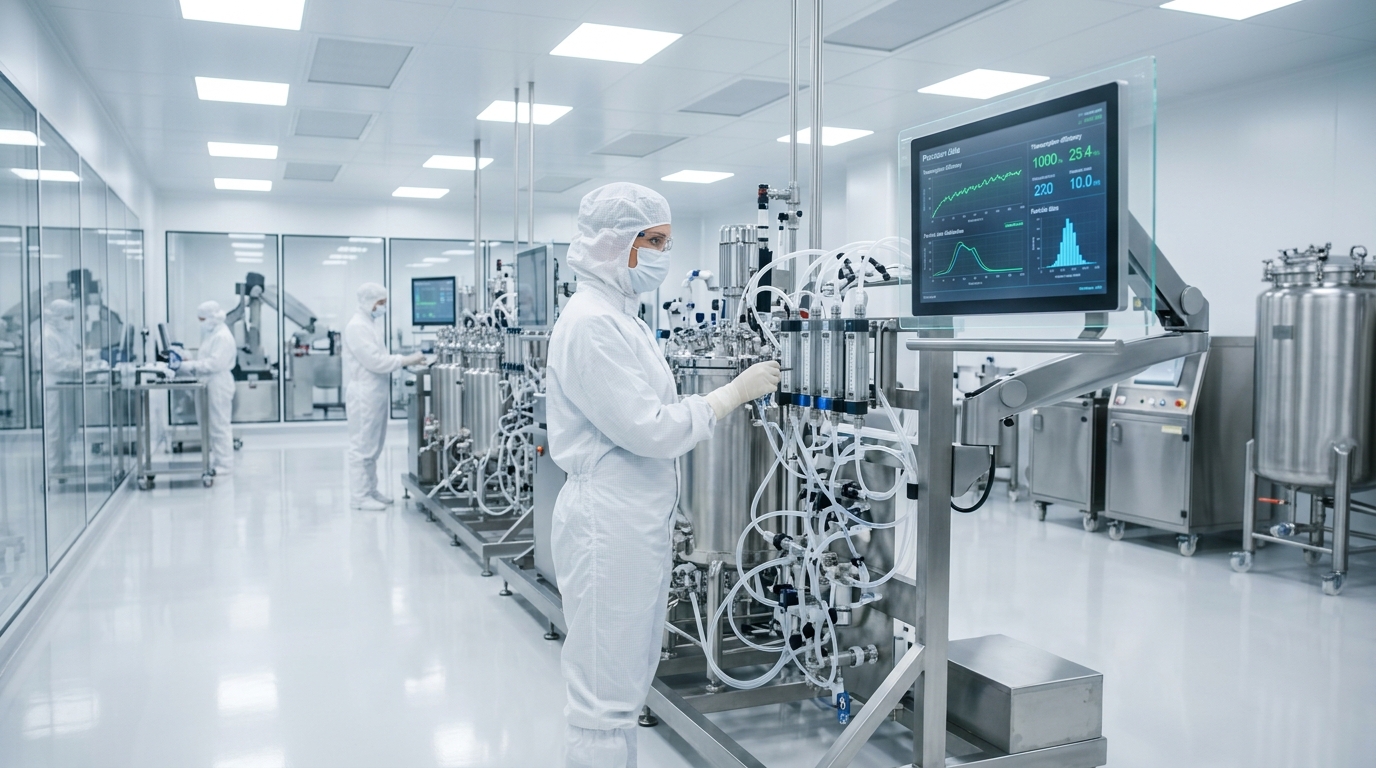
The Specialized Landscape of Next-Gen Bioprocessing
The biopharmaceutical market is currently driving an aggressive technological migration toward genetic and cell-based therapeutic platforms. Consequently, federal oversight architectures have evolved concurrently to address the non-linear risks of advanced biological synthesis. For manufacturing organizations, preparing for an mRNA manufacturing FDA inspection in 2026 presents a highly unique engineering and quality challenge. Investigators no longer arrive with generalized cGMP checklists designed for standard protein or monoclonal antibody production lines. Instead, they apply specialized, data-intensive forensic auditing models to track raw molecular data lineage from initial plasmid templates to final vial packaging.
Because the synthesis of messenger RNA relies on enzymatic cell-free transcription rather than living cell line expansion, old biological validation strategies fail to satisfy federal expectations. Investigators focus heavily on single-use assembly line configurations, cross-contamination prevention matrices, and automated process analytical technology (PAT) configurations. Therefore, life sciences leaders must understand the specific technical trends driving modern advanced therapy facility audits. This extensive guide breaks down every critical milestone of the specialized inspection lifecycle sequentially. It provides your quality unit with the actionable compliance frameworks necessary to maintain an absolute state of ongoing facility readiness.
Validating the Cell-Free In Vitro Transcription Process
The execution of cell-free in vitro transcription (IVT) represents the critical core of the messenger RNA production pipeline. During an intensive mRNA manufacturing FDA inspection, field teams prioritize evaluating how your quality assurance group manages the enzymatic synthesis environment. Investigators focus deeply on tracking the quality lineage of raw linear plasmid DNA templates and critical capping enzymes. If your facility cannot deliver absolute traceability for every single biological catalyst entering the IVT reactor, the audit will trend toward an administrative downgrade.
Furthermore, field teams utilize digital forensics to scan electronic batch records for consistency during the transcription reaction. They closely scrutinize automated temperature tracking logs, pH stabilization metrics, and real-time spectrophotometry purification data. Any unlogged deviation or manual intervention during the enzymatic reaction creates a significant regulatory risk. Therefore, ensuring total system integration between your processing machinery and central enterprise logging software is the only way to satisfy federal data expectations.
- Plasmid Template Lineage: You must deliver empirical proof that incoming DNA templates are completely free of host cell impurities.
- Enzymatic Consistency Logs: Investigators verify calibration metrics for all mass flow controllers managing the delivery of nucleotides.
- Purification Integrity: Field teams check the validation parameters of your chromatography systems to ensure total dsRNA removal.
Top FDA Inspection Findings for Biologics Manufacturing Facilities
Lipid Nanoparticle (LNP) Formulation and Microfluidic Control
Once the purified drug substance is completed, it must undergo encapsulation using highly specialized lipid mixtures. This complex process relies on microfluidic impingement jets to wrap the delicate mRNA strands inside protective lipid nanoparticles (LNPs). Under the strict guidelines of a modern mRNA manufacturing FDA inspection, this step undergoes maximum technical scrutiny due to its highly sensitive fluid dynamics. Investigators target the mechanical consistency of your automated mixing platforms, evaluating how minor pressure variances might impact the final particle size distribution.
A recurring operational vulnerability cited in recent Form 483 observations involves inadequate validation for continuous microfluidic processing runs. If your engineering team modifies the flow rates or solvent ratios to optimize production without formal re-validation studies, the entire batch family faces regulatory rejection. Investigators will demand to review your automated inline particle size analysis metrics and structural lipid raw material certificates. Consequently, maintaining absolute software version integrity across all microfluidic tracking systems is critical to passing these targeted facility checks.
How FDA Inspects SaMD and AI-Enabled Medical Device Companies
Expert Strategic Analysis: The Business Dynamics of mRNA Compliance
Industry Perspective & Thought Leadership In the advanced therapy ecosystem, a pristine mRNA manufacturing FDA inspection rating represents an incredibly vital business multiplier. For global biopharmaceutical sponsors and specialized CDMO platforms, a clean compliance record directly accelerates breakthrough therapy designation timelines and investor capital deployment. The business impact of an operational breakdown is devastating, routinely triggering immediate clinical hold placements, joint venture terminations, and extensive pipeline launch delays. Therefore, long-term strategic value lies in moving beyond basic retrospective checklist audits to embed a permanent, risk-based “Quality Culture” across all automation layers.
Key Challenges & Technological Opportunities The dominant challenge across next-generation processing facilities involves the “Single-Use Consumable Supply Disconnect.” Because modern transcription platforms rely almost exclusively on disposable polymer bags, manifolds, and connectors, facilities are highly vulnerable to localized extraction anomalies. However, this supply-chain risk creates an incredible opportunity for the deployment of “Predictive Material Automation Tools.” By integrating real-time particulate extraction screening software with your localized inventory logs, companies can flag material drift before parts reach the sterile floor. This advanced digital engineering transforms a mRNA manufacturing FDA inspection into a simple showcase of your continuous automated control.
Compliance Considerations for Executive Decision-Makers Senior leadership must recognize that the federal inspectorate evaluates cell-free manufacturing with the exact same technical intensity applied during small molecule pharmaceutical checks. Investigators look for clear evidence that your executive quality unit possesses total operational autonomy from standard commercial production pressures. If an employee discovers a minor LNP sizing deviation, your internal systems must document a clear, non-punitive path for launching an immediate investigation. In 2026, creating an open, data-transparent environment on the production floor is a mandatory prerequisite for protecting global market access and guaranteeing patient safety.
Single-Use Systems and Extractables/Leachables Management
The vast majority of modern advanced therapy lines utilize single-use systems (SUS) to maximize turnaround speeds and eliminate classic cross-contamination risks. However, during a technical mRNA manufacturing FDA inspection, investigators will review your extractables and leachables (E&L) documentation with immense focus. The agency expects manufacturers to provide rigorous scientific validation proving that polymer components do not leach chemical impurities into the therapeutic mixture.
If your engineering group substitutes a validated sterile single-use line component with an alternate part due to procurement limitations, your facility faces immediate citation risks. Investigators will scan your chemical interaction logs to verify that the replacement polymer has undergone dynamic contact fluid testing. Therefore, maintaining an incredibly comprehensive database of raw material safety data and supplier certificates of compliance is an absolute requirement for passing modern bioprocessing inspections.
- Polymer Validation Logs: You must provide clear validation documentation showing the maximum fluid contact times for all processing bags.
- Supplier Audit Tracking: Investigators check if you have formally evaluated your single-use bag providers for sterile manufacturing continuity.
- Particulate Control: Your quality unit must demonstrate robust offline flushing protocols to clear assemblies of microscopic particles.
Common Documentation Failures Found During FDA Inspections
Cold Chain Logistics and Real-Time eQMS Traceability
Because genetic therapies are inherently unstable at room temperatures, finished formulations require immediate crystallization or ultra-low temperature freezing. Consequently, an mRNA manufacturing FDA inspection will expand past the cleanroom suite to evaluate your facility’s localized cold chain logistics infrastructure. Investigators review the validation data for your ultra-low temperature blast freezers, checking for uniform temperature distribution profiles.
Furthermore, field teams utilize data forensics to scan your electronic quality management systems (eQMS) for signs of unlogged temperature excursions. If a batch experiences a temporary temperature spike during inner-facility transport and your operators fail to launch an immediate deviation log, the integrity of the product is legally compromised. Transitioning to integrated IoT-enabled temperature tracking modules ensures that your facility maintains continuous cGMP alignment while simplifying the investigator data review process during an on-site visit.
How FDA Inspects Pet Food Manufacturing Facilities
The Demands of Contentious Sterility Assurance in Filling Lines
Sterility assurance remains the ultimate high-priority parameter for field teams executing an mRNA manufacturing FDA inspection today. Advanced therapies are highly sensitive to thermal degradation, meaning finished formulations cannot undergo terminal heat sterilization. Therefore, the entire filling and finishing sequence must operate under strict aseptic parameters inside automated isolator systems or closed robotic barriers.
Investigators will spend multiple days on the production floor evaluating your media fill verification cycles and cleanroom personnel behaviors. They check whether your operators execute manual interventions using validated, science-based protocols or informal floor shortcuts. If an investigator uncovers an undocumented cleanroom intervention or a failure to follow environmental monitoring alerts, the entire facility will likely drop into an Official Action Indicated (OAI) status. Maintaining absolute operational discipline during the filling lifecycle is the defining benchmark for global regulatory success.
FDA Cosmetic Facility Inspections Under MoCRA: What to Expect
Conclusion: Cultivating Structural Operational Resilience
The complete evolution of the mRNA manufacturing FDA inspection architecture demonstrates a permanent federal commitment to tracking real-time biotechnology process mechanics. The agency has successfully combined classic legal oversight powers with cutting-edge analytical tools to create an incredibly sophisticated facility evaluation engine. For advanced therapy organizations, surviving this rigorous cycle requires abandoning old, reactive audit-season preparation habits.
True operational resilience occurs only when an organization treats compliance as a continuous feature of its daily bioprocessing culture. By embedding automated process controls, executing comprehensive single-use material validations, and securing total cold chain data traceability, your team can face unannounced site visits with total confidence. Ultimately, embracing these modern, data-driven validation mandates is the definitive strategy for protecting your clinical development pipeline, safeguarding your brand valuation, and securely delivering life-saving therapeutic breakthroughs to patients worldwide.
Frequently Asked Questions (FAQs)
1. Why is an mRNA manufacturing FDA inspection different from a standard biologics audit? Standard biologics audits target living cell culture amplification risks, whereas an mRNA audit focuses forensically on cell-free in vitro transcription, enzymatic data lineage, and complex lipid nanoparticle encapsulation mechanics.
2. How long does a facility have to respond to a Form 483 issued during an advanced therapy inspection? Firms must deliver a highly comprehensive, science-based written remediation response to the agency within exactly 15 business days of the close-out meeting to prevent escalation to a Warning Letter.
3. What is the highest citation risk associated with single-use systems in mRNA processing? The primary risk involves inadequate extractables and leachables (E&L) documentation, specifically when engineering teams substitute single-use line parts without performing dynamic fluid contact validation checks.
4. Can an unlogged temperature excursion during cold storage trigger a product seizure? Yes. If an investigator uncovers an unlogged temperature spike that lacks a corresponding deviation report and impact analysis, the product is legally classified as adulterated, which can trigger an immediate federal seizure.
5. How do investigators evaluate automated microfluidic systems during an audit? Investigators utilize digital forensics to review automated fluid flow logs, checking for minute pressure variations or unapproved script adjustments that could alter the particle size distribution of the lipid nanoparticles.
6. Does the FDA require terminal sterilization for messenger RNA therapeutics? No, because mRNA degrades under extreme heat, terminal sterilization is impossible. Instead, the agency mandates absolute aseptic processing within fully validated automated isolator chambers or robotic boundaries.
References & Citations
- FDA Guidance for Industry – Chemistry, Manufacturing, and Controls (CMC) for Human Gene Therapy: FDA Official Portal – The definitive federal guidelines outlining technical documentation and validation expectations for next-generation therapeutic platforms.
- FDA Investigations Operations Manual (IOM) Chapter 5 – Biologics Inspections: FDA ORA Manual – Official field parameters directing how agency investigators must conduct specialized clinical site visits and technical process reviews.
- ICH Q11 – Development and Manufacture of Drug Substances: ICH Quality Guidelines – International consensus standards governing process development validation, raw material control tracking, and hazard management for biopharmaceuticals.
- 21 CFR Part 211 – Current Good Manufacturing Practice for Finished Pharmaceuticals: Government Publishing Office – The primary statutory regulations used by investigators to evaluate advanced therapy quality systems, training histories, and data lineage logs.
- ORA Global Inspection Classification and Enforcement Action Data Portal: FDA Data Dashboard – Public tracking database showing the statistical breakdown of Form 483 observation trends across advanced bioprocessing sectors.
Secure Your Advanced Therapy Pipeline with Elite Compliance Strategies
Successfully managing the complexities of next-generation bioprocessing standards requires more than a basic compliance checklist; it demands a deep, proactive understanding of evolving mRNA manufacturing FDA inspection protocols. We help you eliminate critical technical gaps across your production infrastructure by providing the advanced engineering expertise, automated data validation frameworks, and strategic oversight necessary to protect your commercial assets. Our comprehensive platform bridges the communication divide between life sciences sponsors and international CDMO networks, converting complex federal requirements into transparent, actionable quality metrics. Whether you are validating a novel microfluidic mixing channel or preparing a single-use manufacturing suite for an unannounced site visit, you can find the strategic guidance and expert solutions required to drive business success right here. Join us today to ensure your advanced therapy operations maintain an unblemished compliance record and your products reach the market with total regulatory confidence.