
FDA Inspection Trends for Sterile Injectable Manufacturing in 2026
The Evolution of Aseptic Oversight in 2026
The stakes for injectable drug production have reached a critical peak as global demand for sterile therapies continues to surge. In 2026, a sterile manufacturing FDA inspection is no longer a simple evaluation of cleanroom protocols; it is an intensive, data-driven assessment of a facility’s “Contamination Control Strategy” (CCS). The Food and Drug Administration (FDA) has sharpened its focus on how manufacturers prevent microbial and particulate ingress, particularly in the production of complex biologics and sensitive injectables.
As investigators increasingly adopt technical auditing tools, they are looking for a deep integration of quality by design. Whether you are operating a traditional cleanroom or a modern isolator-based suite, the agency’s primary goal remains the elimination of human-induced contamination. This article identifies the core trends shaping the 2026 inspection landscape and provides the strategic insights necessary to ensure your sterile operations meet the most rigorous federal standards.
How FDA One-Day Inspections Impact Biologics Manufacturers in 2026
The Annex 1 Influence and Global Harmonization
While Annex 1 is a European standard, its principles have fundamentally shifted the expectations during a sterile manufacturing FDA inspection in 2026. The FDA now expects U.S.-based manufacturers to demonstrate a level of “Risk-Based Sterility” that aligns with these international benchmarks. Investigators are specifically scrutinizing the “Quality Risk Management” (QRM) principles applied to aseptic interventions.
A recurring theme in current audits is the evaluation of “First Air” integrity. If your facility cannot prove, through advanced smoke studies and airflow modeling, that critical zones remain protected during dynamic operations, you are at high risk for a citation. The 2026 auditor is looking for more than just passing results; they want to see the underlying scientific rationale for every decision made on the sterile floor.
- Contamination Control Strategy (CCS): You must possess a living document that identifies and mitigates all potential sources of contamination.
- Media Fills: Investigators expect to see “Worst-Case” simulations that include every possible manual intervention.
- Visual Inspection: Automated visual inspection (AVI) systems are under scrutiny for their detection limits and validation data.
Common Documentation Failures Found During FDA Inspections
Advanced Aseptic Technologies: Isolators and RABS
One of the most prominent trends in a sterile manufacturing FDA inspection today is the agency’s strong preference for Restricted Access Barrier Systems (RABS) and Isolators. In 2026, traditional “Open” cleanrooms are viewed as inherently higher risk. If your facility still relies on manual aseptic processing, investigators will dig much deeper into your gowning qualifications and personnel behavior logs.
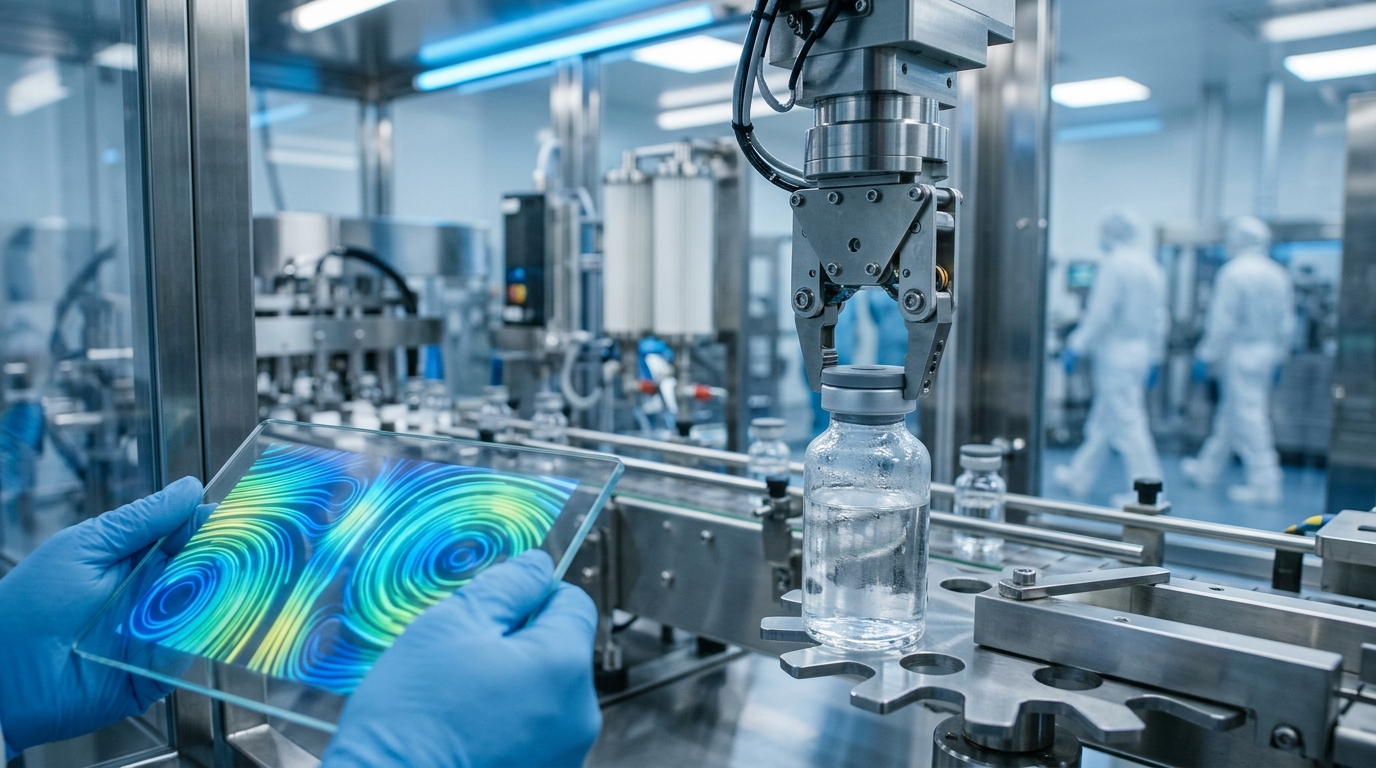
Conversely, for facilities using robotic filling lines and closed-cell processing, the inspectional focus shifts toward software validation and “Decontamination Cycles.” Investigators will review your VHP (Vaporized Hydrogen Peroxide) validation studies to ensure there are no “dead zones” where microbes could survive. Maintaining the technical integrity of these automated systems is the key to a successful audit in the modern era.
What FDA Investigators Look for in Laboratory Records
Strategic Analysis: The Future of Sterile Compliance
Industry Perspective & Expert Analysis
The landscape of 2026 demonstrates that sterile manufacturing FDA inspection outcomes are now a primary indicator of “Operational Resilience.” For sponsors and pharmaceutical manufacturers, a site’s sterility record is the most critical factor in CDMO selection. The business impact of a sterility-related 483 is immense, often leading to product shortages and significant financial penalties. Strategic value lies in “Proactive Integrity,” where firms invest in real-time microbiological monitoring to detect potential issues before they compromise a batch.
Key Challenges & Future Opportunities
The primary challenge in 2026 is managing the “Human Interface” in increasingly automated environments. Even with robots, humans must maintain the equipment and prepare the sterile components. This creates a massive opportunity for “Digital Training Twins.” By using Virtual Reality (VR) to train staff on aseptic behavior, firms can reduce the risk of manual errors. This level of technological investment signals to the FDA that your facility is committed to the “Zero-Contamination” goal, significantly de-risking your audit profile.
Compliance Considerations for Manufacturers
Sponsors must realize that the “Sterility Assurance” of their product is their legal responsibility. During a sterile manufacturing FDA inspection, the agency will evaluate how much oversight the sponsor has over their manufacturing partner’s CCS. If a CDMO’s HVAC system fails and the sponsor is not notified within the agreed-upon window, both parties will face citations for inadequate communication and quality oversight. In 2026, transparency between partners is a mandatory requirement for regulatory success.
FDA Launches New “One-Day Inspectional Assessment” Program: What Industry Should Know
Environmental Monitoring (EM) and Data Integrity
Environmental monitoring is the “pulse” of a sterile facility, and its integrity is non-negotiable. During a sterile manufacturing FDA inspection, investigators will reconstruct the EM data for every critical batch. They are looking for “Trends,” not just individual data points. If you have a spike in fungal counts in a Grade B area and your investigation does not identify a specific root cause, the FDA will view your quality system as ineffective.
Data integrity in the EM lab is under intense scrutiny. Investigators will legally ask to see the “Raw Data” from air samplers and settle plates. If there is evidence of “Plate Cleaning”—discarding samples that show growth before they can be officially counted—the facility will likely face an immediate OAI classification. Automated plate counters and validated LIMS systems are now the expected standard for ensuring data transparency.
Why Contract Testing Laboratories Receive FDA Warning Letters
Sterility Testing and Rapid Microbiological Methods (RMM)
The traditional 14-day sterility test is being supplemented, and in some cases replaced, by Rapid Microbiological Methods (RMM). During a sterile manufacturing FDA inspection, investigators will review your RMM validation data to ensure the new methods are “equivalent or better” than the traditional pharmacopeial tests. The move toward real-time sterility results is a major trend for 2026, allowing firms to identify contamination events much faster.
However, the adoption of RMM requires a high level of technical defensibility. Investigators will look for your “Limit of Detection” studies and how you handle “False Positives.” A failed RMM test must be investigated with the same rigor as a traditional sterility failure. Any attempt to bypass a rapid result in favor of a traditional test without a scientific justification is a major red flag for federal auditors.
Lessons from Recent FDA Warning Letters in Pharmaceutical Manufacturing
Conclusion: Navigating the High-Intensity Audit Cycle
The sterile manufacturing FDA inspection process in 2026 is a reflection of the industry’s shift toward total automation and risk-centricity. By focusing on contamination control strategies, advanced barrier technologies, and rigorous data integrity, manufacturers can turn the audit process into a showcase of their operational excellence. As we move deeper into the year, the firms that view sterility as a “built-in” quality feature rather than a “tested-in” attribute will emerge as the leaders in the global sterile injectable market.
Frequently Asked Questions (FAQs)
1. What is the most common citation in a sterile manufacturing FDA inspection? Environmental monitoring (EM) failures, specifically the failure to follow established SOPs or investigate “out-of-limit” results, remain the most frequent observations.
2. Does the FDA prefer isolators over traditional cleanrooms? Yes, the agency’s 2026 stance strongly favors isolator technology because it removes the most significant source of contamination: the human operator.
3. What is a Contamination Control Strategy (CCS)? It is a comprehensive document that identifies all potential microbial, particulate, and pyrogen risks in a facility and outlines the controls in place to mitigate them.
4. How long does a sterile manufacturing audit usually last? Due to the technical complexity of aseptic processing, these inspections typically last between 7 and 10 business days on-site.
5. Can I use AI to monitor my sterile cleanroom? The FDA encourages the use of AI for vision systems and environmental monitoring, provided the software is fully validated and the data is transparently logged.
6. What happens if a “Media Fill” fails? A media fill failure is a critical event. The facility must halt production, perform a deep-dive investigation, and successfully complete three consecutive media fills before resuming commercial manufacturing.
References & Citations
- FDA Guidance for Industry – Sterile Drug Products Produced by Aseptic Processing: The foundational document for maintaining technical compliance in sterile manufacturing.
- EudraLex Volume 4 – Annex 1: Manufacture of Sterile Medicinal Products: The global benchmark for contamination control and aseptic risk management.
- FDA Inspectional Observations (Sterile Product Trends 2026): Statistical analysis of recurring 483 observations in the sterile injectable sector.
- ISPE Baseline Guide – Sterile Product Manufacturing Facilities: Industry best practices for the design and operation of aseptic suites.
- USP <1116> Microbiological Control and Monitoring of Aseptic Processing Environments: Technical standards for environmental monitoring and sterility assurance.
Secure Your Sterile Success with Elite Compliance Strategies
Successfully managing the complexities of 2026 regulatory standards requires more than just a checklist; it demands a deep understanding of evolving FDA Inspection protocols. We help you eliminate the critical gaps in your sterile manufacturing FDA inspection readiness by providing the technical expertise and strategic oversight necessary to protect your clinical and commercial assets. Our platform bridges the communication divide between sponsors and external partners, ensuring that every batch meets the highest quality expectations. Whether you are auditing a new partner or strengthening an existing relationship, you can find the strategic guidance and expert solutions required to drive business success right here. Join us today to ensure your life-saving products reach the market with total integrity and regulatory confidence.