
How to Prepare for an FDA Inspection: Complete GMP Readiness Guide
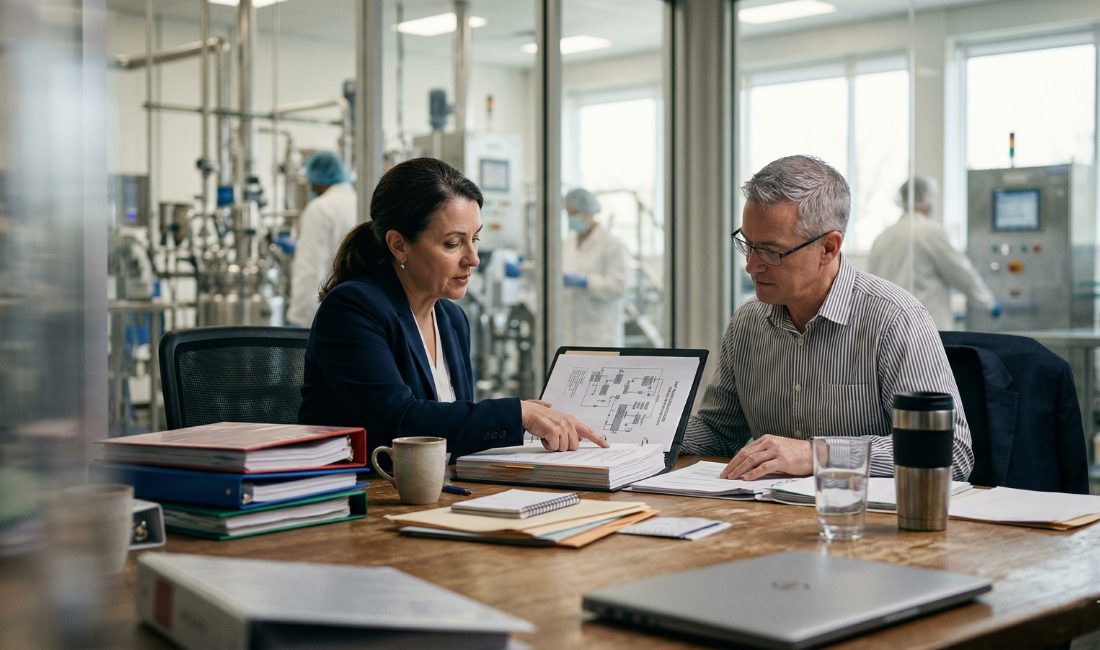
How to Prepare for an FDA Inspection: Complete GMP Readiness Guide
The prospect of an FDA official walking through your front door can be daunting. However, an FDA inspection is not a surprise test you “cram” for; it is a technical audit of your daily commitment to safety and quality. Whether you are in pharmaceuticals, medical devices, or food processing, your goal is to demonstrate that your Quality Management System (QMS) is robust, transparent, and consistently followed.
In 2026, regulatory scrutiny has shifted. The FDA is no longer just looking at physical cleanliness; they are deep-diving into digital footprints, supply chain transparency, and the “Quality Culture” of the organization. To stay ahead, companies must move from a reactive posture to a state of permanent readiness. This comprehensive guide breaks down the massive task of inspection preparation into actionable, compliant phases.
Before we dive into the technical details, it is vital to understand the regulatory landscape. For those in the beauty and personal care sector, you should review FDA Cosmetics Inspection: What the Draft Guidance on Records Access Means for Manufacturers to understand how new laws like MoCRA impact your data sharing obligations during an audit.
The Philosophy of Permanent Readiness
The most successful companies do not “prepare” for an inspection—they live in a state of readiness. Permanent readiness means that if an investigator arrived at 2:00 PM on a Friday, your facility would look exactly the same as it would during a scheduled audit. This mindset eliminates the “panic cleaning” and “document forging” that often leads to the most severe Warning Letters.
A culture of readiness starts with leadership. When executives prioritize quality over production speed, employees follow suit. During an inspection, investigators look for “behavioral cues.” If employees seem coached or nervous, it signals a lack of confidence in the underlying systems. A well-prepared facility radiates confidence because every team member knows their role and the value of the SOPs they follow.
Internal Audits: Your Secret Weapon
You cannot fix what you haven’t identified. A rigorous internal audit program is the cornerstone of GMP readiness. These audits should not be “friendly” checks; they should be as strict, if not stricter, than a real FDA inspection. Use “blind” audits where the department being checked has no prior notice. This reveals the true state of your operations.
When performing these audits, focus on the most common failure points. For a look at what the FDA is currently finding in the field, read our report on Common Deficiencies Cited in FDA Cosmetic Inspections and How to Avoid Enforcement Actions. Learning from the mistakes of others is the most cost-effective way to strengthen your own compliance posture.
Phase 1: Master the Documentation Hierarchy
In the eyes of a regulatory investigator, “If it isn’t documented, it didn’t happen.” Documentation is the primary evidence of your compliance. Disorganized, inconsistent, or unreliable logs provide no value, even if you maintain 10,000 pages of documentation. You must establish a clear hierarchy of documents that are easily retrievable.
The Role of Standard Operating Procedures (SOPs)
Your SOPs are the “law” of your facility. During an inspection, the investigator will watch an operator perform a task and simultaneously read the SOP for that task. Any deviation—even a minor one—is a finding. Ensure your SOPs are not just “on the shelf” but are actively used and understood. If an SOP is too complex for an operator to follow, it needs to be simplified and re-validated.
Logbooks and Contemporaneous Entry
One of the biggest red flags for an investigator is “batch entry” in logbooks. This occurs when an employee fills out a week’s worth of logs in one sitting. Entries must be contemporaneous—meaning they are recorded at the time the work is performed. Use blue or black indelible ink, and never use white-out.Ensure GMP compliance by using only a single line-through, initials, and a date to correct any documentation mistakes.
Phase 2: Personnel and “The Human Element”
Your people are your greatest asset and your biggest risk during an inspection. The FDA is trained to ask open-ended questions to see if employees truly understand the “why” behind their actions. Training must go beyond a signature on a sheet; it must involve competency assessment.
Subject Matter Expert (SME) Selection
Every critical system (HVAC, Water, CAPA, IT) must have a designated SME. This person should be the one to present documentation to the investigator. Master inspection readiness by training staff to provide concise answers, avoid unnecessary details, and never speculate during auditor interviews. If an SME doesn’t know an answer, the correct response is: “I will find out and get back to you shortly.”
The War Room Strategy
Successful inspections are managed from a “Back-room” or “War Room.” This is a secluded area where a team of experts reviews every document requested by the investigator before it is handed over. This team checks for signatures, dates, and consistency. If a document has an error, the War Room team can prepare a “Note to File” or an explanation to accompany the document, showing that the company is already aware of the issue.
Phase 3: Facility Maintenance and the Walkthrough
The physical walkthrough is often where the first impressions are formed. An investigator will look for dust on top of machines, peeling paint, or leaks in the ceiling. These “minor” cosmetic issues suggest a lack of control over the environment, which leads to deeper questions about product sterility and safety.
Equipment Calibration and Validation
Every piece of equipment used in production or testing must be validated for its intended use. This includes “Computer System Validation” (CSV). In 2026, the FDA is paying special attention to how automated systems manage data. For companies using high-tech manufacturing, ensure you are compliant by reading How to Prepare for FDA Data Integrity Inspections in Drug Manufacturing in 2026.
Material Flow and Cross-Contamination
The facility layout must logically move materials from “Quarantine” to “Released” to “Production.” There should be no “backtracking” of materials, which increases the risk of cross-contamination. Ensure that all containers are properly labeled and that “Rejected” materials are kept in a locked, restricted area to prevent accidental use.
Phase 4: Risk Management and Preventive Controls
The FDA has moved toward a “Risk-Based” inspection model. This means they spend more time on processes that have the highest potential to harm the consumer. Your QMS must reflect this by prioritizing high-risk deviations and CAPAs.
The CAPA System: The Heart of Quality
Your Corrective and Preventive Action (CAPA) system is the first thing an investigator will ask to see. They want to see that when something goes wrong, you investigate it thoroughly, find the root cause, and implement a change that prevents it from happening again. A “weak” CAPA system that only treats the symptoms of a problem is a guaranteed way to receive a Form 483.
Food Safety and FSMA Compliance
For those in the food industry, the stakes are higher than ever regarding preventive controls. The FDA is focusing on environmental monitoring for pathogens like Listeria and Salmonella. If you are a food processor, you must stay updated on FSMA Risk-Based Inspection Frequency: What Food Processors Need to Know in 2026 to understand how often you will be audited and what the focus will be.
Phase 5: Digital Integrity and ALCOA+
As industry 4.0 takes over, paper logs are being replaced by Electronic Batch Records (EBR). While this increases efficiency, it also creates new compliance challenges. The FDA uses the ALCOA+ acronym to evaluate data integrity: Attributable, Legible, Contemporaneous, Original, Accurate, Complete, Consistent, Enduring, and Available.
Audit Trails and User Access
Every digital system must have an uneditable audit trail. This trail records who logged in, what they changed, and when they changed it. “Shared passwords” are a major violation. Each user must have a unique login, and their access levels should be restricted to only what is necessary for their job function.
Record Retention and Retrieval
Under modern regulations, the speed of retrieval is a compliance factor. If it takes you four hours to find a requested record, the investigator may conclude that your record-keeping system is in disarray. Ensure that both physical and digital archives are indexed and searchable. This is especially true for food facility observations, as seen in FDA Food Facility Inspection Observations: Top Preventive Control Violations from Recent Reports.
Phase 6: Labeling and Consumer Safety
Labeling is more than just marketing; it is a critical safety component. Incorrect labeling leads to more recalls than almost any other GMP violation. Whether it is an undeclared allergen in food or a wrong dosage instruction on a drug, the consequences are severe.
Reviewing Recent Enforcement Trends
The FDA regularly issues Warning Letters for labeling violations. By reviewing these letters, you can identify “hot spots” that the FDA is currently targeting. For example, the cosmetics industry has seen a surge in enforcement regarding “drug-like” claims on moisturizers and serums. For more, see Cosmetic Labeling Violations from Recent FDA Inspections and Warning Letters (2025-2026).
The Labeling Control Process
Your labeling process must include a “line clearance” step. This ensures that no labels from a previous run are left on the line, which could lead to a mix-up. All labels should be accounted for—if you issued 1,000 labels and only used 950, you must be able to prove that the remaining 50 were destroyed or returned to stock.
Phase 7: Handling the Inspection Day(s)
When the investigator arrives, the clock starts. The first 30 minutes are critical. Your “Front-room” host should meet them, check their credentials, and escort them to a designated meeting room. Do not let the investigator wander the facility unescorted.
Managing the Interview Process
Investigators are skilled at getting people to talk. Your staff should be instructed to answer the specific question asked and then stop. Silence is a tactic used to get people to volunteer extra information. If there is a pause, wait for the next question. Always provide factual data rather than opinions or “best guesses.”
Daily De-briefs
At the end of each inspection day, the investigator will usually provide a summary of their findings so far. The War Room team should take meticulous notes during this session. Use the night to gather extra evidence or draft explanations for any concerns raised. This allows you to address issues before the final Form 483 is written.
Phase 8: The Post-Inspection Response
If you receive a Form 483, it is not the end of the world—if you handle it correctly. You have 15 business days to respond. Your response should be professional, non-defensive, and provide a clear timeline for corrective actions.
Drafting a Robust Response
A good response doesn’t just promise to “retrain staff.” It looks at why the error happened in the first place. Did the SOP lack clarity? Was the equipment faulty? Show the FDA that you are taking systemic action. If you disagree with an observation, provide the regulatory logic and evidence to support your position, but do so respectfully.
Maintaining Ongoing Compliance
Once the inspection is over and the 483 is addressed, the work doesn’t stop. The FDA will likely follow up during the next inspection to ensure you kept your promises. Use the findings as a roadmap for your next year of quality improvements. Compliance is a marathon, not a sprint.
Frequently Asked Questions (FAQs)
1. What is the main focus of an FDA inspection in 2026? While GMP basics remain, the focus has shifted heavily toward data integrity, software validation, and supply chain transparency to ensure product safety in a globalized market.
2. How should I prepare my staff for an unannounced inspection? Implement “mock inspections” and regular “pop-quizzes” on SOPs. Training should be a weekly occurrence, not a yearly event, so that readiness becomes second nature.
3. Can an FDA investigator look at my financial records? Generally, no. The FDA does not have the authority to view financial, sales (except for volume), or pricing data. They are focused strictly on quality, safety, and efficacy.
4. What happens if I receive a Warning Letter? A Warning Letter is a formal escalation from a Form 483. It requires an immediate and comprehensive response. Failure to address a Warning Letter can lead to seizures, injunctions, or criminal prosecution.
5. How do I manage a “Remote Regulatory Assessment”? Treat it with the same seriousness as an on-site visit. Ensure your video conferencing technology is stable and that your digital documents are organized for rapid screen-sharing.
6. What is the ALCOA+ principle? It is the standard for data integrity: Attributable, Legible, Contemporaneous, Original, and Accurate—plus Complete, Consistent, Enduring, and Available.
References and Citations
- FDA Investigations Operations Manual (IOM): The official guide used by FDA staff to conduct inspections and audits.
- Link: Official IOM Guide
- 21 CFR Part 211 (Drug GMP): The primary regulation for pharmaceutical manufacturing quality standards.
- Link: CFR 211 Regulations
- FSMA Preventive Controls for Human Food: The legal framework for food facility safety and preventive measures.
- Link: FSMA Final Rule
- MoCRA 2022 Guidance: New requirements for cosmetic manufacturers regarding facility registration and record access.
- Link: MoCRA Overview
- Data Integrity and GMP Compliance Guidance: The 2026 standard for maintaining electronic records in life sciences.
- Link: FDA Data Integrity Q&A
How FDA Investigators Conduct GMP Inspections
Understanding the mindset of the investigator is half the battle. These individuals are highly trained specialists who look for patterns of non-compliance. They often use a “top-down” approach, starting with your QMS and then drilling down into specific batch records. Their goal is to verify that your system is self-correcting.
Companies often identify these issues during a mock FDA inspection conducted by former FDA investigators. Learn more about FDA Inspection Readiness and Gap Analysis services at FDA Inspection.