Introduction
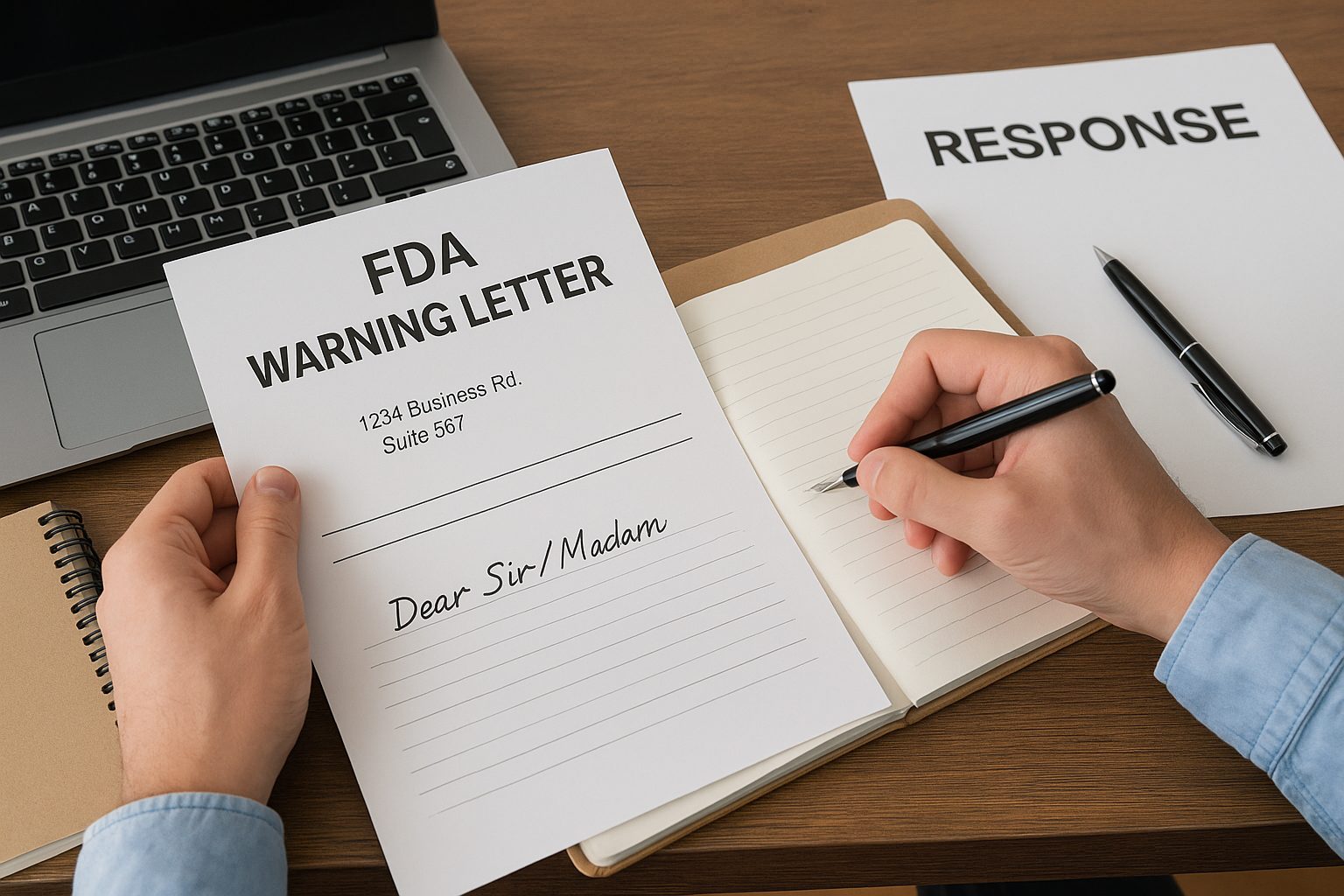
Receiving correspondence from the U.S. Food and Drug Administration (FDA) can be daunting, but a warning letter represents a significant escalation in regulatory concern. It is an official, public notification that your company has committed serious violations of federal law. This is not a preliminary observation; it is a formal demand for action. Knowing how to respond to an FDA warning letter is not just about compliance—it is about protecting your business’s future, reputation, and ability to operate. An inadequate or delayed response can lead to severe consequences, including product seizures, injunctions, and costly fines. This guide provides a step-by-step strategy for crafting a timely, thorough, and effective response that addresses the FDA’s concerns and demonstrates your commitment to quality and safety.
The Critical Difference: FDA Form 483 vs. a Warning Letter
Before diving into the response strategy, it is crucial to understand what a warning letter is and what it is not. Many companies confuse a warning letter with an FDA Form 483. An investigator issues a Form 483 at the conclusion of an inspection to list observed conditions that may violate FDA regulations. It is an opportunity for management to discuss the findings and propose corrections. While serious, a 483 is a list of observations, not a final agency determination. Many of the issues cited are common, as highlighted in the Top 10 FDA 483 Observations of 2024—and How to Avoid Them in 2025.
A warning letter, however, is a more severe action. The FDA issues it after reviewing the inspection report and your response to the Form 483, concluding that the violations are significant and your corrective actions are insufficient. The letter is reviewed by senior FDA staff and legal counsel, signifying that the agency has established a strong case against your company. It is a public document posted on the FDA’s website, making the violations visible to customers, competitors, and investors. This public exposure can inflict lasting damage on your brand’s reputation and market standing, far beyond any direct financial penalties.
Immediate Steps: The First 24-48 Hours
Your actions immediately following the receipt of a warning letter set the tone for the entire process. Procrastination is not an option. The first step is to officially acknowledge receipt of the letter with the issuing FDA District Office. This simple, professional courtesy shows that you are taking the matter seriously. Simultaneously, you must assemble a dedicated response team. This is not a task for a single department. Your team should include key personnel from Quality Assurance, Regulatory Affairs, Manufacturing, and Legal. Most importantly, senior leadership must be actively involved to provide authority, resources, and a clear message that compliance is a top priority for the entire organization.
Once assembled, the team’s initial task is to perform a rapid impact assessment. You must understand the scope of the cited violations. Do they affect a single product line or your entire facility? Are there immediate risks to public health that require a product recall or production halt? The team must also establish a clear and aggressive timeline. The FDA expects a written response within 15 working days. This deadline is non-negotiable without prior discussion with the agency. Immediately map out key milestones: completing the investigation, defining corrective actions, drafting the response, and securing final review and approval from management.
Deconstructing the Letter: A Deep Dive into Each Observation
A successful response depends on a thorough understanding of the deficiencies cited in the warning letter. Do not simply read the letter; dissect it. Assign each observation to a subject matter expert or a small sub-team responsible for investigating its root cause. The goal is to move beyond fixing the surface-level symptom and identify the systemic failure that allowed the violation to occur. For example, if the letter cites a lack of process validation, the root cause might be inadequate training, poorly defined procedures, or a lack of resources allocated to the quality unit. A robust Root Cause Analysis (RCA) is essential.
During this phase, it is vital to review the entire history of the issue. Look back at the initial inspection that led to the Form 483. The inspection process itself is multifaceted, and understanding the different Types of FDA Inspections: What You Need to Know (2025 Guide) can provide crucial context. Did your team misunderstand the initial observation? Was your 483 response unclear or incomplete? Connecting the warning letter back to the original inspection findings helps you understand the FDA’s perspective and why they deemed your initial response inadequate. This deep analysis ensures your new corrective actions will finally resolve the underlying problem to the agency’s satisfaction.
The Core of Your Response: The CAPA Plan
The heart of your written response will be your Corrective and Preventive Action (CAPA) plan. This is where you demonstrate to the FDA that you have a concrete, actionable plan to fix the problems and prevent them from recurring. Your CAPA plan must be detailed, specific, and credible. It should clearly distinguish between different types of actions. A “correction” is the immediate fix—for instance, quarantining a non-conforming batch of product. A “corrective action” addresses the root cause of the problem, such as retraining staff on a specific procedure or revising a faulty SOP.
A “preventive action” goes a step further by addressing systemic weaknesses to prevent similar issues from arising in other areas. For each violation, you must outline the specific CAPA you will implement. Avoid vague promises like “we will improve training.” Instead, provide concrete details: “We will revise SOP-101 by October 5, 2025, to include specific instructions for equipment calibration. All technicians will complete documented training on the revised SOP by October 20, 2025.” Assign a responsible individual and a realistic completion date for each action item. Finally, describe how you will verify the effectiveness of each CAPA to ensure the fix is permanent.
Drafting the Written Response: Getting the Tone, Timing, and Content Right
With your CAPA plan established, you can begin drafting the formal response letter. The tone of this letter is critically important. It must be professional, respectful, and non-defensive. You should acknowledge the FDA’s authority and express a clear commitment to full compliance. Even if you disagree with a finding, present your counterargument with objective evidence, not emotion. The structure should be logical and easy for the FDA reviewer to follow. Begin by acknowledging the warning letter by date and subject. Then, address each observation from the warning letter individually, in the order it appeared.
For each point, restate the observation verbatim. This confirms you have read and understood it. Next, state your detailed response, including your root cause analysis findings and the specific CAPAs you have committed to implementing. Provide timelines for all actions that are in progress and include documentation for any actions already completed. If you need more than 15 days to finalize your corrective actions, you must still respond within the deadline. In this preliminary response, explain the actions you have taken so far and provide a projected timeline for the remaining activities, along with a commitment to send follow-up reports. This comprehensive approach is covered in How to Respond to an FDA Warning Letter: A Complete Guide for Manufacturers.
A Case Study in Action: Learning from Others
Real-world examples provide invaluable lessons. For instance, the case of the US FDA Issues Warning Letter to DeGrave Dairy for Illegal Drug Residue illustrates the consequences of failing to control processes and maintain proper records. The warning letter publicly detailed failures in veterinary drug administration and screening, leading to adulterated products entering the food supply. Such cases underscore the importance of having a robust Quality Management System (QMS) that is followed diligently. Reading through public warning letters in your industry can reveal common pitfalls and the FDA’s current enforcement priorities.
These examples show that violations are rarely unique. Whether in pharmaceuticals, food production, or dietary supplements, the underlying failures often relate to documentation, training, process control, and management oversight. In fact, many issues cited in warning letters for one industry mirror the Most Common FDA 483 Observations for Dietary Supplement Manufacturers (With Real Examples). By learning from the mistakes of others, you can proactively strengthen your own systems and reduce the risk of receiving a warning letter in the first place. Use these public records as a tool for continuous improvement and a guide for what not to do.
Beyond the Letter: Execution and Follow-Through
Submitting the response is a major milestone, but it is not the end of the process. Your credibility with the FDA now rests on your ability to follow through on your promises. You must execute your CAPA plan exactly as described in your letter. Meticulously document every action taken, including training records, revised procedures, validation reports, and meeting minutes. This documentation will be the primary evidence you present during a future re-inspection. Be prepared for the FDA to return to verify that you have implemented your corrective actions effectively.
Establish an internal project management system to track the progress of each CAPA item. Hold regular meetings with the response team to review progress, address roadblocks, and ensure timelines are met. If you encounter unforeseen delays, it is better to proactively communicate them to the FDA than to wait for them to discover the lapse during an inspection. Maintaining open and honest communication shows that you are managing the process responsibly. This diligent follow-through is what transforms a reactive response into a proactive strengthening of your entire Quality Management System.
Conclusion
Responding to an FDA warning letter is a demanding and high-stakes process that tests a company’s commitment to quality and regulatory compliance. The key to a successful outcome lies in a strategic, systematic, and transparent approach. From the moment the letter arrives, you must act with urgency, assembling a multidisciplinary team to investigate root causes, not just symptoms. The resulting CAPA plan must be robust, detailed, and backed by realistic timelines. The written response itself should be framed with a professional and non-defensive tone, addressing each of the FDA’s concerns directly and completely. Ultimately, a well-handled response can be more than just a corrective measure; it is an opportunity to reinforce your quality systems, rebuild trust with the agency, and foster a stronger culture of compliance throughout your organization.
Frequently Asked Questions (FAQs)
What is an FDA warning letter?
An FDA warning letter is an official notification from the agency that a company has significantly violated federal regulations. It demands prompt corrective action.
Is a warning letter made public?
Yes, the FDA posts most warning letters on its public website, making them accessible to customers, competitors, and the public.
What is the deadline for responding to a warning letter?
The standard deadline for a written response is 15 working days from the date of receipt.
What if I cannot fix all the issues within 15 days?
You must still submit a response within 15 days. In it, detail the actions you have completed and provide a clear timeline for the remaining corrective actions.
Can I disagree with an FDA observation in my response?
Yes, but you must provide strong, objective evidence to support your position. A well-reasoned argument is more effective than a simple denial.
What is the difference between a Form 483 and a warning letter?
A Form 483 is a list of observations made by an investigator during an inspection. A warning letter is a more serious, formal agency communication indicating that your response to the 483 was inadequate and that significant violations remain.
Who should be on the warning letter response team?
The team should be cross-functional, including representatives from Quality, Regulatory Affairs, Legal, Operations/Manufacturing, and senior management.
What happens if I ignore an FDA warning letter?
Ignoring a warning letter can lead to severe enforcement actions, including product seizure, injunctions (a court order to stop operations), and civil or criminal penalties.
References
FDA Warning Letters Page: The official database where the FDA posts warning letters issued to regulated companies. https://www.fda.gov/inspections-compliance-enforcement-and-criminal-investigations/compliance-actions-and-activities/warning-letters
FDA Compliance Manual for Warning Letters: Detailed guidance for FDA staff on the procedures for issuing and handling warning letters. https://www.fda.gov/inspections-compliance-enforcement-and-criminal-investigations/compliance-manuals/chapter-4-advisory-actions
Code of Federal Regulations Title 21 (21 CFR): The primary source of regulations governing food and drugs in the United States. https://www.ecfr.gov/current/title-21
FDA Inspections, Compliance, Enforcement, and Criminal Investigations: A portal for all FDA enforcement activities and resources. https://www.fda.gov/inspections-compliance-enforcement-and-criminal-investigations
Guidance for Industry: Responding to FDA Form 483 Observations: While focused on 483s, this document offers valuable insights into crafting responses acceptable to the FDA. https://www.fda.gov/regulatory-information/search-fda-guidance-documents/responding-fda-form-483-observations