Introduction
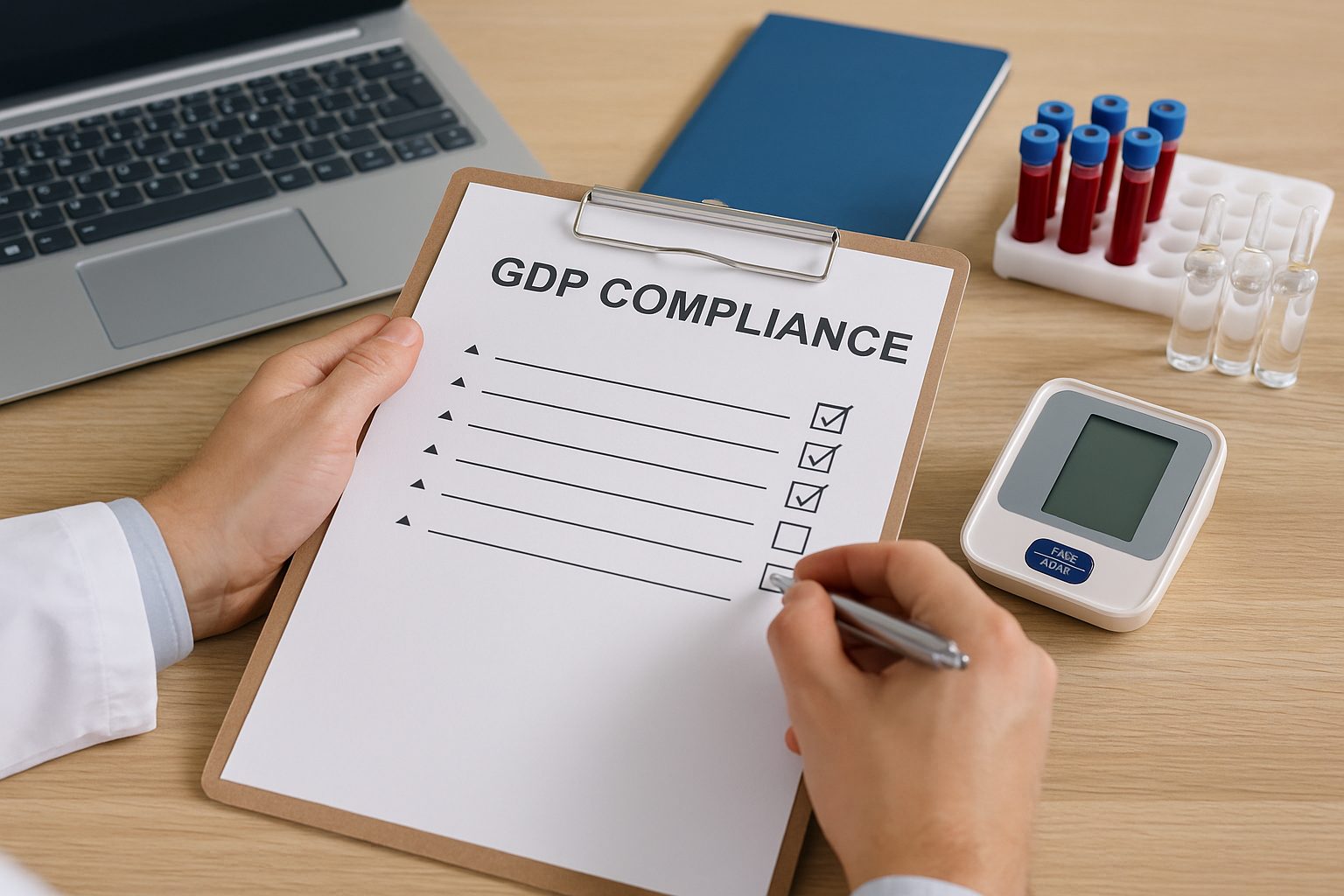
The transportation and storage of biologics represent one of the most complex challenges in the pharmaceutical industry. Unlike traditional small-molecule drugs, biologics are highly sensitive to environmental fluctuations, particularly temperature. This sensitivity makes the supply chain vulnerable to product degradation, loss of efficacy, and potential patient safety risks. Regulators use Good Distribution Practice (GDP) to protect product quality across the supply chain. For biologics, GDP compliance is fundamental to patient safety and public trust.
This 2025 guide covers GDP compliance for biologics. It details GDP principles, specific challenges with biologics, and key best practices. Adhering to these rules prevents regulatory action and ensures product quality. A proactive and well-documented compliance strategy is the only way to navigate this demanding landscape successfully.
Understanding GDP: The Foundation of a Secure Supply Chain
Good Distribution Practice (GDP) is a quality system for warehouse and distribution centers dedicated to pharmaceutical products. International bodies, including the FDA, EMA, and WHO, publish guidelines that define the minimum standards that distributors must meet. This involves controlling every step, from the moment a product leaves the manufacturer until it reaches the end user. It covers personnel, premises, equipment, documentation, and operational procedures.
For biologics, these regulations take on heightened importance. These products, which include vaccines, monoclonal antibodies, and cell therapies, are large, complex molecules derived from living organisms. A biologic’s therapeutic effect depends directly on its structural integrity. Even minor deviations from specified storage conditions can render the product ineffective or harmful. Consequently, GDP for biologics focuses intensely on preventing contamination, degradation, and falsification. Companies must demonstrate robust control over their logistics network to satisfy regulators and protect patients.
The Unique Challenges of Biologics Logistics
The primary challenge in managing biologics logistics is their extreme sensitivity to temperature. Most biologics require refrigerated storage, typically between 2°C and 8°C, a range often referred to as the “cold chain.” Some advanced therapies, such as certain vaccines or cell-based products, demand even colder, cryogenic temperatures. Maintaining this unbroken cold chain across a global supply chain with multiple handoff points is a significant operational feat. Any excursion outside the specified temperature range, even for a short duration, can irreversibly damage the product.
Beyond temperature, biologics are also sensitive to light, vibration, and shock, which can cause aggregation or denaturation of proteins. This means you must meticulously design and validate your packaging and handling procedures to protect the product’s physical integrity. Managing these multifaceted risks requires a sophisticated infrastructure and a deeply embedded quality culture. Understanding the different Types of FDA Inspections: What You Need to Know (2025 Guide) can help companies prepare for scrutiny of their logistics controls.
Key Pillar 1: A Robust Quality Management System (QMS)
A comprehensive Quality Management System (QMS) is the bedrock of GDP compliance. The QMS should be a formalized system that documents all processes, procedures, and responsibilities for achieving quality policies and objectives. You must tailor the system to your company’s specific activities and the risks associated with the products you handle. For biologics logistics, the QMS must explicitly define procedures for temperature monitoring, deviation management, supplier qualification, and personnel training. It serves as the central framework that connects all compliance activities into a cohesive and controllable whole.
Your QMS must be a dynamic system, not just static documents. Drive continuous improvement with regular audits, data analysis, and Corrective and Preventive Actions (CAPAs). A living QMS demonstrates control over your distribution network, which is essential for passing regulatory inspections.
Key Pillar 2: Validated Temperature Control and Monitoring
Maintaining the cold chain is non-negotiable for GDP compliance in biologics logistics. This requires a multi-layered approach starting with validated equipment. You must qualify and validate all temperature-controlled equipment. This process proves the units can consistently maintain required temperatures under real-world conditions. This process includes Installation Qualification (IQ), Operational Qualification (OQ), and Performance Qualification (PQ).
Continuous monitoring is equally critical. Temperature data loggers must be placed with the product during transit and in storage facilities to provide a complete and unbroken record of the environmental conditions. Modern systems offer real-time monitoring with automated alerts, allowing logistics partners to intervene proactively if a temperature deviation is imminent. Upon receipt, this data must be reviewed and archived as part of the product’s batch record. Failure to provide complete temperature records is a major red flag for inspectors and one of the Top 10 FDA 483 Observations of 2024—and How to Avoid Them in 2025 .
Key Pillar 3: Rigorous Risk Management
A proactive risk management strategy is essential for identifying and mitigating potential threats to product quality within the supply chain. Companies should use risk assessment tools like Failure Mode and Effects Analysis (FMEA) to systematically evaluate every stage of the logistics process. This involves identifying potential failure points, such as equipment malfunction, customs delays, or extreme weather events, and assessing their potential impact on the product.
For example, a risk assessment might identify a long-haul shipping lane that frequently experiences delays. A mitigation strategy could involve using advanced passive shipping containers that offer longer temperature hold times or arranging for priority customs clearance. This demonstrates to regulators that the company has thoughtfully considered potential problems and has established contingency plans to protect product integrity. A failure to manage risk can lead to disastrous product losses and serious compliance issues.
Key Pillar 4: Meticulous Documentation and Data Integrity
In the world of GDP, if it wasn’t documented, it didn’t happen. Meticulous record-keeping is a fundamental requirement. Every action related to the distribution of a biologic, from receipt and storage to packaging and shipping, must be documented. These records must be accurate, legible, and readily available for review by auditors. This includes temperature logs, shipping manifests, training records, and deviation reports.
In an increasingly digital environment, ensuring data integrity is paramount. Secure your electronic records against unauthorized changes and deletion. You must also validate your logistics data systems to ensure they are reliable and compliant with all regulation like 21 CFR Part 11. Data must adhere to the ALCOA+ principles—attributable, legible, contemporaneous, original, accurate, complete, consistent, enduring, and available. Compromised data can obscure serious quality issues and is a major focus during regulatory inspections, often leading to severe enforcement actions. Inadequate documentation is frequently cited in regulatory enforcement, as seen in cases like the US FDA Issues Warning Letter to DeGrave Dairy for Illegal Drug Residue where record-keeping failures were central.
Key Pillar 5: Comprehensive Supplier and Partner Qualification
The biologics supply chain is rarely managed by a single entity. It is a complex network of manufacturers, third-party logistics (3PL) providers, freight forwarders, and specialty couriers. A company is ultimately responsible for the integrity of its product, even when it is in the hands of a partner. Therefore, a robust supplier qualification program is a critical component of GDP compliance. Before engaging any logistics partner, a company must conduct thorough due diligence to verify that the partner has the capabilities, procedures, and quality mindset to handle sensitive biologics.
This qualification process should include on-site audits, a review of the partner’s QMS, and verification of their training programs and equipment validation. Once a partner is qualified, a formal Quality Agreement should be established. This legally binding document clearly defines the quality and compliance responsibilities of each party. You must also manage the relationship through ongoing performance monitoring and periodic re-audits.. Relying on an unqualified partner is a high-risk gamble that can lead to catastrophic product loss and severe regulatory consequences, including a formal warning letter. Knowing How to Respond to an FDA Warning Letter: A Complete Guide for Manufacturers is crucial, but preventing one through proper oversight is far better.
Personnel Training: The Human Element of Compliance
Even the most sophisticated systems and procedures are ineffective without properly trained personnel. Every employee involved in the biologics supply chain, from warehouse staff to delivery drivers, must receive initial and ongoing training on GDP principles and their specific job functions. This training should cover topics such as the unique handling requirements of biologics, procedures for temperature monitoring, what to do in the case of a deviation or spill, and the importance of accurate documentation.
Training effectiveness should be periodically assessed to ensure that all personnel understand their responsibilities. All training activities must be documented, creating a record that can be presented to inspectors. A well-trained workforce is the first line of defense against quality failures. Employees who understand the “why” behind the rules are more likely to follow them consistently and to identify potential issues before they become major problems. Investing in comprehensive training is an investment in product quality and regulatory compliance. Many inspection findings are ultimately traced back to human error, a fact that is often highlighted in reviews of the Most Common FDA 483 Observations for Dietary Supplement Manufacturers (With Real Examples), a lesson that applies across all FDA-regulated sectors.
Preparing for Regulatory Inspections
Regulatory inspections are an inevitable part of operating in the pharmaceutical industry. The key to a successful inspection is constant readiness. Companies should operate as if an inspector could arrive at any moment. This involves maintaining all documentation in an organized and accessible manner, ensuring all personnel are trained and confident in their roles, and regularly conducting internal audits to identify and correct potential compliance gaps. These internal audits should be treated with the same seriousness as a regulatory inspection.
When an inspector arrives, the company should have a pre-defined plan for managing the inspection process. This includes assigning specific personnel to accompany the inspector, establishing a “war room” for collecting requested documents, and ensuring clear communication channels. Staff should be trained to answer questions truthfully and concisely, without speculating or providing information that was not requested. A calm, professional, and organized response demonstrates to the inspector that the company is in control of its quality systems.
The Future of Biologics Logistics: Technology and Innovation
The field of biologics logistics is continually evolving, driven by technological innovation. Advanced passive shipping containers use phase-change materials and vacuum insulation to maintain stable temperatures for five days or more, reducing reliance on active, powered systems. Real-time GPS and IoT sensors provide unprecedented visibility into the location and condition of a shipment, allowing for proactive intervention. Blockchain technology is also being explored as a means to create an immutable and transparent record of a product’s journey through the supply chain, enhancing security and traceability.
While these technologies offer powerful new tools for ensuring GDP compliance, they are not a substitute for a robust QMS. Any new technology must be thoroughly validated to ensure it is fit for its intended purpose and that its data is reliable. Companies must integrate these tools into their existing quality framework, with clear procedures for their use and maintenance. As biologics become more complex and personalized, embracing these innovations will be key to managing the next generation of logistics challenges.
Conclusion
Achieving and maintaining GDP compliance in biologics logistics is a complex but essential undertaking. It demands a holistic approach grounded in a robust Quality Management System that addresses every facet of the supply chain. From validated temperature controls and meticulous documentation to proactive risk management and comprehensive personnel training, every element must work in concert to protect product integrity. The high sensitivity and value of biologics mean there is no margin for error. Companies must foster a culture of quality that permeates every level of the organization and extends to all external partners. By embracing best practices and investing in the right systems and people, organizations can successfully navigate the regulatory landscape, ensure patient safety, and secure their place in the future of medicine.
Frequently Asked Questions (FAQs)
What is Good Distribution Practice (GDP)?
GDP is a quality system that ensures the integrity and quality of pharmaceutical products are maintained throughout the supply chain, from the manufacturer to the end user.
Why is GDP particularly important for biologics?
Biologics are highly sensitive to temperature, light, and shock. GDP is critical to prevent degradation that can render them ineffective or unsafe for patients.
What is a “cold chain”?
A cold chain is an uninterrupted, temperature-controlled supply chain. For most biologics, this means maintaining a constant temperature between 2°C and 8°C.
What is the role of a Quality Management System (QMS) in GDP?
The QMS is the central framework of documented processes and responsibilities that ensures all activities consistently meet GDP standards and quality objectives.
How do I qualify a logistics partner?
Qualification involves conducting due diligence, including on-site audits of the partner’s facilities and QMS, to verify they can meet all GDP requirements for handling biologics.
What is equipment validation in logistics?
Validation is the documented process of proving that equipment, such as a refrigerator or shipping container, consistently operates within specified limits and is fit for its purpose.
References
U.S. Food and Drug Administration (FDA) – Good Distribution Practices for Pharmaceutical Products: https://www.fda.gov/regulatory-information/search-fda-guidance-documents/good-distribution-practices-pharmaceutical-products
Official guidance from the FDA outlining the core principles and expectations for the distribution of pharmaceutical products in the United States.
World Health Organization (WHO) – Good distribution practices for pharmaceutical products:https://www.who.int/publications/m/item/good-distribution-practices-for-pharmaceutical-products
Comprehensive international standards from the WHO that serve as a basis for many national regulatory guidelines on GDP.
European Medicines Agency (EMA) – Guidelines on Good Distribution Practice of medicinal products for human use:https://www.ema.europa.eu/en/documents/regulatory-procedural-guideline/guidelines-5-november-2013-good-distribution-practice-medicinal-products-human-use-2013c-34301_en.pdf
The specific GDP regulations that must be followed for products distributed within the European Union.
Pharmaceutical Inspection Co-operation Scheme (PIC/S) – Guide to Good Distribution Practice for Medicinal Products:https://picscheme.org/en/publications?tri=gdp
A harmonized set of GDP guidelines developed by numerous regulatory authorities to promote common standards in pharmaceutical inspection.
Parental Drug Association (PDA) – Technical Reports:https://www.pda.org/bookstore/technical-reports
A leading industry organization that publishes technical reports and standards on best practices in pharmaceutical manufacturing and distribution, including cold chain logistics.
21 CFR Part 11 – Electronic Records; Electronic Signatures:https://www.ecfr.gov/current/title-21/chapter-I/subchapter-A/part-11
The FDA regulation that sets the requirements for ensuring that electronic records and signatures are trustworthy, reliable, and equivalent to paper records.