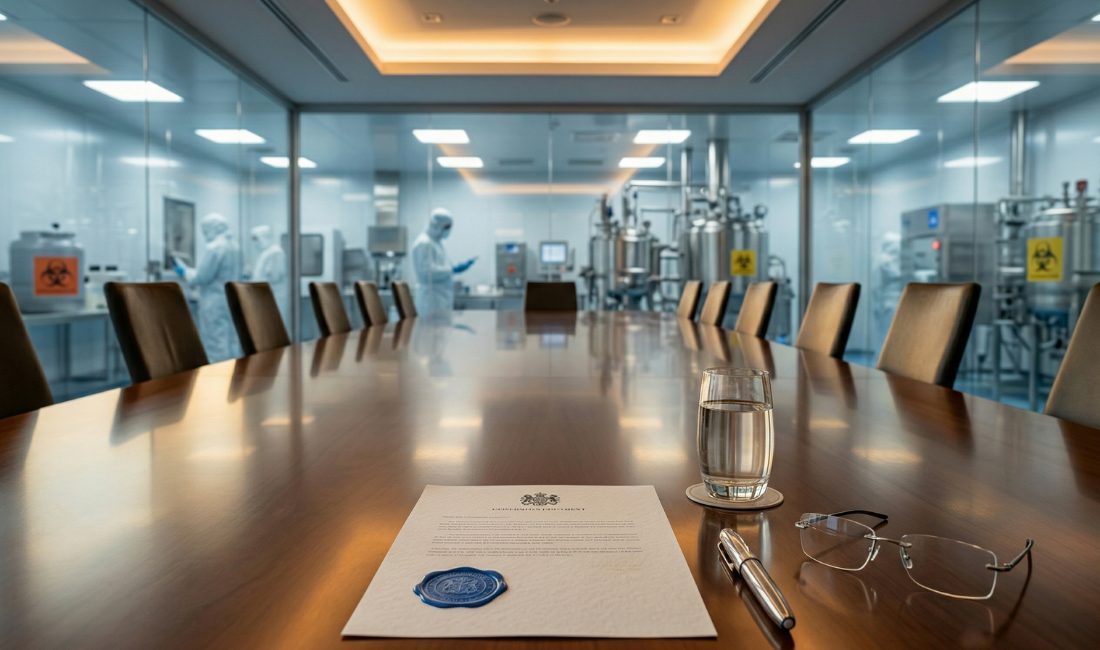
Understanding the Gravity of FDA Warning Letters
An FDA Warning Letter represents one of the most serious non-judicial enforcement actions the United States Food and Drug Administration can take against a manufacturer. When an agency investigator identifies significant violations of Current Good Manufacturing Practice (cGMP), and the company’s initial response is deemed insufficient, the agency escalates the matter. In 2026, the regulatory landscape has become increasingly transparent, meaning these letters are not only a private compliance matter but a public record that can impact stock prices, partner trust, and consumer confidence.
Receiving such a letter indicates that the agency is prepared to take further action, such as seizures, injunctions, or even criminal prosecution, if the deviations are not corrected immediately. For Quality Assurance directors and manufacturing leadership, the letter is a final opportunity to demonstrate a commitment to safety and quality before the government intervenes legally. Understanding the nuances of these communications is vital for any organization operating under the FDA’s jurisdiction.
To prevent reaching this stage of escalation, many firms utilize internal audits to catch gaps. For a detailed breakdown of what triggers these findings, see our guide on the Top 20 Reasons Companies Fail FDA Inspections. Proactive identification is the only reliable way to avoid the formal warning process entirely.
The Life Cycle: From Inspection to Warning Letter
The process leading up to a Warning Letter generally starts with an in-person inspection at the facility. During this time, investigators scrutinize your processes, records, and facility conditions. At the end of the visit, they issue a Form 483, listing their observations. While a 483 is an informal list of concerns, the Warning Letter is a formal agency notification that you are in violation of the Federal Food, Drug, and Cosmetic Act.
If your response to the initial 483 observations lacks technical depth or fails to address systemic root causes, the District Office will refer the case to the Center (such as CDER or CDRH) for the issuance of a formal Warning Letter. This escalation signals that the agency has lost confidence in your ability to self-correct. It is a transition from a collaborative dialogue to a formal regulatory confrontation.
Navigating this transition requires a deep understanding of the investigator’s mindset. You can learn more about this by reviewing What Happens After an FDA Inspection? Understanding the 483 and Warning Letter Process. This context is essential for drafting a response that satisfies the agency’s high expectations in 2026.
Key Components of a Warning Letter
An official Warning Letter contains specific sections that dictate your required actions. It typically starts by identifying the specific products and regulations involved, followed by a detailed list of the violations found. In 2026, the agency has placed a heightened emphasis on data integrity and the “Quality Culture” of the organization. If the letter mentions these terms, your remediation efforts must be particularly robust.
The Evidence and Citations
The agency provides specific evidence for each violation, often referencing your company’s own SOPs or batch records. They will cite the exact section of the Code of Federal Regulations (CFR) that you have violated. This section presents the formal charges against you, and you must respond to each allegation individually in your written reply.
The Directive for Correction
The letter will conclude with a demand for a written response within 15 business days. This response must outline exactly how you have corrected the problems and, more importantly, how you will prevent them from recurring. Failure to meet this deadline is considered an admission of non-compliance and often leads to immediate legal sanctions.
Common Triggers for Regulatory Escalation
Why do some 483 observations turn into Warning Letters while others do not? The answer usually lies in the perceived risk to public health and the company’s past compliance history. In 2026, certain “hot-button” issues almost always trigger a formal warning if they are not resolved during the initial response period.
Data Integrity and ALCOA+ Failures
The FDA cannot trust the quality of a product if they cannot trust the data behind it. Data integrity violations, such as back-dating records, shared passwords, or unauthorized deletions, are among the most common triggers for Warning Letters. For a deep dive into what the agency looks for in digital records, consult FDA Data Integrity Violations: What Investigators Look For.
Repeat Observations and Failed CAPA
If the agency finds the same violation during two consecutive inspections, they view it as a failure of your Corrective and Preventive Action (CAPA) system. Repeat observations prove to the FDA that your previous promises to fix the issue were either ineffective or untruthful. This loss of credibility is the primary driver behind the transition from an informal 483 to a formal Warning Letter.
How to Respond to an FDA Warning Letter
The 15-day response window is a high-pressure period that requires a multi-disciplinary approach. Your response must be professional, transparent, and technically rigorous. It is not an opportunity to argue with the agency; it is a time to prove your commitment to remediation.
The “Systemic” Response Strategy
A weak response focuses only on the specific examples the FDA found. A strong response looks at the system that allowed the error to happen. If an investigator found a single dirty piece of equipment, don’t just say you cleaned it. Explain how you have updated the entire cleaning validation program and retrained all sanitation staff. This systemic approach is mirrored in the best practices for How to Respond to an FDA Form 483 (Step-by-Step Guide).
Providing Evidence of Implementation
Don’t just promise to make changes—provide proof that you have already started. Attach new SOPs, photographs of facility repairs, and initial training logs. If a long-term project is required, provide a project plan with specific milestones. The FDA needs to see that the “momentum of compliance” has already begun.
The Impact on Business Operations
A Warning Letter is a public event. It is posted on the FDA’s website, and in 2026, automated scrapers alert investors and competitors the moment a new letter is published. The business impact can be far-reaching, affecting everything from supply chain contracts to the ability to recruit top-tier talent.
Withholding of Approvals
One of the most immediate business impacts is the “withholding of approvals.” The FDA will generally not approve any new drug or device applications that list the violating facility as a manufacturer. This can stall your product pipeline for years while you work through the remediation process.
Import Alerts and Seizures
For international facilities, a Warning Letter can lead to an Import Alert, which effectively bans your products from entering the United States. Domestically, the agency may seek a court order to seize existing inventory if they believe the products pose a risk to consumers. Understanding these risks is why companies must follow an FDA Inspection Checklist: What Investigators Review During GMP Audits to ensure they are never surprised by these findings.
Navigating the “Close-Out” Process
A Warning Letter remains “open” until the FDA verifies that all corrective actions have been successfully implemented. This is usually done through a follow-up inspection. Only after a successful re-inspection will the agency issue a formal “Close-Out Letter.” This letter is the only way to officially clear your name and resume normal regulatory standing.
The Follow-Up Inspection
The follow-up inspection is often more intense than the initial one. The investigator will go directly to the violations listed in the Warning Letter to see if your fixes are truly ingrained in your daily operations. If they find that you have lapsed on your promises, the agency may move toward a “Consent Decree,” which involves court-ordered oversight of your facility.
Maintaining Long-Term Compliance
Receiving a Close-Out Letter is not a signal to relax. It is a sign that your new systems are working. You must maintain this level of intensity to prevent future lapses. Continuous monitoring, regular internal audits, and a robust training program are the only ways to ensure that you never receive another regulatory communication of this nature.
Strategic Remediation and Third-Party Audits
In 2026, the FDA frequently expects companies to hire third-party consultants to assist with Warning Letter remediation. This provides an extra layer of assurance to the agency that an unbiased, expert eye is overseeing the corrective actions. For many firms, this is the most effective way to regain the agency’s trust.
The Role of Mock Inspections
A mock inspection conducted by former FDA investigators can identify the same gaps the agency would find, but in a safe environment. This allows you to remediate issues before they ever appear on a Form 483. This proactive step is discussed in detail in our article on Mock FDA Inspections: How Former FDA Investigators Prepare Companies.
Gap Analysis and Holistic Assessment
A Warning Letter at one site often implies that there may be similar issues at other sites within the same company. Perform a holistic gap analysis across your entire organization. If you find a systemic flaw in your CAPA or data integrity program, fix it globally. This shows the FDA that you are taking a mature, enterprise-wide approach to quality.
The Role of Management in Compliance
The FDA holds senior management personally responsible for the quality of the products their company produces. If a Warning Letter cites “Management Responsibility,” it means the agency believes the leadership team has failed to provide the necessary resources or oversight for compliance.
Direct Involvement in Quality Decisions
In 2026, management must be more than just a signature on a report. They must be actively involved in quality reviews and resource allocation. If the Quality Department asks for a new LIMS system to fix data integrity issues and management denies the request, the FDA will view that as a direct failure of management responsibility.
Creating a No-Blame Quality Culture
A “culture of fear” leads to employees hiding errors, which leads to data integrity violations, which leads to Warning Letters. Management must foster an environment where employees are encouraged to report mistakes immediately. This transparency is the bedrock of a modern, compliant manufacturing organization.
Conclusion: From Warning to Compliance Excellence
An FDA Warning Letter is a daunting challenge, but it is also a catalyst for meaningful change. By treating the letter as a roadmap for excellence rather than a punishment, you can transform your organization into a leader in quality and safety. The goal is to move from a state of “correcting violations” to a state of “preventing risks.”
The regulatory environment of 2026 demands absolute transparency and technical rigor. There are no shortcuts to regaining the FDA’s trust. However, by implementing systemic changes, embracing third-party oversight, and fostering a true culture of quality, you can navigate the Warning Letter process and emerge as a stronger, more resilient company. Stay diligent, stay honest, and always prioritize the safety of the patient at the end of your supply chain.
Frequently Asked Questions (FAQs)
1. Is an FDA Warning Letter a legal document? It is a formal administrative notification that identifies violations of the law. While not a court order, it is the final step before the agency pursues legal remedies like injunctions or seizures.
2. How long do I have to respond to a Warning Letter? You have exactly 15 business days from the date of receipt to provide a written response. If you cannot complete all actions in that time, you must still respond with your proposed plan and timelines.
3. Will the FDA always conduct a re-inspection after a Warning Letter? Yes. The agency will generally not issue a Close-Out Letter or remove a firm from “Official Action Indicated” (OAI) status without a physical follow-up inspection to verify the corrections.
4. What is a “Consent Decree”? A Consent Decree is a legal agreement filed in federal court. It typically involves a company agreeing to pay heavy fines and work under the supervision of an outside auditor until the FDA is satisfied with their compliance.
5. Are Warning Letters made public? Yes. The FDA publishes all Warning Letters on its official website. In 2026, these are frequently tracked by industry watchdogs, investors, and news organizations.
6. Can a Warning Letter lead to a product recall? Often, yes. If the violations cited in the letter suggest that products on the market are unsafe or adulterated, the agency will expect the firm to initiate a voluntary recall.
References and Citations
- FDA Investigations Operations Manual (IOM): The primary guide used by investigators to determine when a violation warrants a Warning Letter.
- Website: FDA Official IOM
- 21 CFR Part 211 – Current Good Manufacturing Practice: The federal regulations that define the quality standards for drug manufacturing.
- Website: eCFR – Title 21
- FDA Warning Letter Database: The official public repository for all agency enforcement communications.
- Website: FDA Warning Letter Search
- FDA Guidance for Industry: Formal Dispute Resolution: Documentation on how to technically challenge an agency’s findings if you believe they are incorrect.
- Website: FDA Regulatory Guidance
- Regulatory Affairs Professionals Society (RAPS): A leading research body providing whitepapers on 2026 enforcement trends and remediation strategies.
- Website: RAPS Official Site
How FDA Investigators Conduct GMP Inspections
Investigators are specialists trained to identify the “State of Control” within a facility. They often use a “top-down” approach, beginning with your Quality System and then drilling down into specific batches or deviations. Their goal is to verify that your processes are validated and that your records are contemporaneous and accurate. They pay close attention to employee behavior; if operators appear coached or hesitant, the investigator will dig deeper into your training and culture programs.
Companies often identify these issues during a mock FDA inspection conducted by former FDA investigators. To explore FDA Inspection Readiness and Gap Analysis services further, go to FDA Inspection.