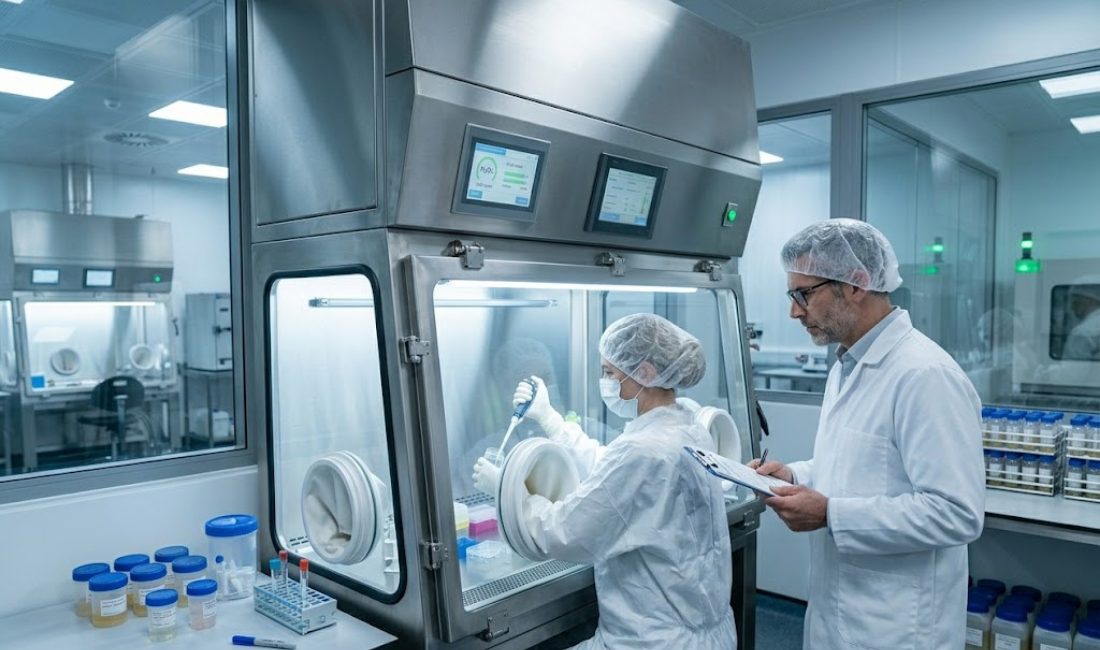
The Critical Role of Contract Labs in Regulatory Compliance
Contract testing laboratories serve as the backbone of the pharmaceutical and medical device industries. Manufacturers rely on these facilities to perform complex analytical testing that ensures product safety and efficacy. However, a significant trend shows that Contract Testing Laboratories Receive FDA Warning Letters at an increasing rate. When a contract lab fails an inspection, the consequences extend far beyond their own facility. Every client using that lab for batch release or stability testing suddenly faces a massive regulatory risk. The FDA views the contract lab as an extension of the manufacturer’s own Quality System. Consequently, any failure in the lab is a failure for the drug sponsor.
A successful relationship between a manufacturer and a lab depends on transparency and rigorous oversight. The FDA holds contract labs to the same Current Good Manufacturing Practice (cGMP) standards as the manufacturers themselves. If a lab lacks the necessary controls to guarantee accurate data, the agency will not hesitate to issue a Warning Letter. Understanding the common pitfalls is the first step toward maintaining a compliant partnership. By focusing on the root causes of these enforcement actions, labs can better protect public health and their business reputation.
Inadequate Data Integrity and Forensic Audit Failures
Data integrity remains the primary reason why Contract Testing Laboratories Receive FDA Warning Letters. The agency expects every piece of data to be attributable, legible, contemporaneous, original, and accurate (ALCOA+). In many warned laboratories, investigators find that analysts have manipulated chromatography peaks or deleted failing results. This practice, often intended to save time or meet client deadlines, destroys the credibility of the entire laboratory. Forensic investigators now use advanced digital tools to uncover these hidden activities during deep-dives into electronic audit trails.
Furthermore, the failure to review audit trails is a recurring theme in regulatory citations. If a lab generates electronic data but the Quality Unit never checks the system logs for unauthorized changes, the FDA considers the oversight system broken. This trend is a major focus of How FDA Detects Data Integrity Manipulation in Laboratories. Labs must implement strict user access controls to ensure that analysts cannot delete or modify raw data. Without these technical safeguards, a laboratory remains highly vulnerable to enforcement actions that can lead to a complete shutdown of operations.
Failure to Investigate Out of Specification Results
Another common reason labs find themselves in regulatory trouble is the improper handling of Out of Specification (OOS) results. The FDA requires a thorough, documented investigation whenever a test result falls outside of established limits. However, many contract labs engage in “testing into compliance.” This involves repeating a failing test until a passing result is achieved, then reporting only the passing result to the client. This deceptive practice is a direct violation of cGMP and almost always leads to a Warning Letter.
A compliant laboratory must follow a structured OOS procedure that identifies the root cause of the failure. Was it an analytical error, or a genuine product defect? The FDA Guidance for Industry: Investigating Out-of-Specification (OOS) Test Results provides the framework for these investigations. If a lab consistently fails to document failed runs, investigators will find the “orphan data” on instrument hard drives. Successfully managing OOS results requires a culture of honesty where staff feel safe reporting failures without fear of repercussions.
Lack of Quality Unit Oversight and Client Coordination
The Quality Unit (QU) in a contract lab must act as an independent authority. A frequent finding in Warning Letters is that the lab’s Quality Unit is either understaffed or lacks the power to overrule production goals. If the QU “rubber stamps” certificates of analysis (COAs) without reviewing raw data, the lab is in violation of its regulatory responsibilities. Furthermore, the contract lab must have a clear “Quality Agreement” with every client. This document defines who is responsible for specific tasks, such as investigating deviations or approving changes to analytical methods.
Inadequate coordination often leads to a “compliance gap” where neither the lab nor the manufacturer takes ownership of a critical quality issue. This lack of oversight is why knowing How FDA Investigators Evaluate Quality Systems is vital for lab managers. The FDA evaluates the lab’s Quality System as the “brain” of the facility. If the brain is not functioning, every other system, from laboratory controls to facilities, will eventually fail. A strong Quality Unit is the best defense against the systemic risks that trigger regulatory intervention.
Equipment Qualification and Calibration Gaps
Analytical instruments must be qualified and calibrated to ensure they produce reliable results. Many contract labs receive Warning Letters because they use “legacy” equipment that lacks modern data integrity features. Furthermore, investigators often find that instruments have not been calibrated according to the manufacturer’s specifications. If an HPLC or GC system is not properly qualified, the data it generates is legally invalid. This technical failure is common in labs that prioritize high-volume testing over equipment maintenance.
Labs must maintain a rigorous schedule for Preventative Maintenance (PM) and Operational Qualification (OQ). In addition, they must document every repair and calibration in a searchable log. This level of detail is a core part of FDA Inspection Preparation for Medical Device Companies and pharmaceutical labs alike. If an investigator sees a calibration sticker that is past its due date, they will question the validity of every test performed on that instrument. Proper facility management is a visible indicator of a lab’s commitment to quality.
Method Validation and Transfer Failures
Contract labs often test products using methods developed by their clients. However, the lab cannot simply take a method and start testing. They must perform a “Method Transfer” or a “Method Validation” to prove that the method works accurately in their specific environment with their specific equipment. A frequent citation in Warning Letters involves labs that failed to validate a method for a new drug product. Consequently, the results they provided to the client were scientifically unsound.
The ICH Q2(R2) Validation of Analytical Procedures provides the international standard for this process. Labs must demonstrate specificity, linearity, and accuracy for every validated method. Furthermore, they must ensure that the analysts performing the tests are properly trained on the specific protocol. By maintaining a data-rich validation package, the lab can defend its results during an audit. This technical readiness is critical for labs involved in FDA Inspection Preparation for Biologics Manufacturers, where methods are exceptionally complex.
Inadequate Training and Personnel Competency
The personnel in a laboratory are its most important asset. However, if analysts do not understand the “why” behind cGMP, they will likely take shortcuts. Investigators often identify training gaps through unscripted interviews on the lab floor. If an analyst cannot explain how to handle a system crash or how they perform an integration, it signals a systemic failure in the training program. Many labs receive citations because their training records only show that an employee “read and understood” an SOP, without any proof of actual competency.
A robust training program should include practical assessments and regular cGMP refresher courses. This proactive approach prevents the “compliance drift” that often leads to data manipulation. Understanding How FDA Investigators Conduct GMP Inspections helps lab leadership prepare their team for the psychological pressure of a regulatory audit. A well-trained staff that demonstrates professional confidence is a hallmark of a laboratory that is in total control of its analytical processes.
Supply Chain Risks and Reagent Control
Contract labs are responsible for the quality of the reagents and standards they use. If a lab uses an expired reagent or an uncertified reference standard, the results of the test are compromised. FDA investigators frequently check the “reagent room” to look for expired chemicals and improper storage conditions. Furthermore, the lab must qualify its own vendors to ensure that the materials it purchases meet GxP standards. This focus on the “upstream” supply chain is a growing trend in regulatory enforcement.
This level of scrutiny is especially prevalent in FDA Inspection Preparation for Food and Dietary Supplement Facilities, where the purity of reagents is critical for identity testing. Labs must implement a strict labeling and tracking system for every chemical in the facility. If an investigator finds a reagent that lacks a “received” date or an “opened” date, they will cite the lab for a lack of material control. By treating reagents as critical components, the lab ensures that its analytical foundation remains solid.
Managing Forensic Audit Readiness
Current FDA Inspection Trends: What Investigators Are Focusing on Now show that the agency is prioritizing “unprocessed” data. This means investigators want to see the files that stay on the instrument hard drive but never make it into the final report. If your lab has a history of “trial injections” or “practice runs,” you must remediate that culture immediately. A forensic audit will uncover these files, and the lab will be cited for hiding failing results.
To stay ready, labs should conduct their own internal forensic audits. This involves randomly selecting batch records and tracing them back to the raw electronic data. Implementing a regular How to Conduct an Internal GMP Audit Before an FDA Inspection program allows you to identify these “ghost” files on your own terms. By finding and fixing these issues internally, you prove to the FDA that your lab is capable of self-regulation and committed to total transparency.
The Impact of a Laboratory Warning Letter on Clients
When a contract testing lab receives a Warning Letter, the impact spreads throughout the industry. The FDA often notifies the lab’s clients that their data may be unreliable. This can lead to clients being forced to re-test years of product or, in extreme cases, issuing a market recall. Consequently, a Warning Letter can result in a total loss of business for the laboratory. Manufacturers are now more selective than ever, often performing their own “Gap Analysis” of a lab before signing a contract.
A lab’s regulatory history is its most important marketing tool. Labs that maintain a “No Action Indicated” (NAI) status are highly valued in the marketplace. Conversely, labs that struggle with compliance become a liability. By prioritizing cGMP and data integrity, contract labs can ensure long-term stability and growth. Regulatory excellence is not a burden; it is a competitive advantage that protects both the laboratory and the patients who rely on the medications being tested.
Conclusion
Contract testing laboratories are under the regulatory microscope like never before. By understanding why Contract Testing Laboratories Receive FDA Warning Letters, facilities can take the necessary steps to harden their systems against enforcement. Data integrity, OOS investigations, and Quality Unit oversight are the three pillars of a compliant lab. When these systems are robust, the laboratory remains a trusted partner in the pharmaceutical supply chain. Ultimately, a commitment to honest data and scientific rigor is the only path to a successful FDA inspection and a sustainable business future.
FAQs
1. What is the most common reason for a contract lab Warning Letter? The most frequent cause is data integrity manipulation, including “testing into compliance” and unauthorized deletion of analytical results.
2. Can a manufacturer be blamed for a contract lab’s failure? Yes. The FDA holds the manufacturer responsible for the quality of their products, which includes the oversight of any contract facilities they utilize.
3. What is “Orphan Data” in a laboratory setting? Orphan data refers to electronic files on an instrument that are not linked to an official report or batch record, often indicating unrecorded “practice” runs.
4. How does the FDA find hidden data in a lab? Investigators perform forensic deep-dives into instrument audit trails and metadata to see when files were created, modified, or deleted.
5. Why is Method Validation critical for contract labs? Labs must prove that a client’s analytical method works correctly on the lab’s specific equipment to ensure results are accurate and reproducible.
6. What should a client do if their lab gets a Warning Letter? The client should immediately perform a risk assessment of all products tested at that lab and may need to conduct a data retrospective or re-test retained samples.
References
- FDA 21 CFR Part 211 – Laboratory Controls – The primary U.S. regulation governing the standards for pharmaceutical testing and quality control.
- FDA Questions and Answers on Data Integrity – The official agency document clarifying expectations for electronic record-keeping in laboratories.
- USP <1225> Validation of Compendial Procedures – The technical standard used by laboratories to ensure that analytical methods are fit for their intended use.
- ICH Q7 Good Manufacturing Practice Guide for APIs – An international standard that includes specific requirements for contract laboratories and quality oversight.
- FDA Regulatory Procedures Manual – Warning Letter Process – The manual used by investigators to determine when a laboratory failure warrants a formal Warning Letter.
Many global manufacturers identify critical analytical gaps by utilizing a mock FDA inspection led by former agency investigators to evaluate their contract lab partners. To ensure your third-party data remains compliant and to strengthen your regulatory defense, explore expert FDA Inspection Readiness and Gap Analysis services at FDA Inspection. Implementing these professional assessments builds significant authority around your site’s inspections and protects your facility from the fallout of laboratory enforcement.