
Recent FDA Recalls in Dietary Supplements: Lessons Learned
Introduction
The dietary supplement industry operates on a foundation of consumer trust. When that trust is broken by a product recall, the consequences can be catastrophic for a brand. An FDA recall signals a critical failure in product safety or quality, causing severe financial losses and permanently harming a company’s reputation. You must navigate the complex regulatory landscape effectively. To prevent recalls, first understand their main causes. This knowledge helps you build a resilient quality management system, which protects consumers and ensures your business thrives long-term. This article examines the most common causes of these recalls and extracts crucial lessons for every manufacturer in the industry.
The Anatomy of a Dietary Supplement Recall
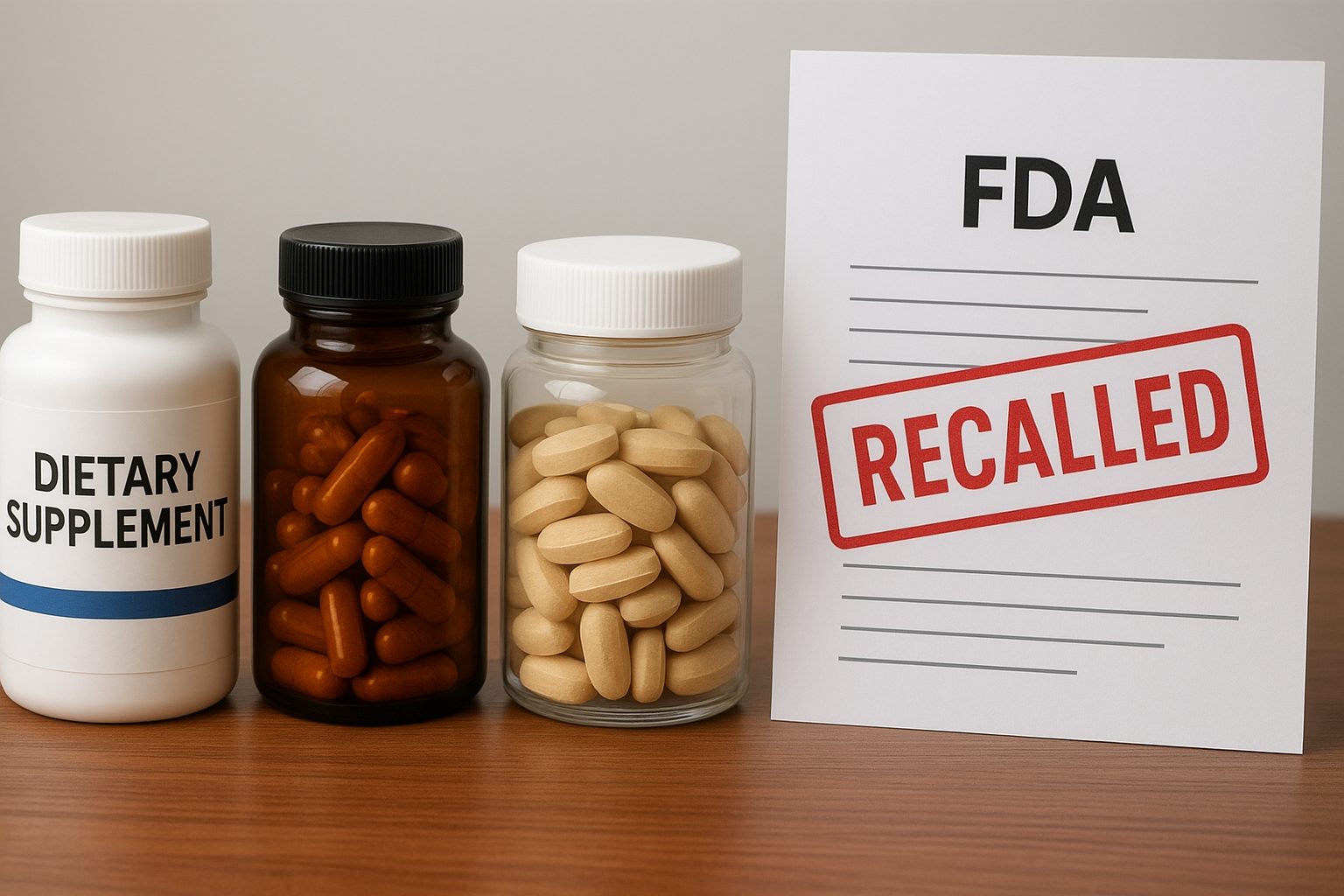
Before diving into the causes, it’s essential to understand what a recall entails. A recall is an action taken by a firm to remove a product from the market. The FDA classifies recalls into three categories based on the level of hazard involved. FDA recalls vary by risk. Class I is for products that can cause serious harm or death. Class II is for temporary health issues, and Class III is for products unlikely to cause harm. While most recalls are voluntary, the FDA can mandate them.
Reason 1: Undeclared Active Pharmaceutical Ingredients (APIs)
Hidden drugs in dietary supplements often lead to recalls. They are common in products for weight loss or sexual enhancement. These supplements may illegally contain sildenafil (Viagra’s drug) or sibutramine, a banned substance with known heart risks.
The presence of these undeclared APIs poses a significant risk to consumers. Hidden drugs create serious risks for consumers. A person with a heart condition could react severely to undeclared sildenafil. This danger stems from supply chain failures. Manufacturers must test all raw materials and properly qualify their suppliers. This is a direct violation of Current Good Manufacturing Practices (cGMP), which mandates identity testing for all components. These failures are often documented in inspection reports, highlighting issues similar to the Most Common FDA 483 Observations for Dietary Supplement Manufacturers (With Real Examples).
Reason 2: Microbial Contamination
A silent but deadly threat in the supplement industry is microbial contamination. Pathogens such as Salmonella, Cronobacter, E. coli, and Listeria monocytogenes can find their way into products through contaminated raw materials, poor sanitation practices, or a contaminated water supply. Botanical ingredients are particularly susceptible to contamination if not handled properly from farm to facility. A recall due to Salmonella can affect thousands of consumers, leading to widespread illness and potential fatalities, especially among vulnerable populations.
Preventing microbial contamination requires a comprehensive environmental monitoring program, stringent sanitation SOPs, and regular testing of both raw materials and finished products. The FDA expects firms to have scientifically sound specifications for microbial limits and to test against them. A failure to do so is a common citation during inspections. Understanding the different Types of FDA Inspections: What You Need to Know (2025 Guide) can help companies prepare their facilities to demonstrate control over their manufacturing environment and prevent these dangerous and costly contamination events.
Reason 3: Heavy Metals and Other Environmental Contaminants
Another significant cause for recalls is the presence of heavy metals like lead, mercury, arsenic, and cadmium above safe limits. These contaminants can enter the supply chain through soil and water used to grow botanical ingredients or through industrial processes. Long-term exposure to heavy metals can lead to severe health issues, including neurological damage and cancer. Consumers are often unaware of this risk, assuming that “natural” products are inherently safe.
The responsibility falls squarely on the manufacturer to ensure their products are free from these harmful substances. This involves more than just accepting a supplier’s Certificate of Analysis (CoA) at face value. Companies must verify the results through their own independent testing or by conducting thorough audits of their suppliers’ testing laboratories. Failure to establish and meet specifications for potential contaminants is a serious cGMP violation and a recurring theme in regulatory actions. These types of violations are frequently listed among the Top 10 FDA 483 Observations of 2024—and How to Avoid Them in 2025 .
Reason 4: Mislabeling and Undeclared Allergens
Not all recalls are due to contamination. Many are triggered by labeling errors, particularly the failure to declare major food allergens. Under the Food Allergen Labeling and Consumer Protection Act (FALCPA), the eight major food allergens (milk, eggs, fish, shellfish, tree nuts, peanuts, wheat, and soybeans) must be clearly identified on the label. An individual with a severe peanut allergy could experience a life-threatening anaphylactic reaction from a product that was cross-contaminated and not properly labeled.
These recalls are often the result of inadequate controls in the production and packaging process. This can include using shared equipment without proper cleaning validation or a simple breakdown in the label review and approval process. A seemingly minor oversight can have devastating consequences. Ensuring label accuracy is a fundamental aspect of cGMP and a key focus during FDA audits. Even a seemingly unrelated enforcement action, like the US FDA Issues Warning Letter to DeGrave Dairy for Illegal Drug Residue, shows the FDA’s commitment to holding firms accountable for what is in their products and on their labels.
Reason 5: Misbranding and Illegal Disease Claims
Beyond allergens, supplements are often recalled for misbranding related to illegal disease claims. The Dietary Supplement Health and Education Act (DSHEA) draws a clear line between permissible “structure/function” claims and illegal “disease” claims. A company can say its product “supports immune health,” but it cannot say it “prevents the flu” or “cures cancer.” Making such claims turns the supplement into an unapproved new drug in the eyes of the FDA, rendering it illegal to sell.
The FDA actively monitors the market for products making these claims, especially those targeting serious conditions like Alzheimer’s, diabetes, and heart disease. Companies that cross this line often find themselves subject to severe enforcement action, including recalls and warning letters. It is crucial for marketing teams to work closely with regulatory experts to ensure all product claims are compliant. If a company receives a warning, knowing How to Respond to an FDA Warning Letter: A Complete Guide for Manufacturers is critical to mitigating further regulatory action and preventing a potential recall.
Lessons Learned: A Roadmap to Prevention
Analyzing these recent FDA recalls in dietary supplements reveals a clear pattern: nearly all recalls are preventable and stem from a failure to adhere to established cGMP regulations. Here are the essential lessons manufacturers must learn to protect their customers and their brand.
Lesson 1: Master Your Supply Chain. Your suppliers are an extension of your facility. You must implement a rigorous supplier qualification program that includes audits, identity testing of every raw material lot, and periodic re-evaluation. Do not blindly trust a CoA. Verify, verify, verify. A weak supplier program is the number one cause of recalls related to undeclared APIs and contaminants.
Lesson 2: Invest in Robust Testing. A comprehensive testing program is not a cost center; it is an investment in safety and brand protection. This includes identity testing for all incoming components, microbial and heavy metal testing where appropriate, and finished product testing to ensure the product meets all specifications. Your quality control laboratory must have the right equipment, validated methods, and trained personnel to produce reliable results.
Lesson 3: Fortify Your cGMP Foundation. Compliance with 21 CFR Part 111 is non-negotiable. This means having well-documented procedures for everything from receiving raw materials to handling customer complaints. Your Master Manufacturing Records (MMRs) and Batch Production Records (BPRs) must be detailed and accurate. Conduct regular internal audits to identify gaps in your system before an FDA investigator finds them.
Lesson 4: Prioritize Labeling and Claim Accuracy. Your labeling and packaging operations must have strict controls to prevent mix-ups and errors. Every label should be reviewed and approved by a qualified individual to ensure it is accurate, especially concerning allergen declarations. Your marketing claims must be carefully vetted by regulatory experts to ensure they are compliant with DSHEA and do not cross the line into making disease claims.
Conclusion
The landscape of FDA recalls in dietary supplements provides a clear and cautionary tale. The common threads running through these enforcement actions are not isolated mistakes but systemic breakdowns in fundamental quality processes. From undeclared pharmaceuticals and microbial threats to mislabeling and illegal claims, each recall underscores the absolute necessity of a robust quality culture. Proactive compliance is the only sustainable strategy. By mastering the supply chain, investing in rigorous testing, and building an unshakeable cGMP foundation, manufacturers can move beyond a reactive stance and create products that are not only effective but consistently safe, protecting both consumers and their own future.
Frequently Asked Questions (FAQs)
What is the difference between a recall and a market withdrawal?
A recall involves a product that is in violation of FDA law, whereas a market withdrawal is conducted for a minor violation that is not subject to FDA legal action, or for commercial reasons.
Are all dietary supplement recalls mandatory?
No, the vast majority of recalls are voluntary actions initiated by the manufacturer. However, the FDA has the authority to request or mandate a recall if a company refuses to act on a dangerous product.
How can consumers find out about recent recalls?
The FDA maintains a public database of all recalls, market withdrawals, and safety alerts on its website, which consumers can search.
What does a Class I recall signify?
A Class I recall is the most serious type. It means there is a reasonable probability that using the product will cause serious adverse health consequences or death.
What is the first step a company should take after discovering a potential recall situation?
The first step is to immediately investigate the issue to determine the scope and risk. The company should then notify the FDA and develop a recall strategy to efficiently remove the product from the market.
Can a Form 483 observation lead directly to a recall?
Yes. If observations on a Form 483 indicate a serious product safety issue (e.g., major contamination or undeclared allergens), it can prompt the FDA to recommend, or the company to initiate, a recall.
References
FDA Recalls, Market Withdrawals, & Safety Alerts: The official and searchable database for all FDA-regulated product recalls. https://www.fda.gov/safety/recalls-market-withdrawals-safety-alerts
FDA Dietary Supplements Information: A comprehensive resource hub from the FDA covering regulations, guidance, and consumer information for dietary supplements. https://www.fda.gov/food/dietary-supplements
21 CFR Part 111 – cGMP for Dietary Supplements: The full text of the Current Good Manufacturing Practice regulations that all dietary supplement manufacturers must follow. https://www.accessdata.fda.gov/scripts/cdrh/cfdocs/cfcfr/CFRSearch.cfm?CFRPart=111
Dietary Supplement Health and Education Act of 1994 (DSHEA): The public law that amended the Federal Food, Drug, and Cosmetic Act to create a new regulatory framework for dietary supplements. https://www.congress.gov/bill/103rd-congress/senate-bill/784
FDA Warning Letters: A public database where the FDA posts warning letters issued to regulated companies, providing insight into common compliance failures. https://www.fda.gov/inspections-compliance-enforcement-and-criminal-investigations/compliance-actions-and-activities/warning-letters
Dietary Supplement Labeling Guide: FDA guidance outlining the required elements and claims permitted for dietary supplement labeling. https://www.fda.gov/food/food-labeling-nutrition/dietary-supplement-labeling-guide
Tainted Supplements Database: An FDA resource listing potentially hazardous supplements that have been found to contain hidden ingredients. https://www.fda.gov/drugs/medication-health-fraud/tainted-supplement-database