
What to Expect in Virtual FDA Inspections for Dietary Supplement Facilitie
Introduction
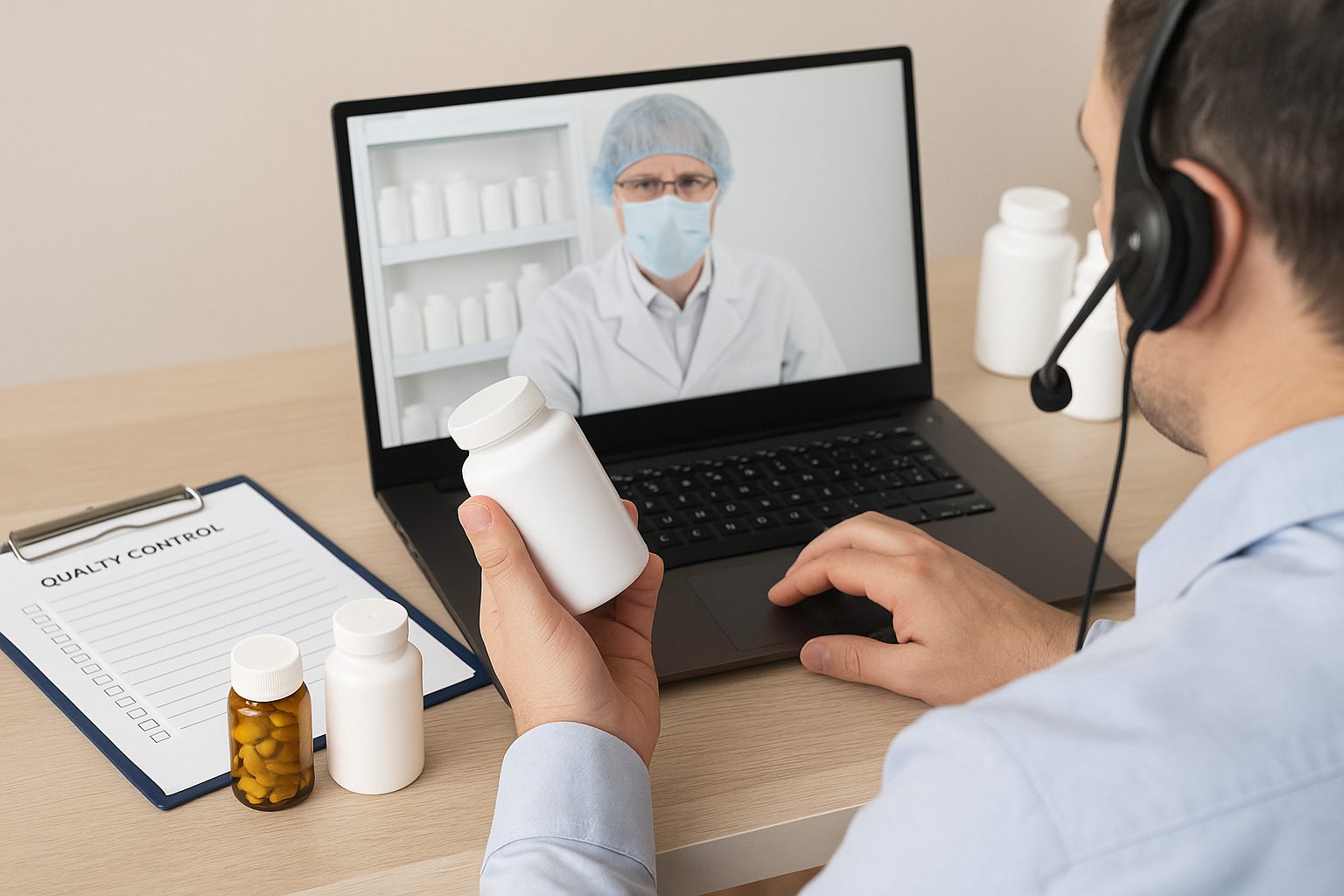
The landscape of regulatory oversight has fundamentally shifted. For dietary supplement manufacturers, the days of only preparing for an unannounced visit from an FDA investigator walking through the door are evolving. The rise of technology, accelerated by global events, has ushered in a new era of enforcement: the virtual inspection. Officially termed Remote Regulatory Assessments (RRAs), these virtual audits are becoming a standard tool in the FDA’s arsenal to ensure compliance with Current Good Manufacturing Practices (cGMP).
For facilities in the dietary supplement industry, this isn’t just a change in logistics; it’s a paradigm shift that requires a new level of preparation, technological readiness, and a deep understanding of how to demonstrate compliance through a camera lens. A virtual inspection is just as rigorous as an in-person one, and the consequences of failing to meet the standard are identical, leading to observations, warning letters, and other enforcement actions.
This comprehensive guide will walk you through everything you need to know about virtual FDA inspections for dietary supplements. We will cover the framework, preparation strategies, best practices during the assessment, and how to handle the outcomes, ensuring your facility is not just compliant, but confidently prepared for the future of regulatory oversight.
The Evolution from On-Site to Online: The Rise of the RRA
While the concept of remote audits isn’t entirely new, the FDA significantly expanded its use of RRAs in response to travel restrictions and the need for continued oversight. What began as a necessity has now proven to be an efficient and effective method for certain types of regulatory checks. The FDA can use RRAs to review records, examine procedures, and even conduct virtual tours of a facility, all without an investigator stepping on-site.
It’s crucial to understand that an RRA is not necessarily a replacement for a traditional inspection. The FDA retains full authority to conduct on-site visits, and often will, especially for pre-approval inspections or in for-cause situations. However, RRAs are now a distinct and important part of the regulatory toolkit. They fall within a spectrum of oversight activities, each with its own triggers and objectives. To understand where RRAs fit in, it’s helpful to be familiar with the broader Types of FDA Inspections: What You Need to Know (2025 Guide). An RRA can be used for routine surveillance, to follow up on a consumer complaint, or to pre-screen a facility before committing resources to an international on-site inspection.
The legal basis for these remote record requests is rooted in Section 704(a)(4) of the Federal Food, Drug, and Cosmetic (FD&C) Act, which grants the FDA the authority to request and review records “in advance of or in lieu of an inspection.” While participation in a fully virtual RRA (including live streams) is technically considered voluntary, a facility’s refusal can be a significant red flag for the agency and may increase the likelihood of an immediate, prioritized on-site inspection.
Preparing for a Virtual Inspection: A Proactive Framework
Success in a virtual FDA inspection is almost entirely determined by the quality of your preparation. Because the process relies on digital documentation and live-streaming technology, you can no longer depend on guiding an investigator through a physical space to provide context. Your systems, documents, and personnel must be primed for remote scrutiny.
Phase 1: Fortifying Your Documentation
Long before you receive a notification from the FDA, your documentation should be in a state of constant readiness. For a virtual inspection, this means not only being compliant but also being digitally accessible.
- Organize and Digitize: Convert all key cGMP documents into a clean, organized, and searchable digital format. This includes, but is not limited to:
- Standard Operating Procedures (SOPs)
- Master Manufacturing Records (MMRs) and Batch Production Records (BPRs)
- Supplier qualification records
- Certificates of Analysis (CoAs) for raw materials and finished products
- Employee training records
- Calibration and maintenance logs
- Consumer complaint files
- Environmental monitoring data
- Establish a Secure Portal: Prepare a secure, cloud-based platform or file-sharing service (e.g., a secure SharePoint or Box folder) to transmit documents to the FDA. Ensure it is easy to navigate, with a logical folder structure that mirrors your quality system. Never use unsecured email for transmitting sensitive records.
- Conduct Internal Audits: Regularly perform internal audits of your documentation to ensure everything is complete, signed, and dated correctly. This proactive approach helps you identify gaps before the FDA does. The issues cited in virtual inspections often mirror those found in person. Knowing the Most Common FDA 483 Observations for Dietary Supplement Manufacturers (With Real Examples) can help you focus your internal audits on high-risk areas like batch record review and lab controls.
Phase 2: Mastering the Technology
Technological failures are not an acceptable excuse for non-compliance during a virtual inspection. Your facility must be equipped to handle the demands of a live-streamed audit.
- Internet Connectivity: Ensure you have a strong, stable, and high-speed internet connection throughout your entire facility, including the warehouse, production areas, and quality control labs. Conduct a site survey to identify and remedy any Wi-Fi “dead zones.”
- Visual and Audio Equipment:
- Camera: A high-definition camera is non-negotiable. Modern smartphones or tablets are often sufficient, provided they can stream clear video. Consider using a gimbal or stabilizer to prevent shaky footage, which can be disorienting for the investigator.
- Audio: Use a high-quality microphone to ensure the investigator can hear your narrator and any interviewees clearly. A wireless lapel microphone for the primary speaker is an excellent investment. Test for background noise from machinery and implement mitigation strategies if necessary.
- Conduct a Mock Tour: This is the most critical step in your tech preparation. Assemble your team and conduct a full, simulated virtual tour of the facility. Have one person act as the “camera operator,” another as the “narrator,” and have remote team members play the role of the FDA investigator, asking to see specific documents, equipment, and processes. This dry run will reveal technical glitches, logistical challenges, and areas where your team needs more training.
Phase 3: Assembling and Training Your Team
Your people are your most important asset during any inspection. For a virtual one, their ability to communicate clearly and effectively through a screen is paramount.
- Designate Key Roles:
- Host/Lead: A single point of contact (often from Quality or Regulatory Affairs) to manage communication, schedule sessions, and oversee the entire process.
- Camera Operator: A tech-savvy individual who can smoothly follow directions and keep the camera focused and stable.
- Narrator/Spokesperson: A confident subject matter expert (SME) who can walk the investigator through the facility, explain processes, and answer initial questions.
- Scribes: One or more individuals tasked with taking meticulous notes of all requests, questions, and discussions.
- Runners/Back-Room Support: A team responsible for quickly retrieving any requested documents or information that isn’t immediately available.
- SME Preparation: Identify the SMEs for every key area (e.g., production, sanitation, laboratory, warehousing). Brief them on virtual inspection etiquette: look at the camera, speak clearly, answer only the question asked, and avoid speculating. If they don’t know an answer, the correct response is, “I will find that information for you,” not an educated guess.
- Set the Stage: Designate a clean, quiet, and professional-looking “command center” or conference room where the host and support team will operate. Ensure it has all the necessary technology and a clutter-free background.
Navigating the Virtual Inspection: Best Practices in Action
When the day of the RRA arrives, your preparation will pay off. The key to success is maintaining professionalism, transparency, and control throughout the process.
- First Impressions Matter: Begin the inspection with a brief introductory meeting. Introduce your key team members and provide a short overview of your facility’s operations. This sets a collaborative and professional tone.
- Record and Document Review: When asked to present a document, display it clearly to the camera or share it on-screen. Be prepared to explain its contents, point out signatures, and answer any related questions. Remember that the same deficiencies that lead to citations in person will be scrutinized digitally. Avoiding common compliance gaps is critical, as detailed in the Top 10 FDA 483 Observations of 2024—and How to Avoid Them in 2025. These observations are often rooted in inadequate documentation, which is even more apparent in a remote setting.
- Employee Interviews: The FDA may ask to speak directly with operators, technicians, or supervisors. Bring the requested individual into a quiet area for the interview. Coach them to be honest, direct, and concise. Ensure they understand that it is an official interview with a federal agency.
Potential Outcomes and How to Respond
A virtual FDA inspection can result in the same range of outcomes as an on-site inspection. At the conclusion, the investigator will hold a close-out meeting to discuss any potential observations.
- Form FDA 483: If the investigator observed conditions that, in their judgment, may constitute violations of the FD&C Act, they will issue a Form 483. Each observation lists a specific deficiency. Receiving a 483 is serious, and your response is critical. It must be timely (typically within 15 business days), thorough, and include a detailed corrective and preventive action (CAPA) plan for each observation.
- Warning Letters: If the deficiencies noted on the 483 are severe, or if a facility fails to provide an adequate response, the FDA may escalate its action by issuing a Warning Letter. This is a formal notification that the company has significantly violated FDA regulations. Responding effectively is paramount to avoiding further legal action. For a detailed strategy, it is essential to understand How to Respond to an FDA Warning Letter: A Complete Guide for Manufacturers. The principles of a strong response—acknowledgment, root cause analysis, and robust CAPA—apply regardless of whether the initial inspection was virtual or in person. The consequences of inaction are severe, as seen in cases across all FDA-regulated industries, such as when the US FDA Issues Warning Letter to DeGrave Dairy for Illegal Drug Residue, highlighting the agency’s commitment to enforcement action following inspections that reveal significant public health risks.
- No Action Indicated (NAI) or Voluntary Action Indicated (VAI): The best-case scenario is an NAI classification, meaning no objectionable conditions were found. A VAI classification means minor objectionable conditions were observed, but the FDA is confident the facility will correct them voluntarily without further agency action.
Conclusion: Embracing a Culture of Virtual Readiness
Virtual FDA inspections are no longer a temporary measure but a permanent fixture in the regulatory landscape for dietary supplement facilities. The focus on remote assessment places an unprecedented emphasis on robust, digitally-accessible quality systems and a well-trained, adaptable team.
The path to success is not about scrambling to prepare when a notification arrives; it’s about embedding a culture of “anytime-readiness” into your daily operations. By fortifying your documentation, mastering the required technology, and training your personnel for on-camera scrutiny, you can transform a potentially stressful virtual audit into an opportunity to demonstrate your commitment to quality and compliance. In this new era, the facilities that thrive will be those that see the camera not as a threat, but as a window through which to proudly display their excellence.
Frequently Asked Questions (FAQs)
1. What is a virtual FDA inspection?
It is a Remote Regulatory Assessment (RRA) where the FDA inspects a dietary supplement facility using technology like video calls and digital document sharing instead of an on-site visit.
2. Are these virtual inspections mandatory?
While the live video tour is technically voluntary, refusing to participate or provide requested records can trigger an immediate in-person inspection and is highly discouraged.
3. What is the most common mistake to avoid?
The biggest mistake is a lack of preparation, which leads to technological failures, disorganized documents, and staff who are unable to answer questions confidently and accurately.
4. Can a virtual inspection result in a Warning Letter?
Yes. A virtual inspection can lead to the same regulatory actions as an in-person one, including Form 483 observations and official FDA Warning Letters if significant violations are found.
5. How should we protect confidential information?
Discuss sensitive areas with the FDA beforehand. During the tour, you can describe proprietary processes without showing them in detail and redact non-essential trade secret information from documents before sharing.
6. What is the most critical technology needed?
A strong, stable, high-speed internet connection throughout the entire facility is the most critical piece of technology. A high-definition camera and clear audio equipment are also essential.
References
- U.S. Food & Drug Administration (FDA). (2023). Guidance for Industry: Remote Regulatory Assessments. A foundational document from the agency outlining the scope, authority, and procedures for conducting RRAs. Link to FDA Website
- Code of Federal Regulations, Title 21, Part 111. (2024). Current Good Manufacturing Practice in Manufacturing, Packaging, Labeling, or Holding Operations for Dietary Supplements. The primary regulation governing cGMP for the dietary supplement industry, which forms the basis of all inspections. Link to eCFR
- International Society for Pharmaceutical Engineering (ISPE). (2022). Good Practice Guide: Remote and Virtual Audits. An industry guide providing best practices and technical considerations for conducting and hosting remote audits, with principles applicable to FDA inspections. Link to ISPE Website
- Natural Products Association (NPA). (2025). Industry Resources on FDA Compliance. A trade association providing guidance and resources for dietary supplement manufacturers to help them navigate complex regulatory requirements, including inspections. Link to NPA Website
- World Health Organization (WHO). (2022). Good manufacturing practices for pharmaceutical products. While focused on pharmaceuticals, this WHO guidance contains universally applicable principles of GMP that are relevant to quality management and inspection readiness. Link to WHO Website