
How FDA Inspects Your Food Safety Plan and Preventive Controls
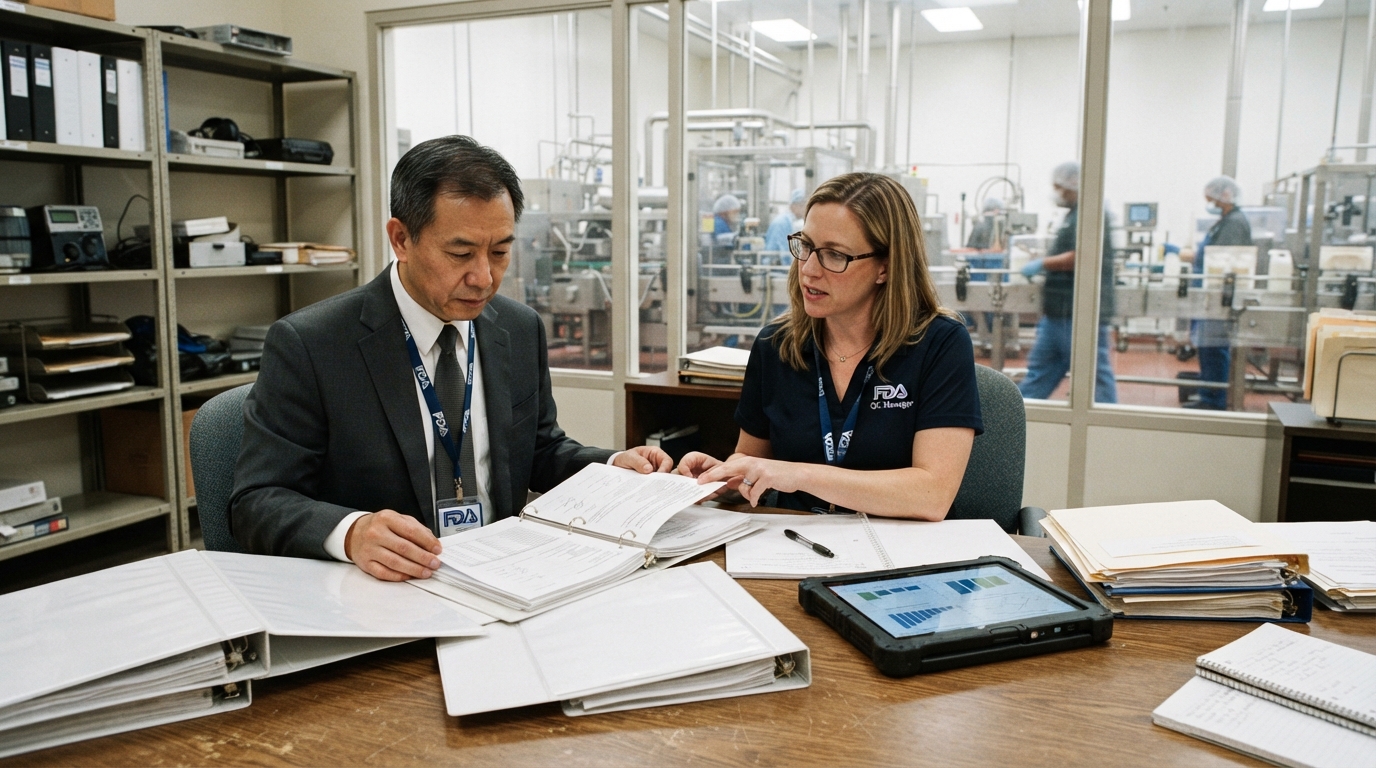
Operating a commercial food processing facility, contract manufacturing plant, or dietary ingredient packaging suite requires continuous regulatory readiness under the Food Safety Modernization Act (FSMA). When federal consumer safety officers arrive for an audit, they focus directly on your technical documentation and scientific controls. Navigating a comprehensive FDA preventive controls inspection requires a defensible Food Safety Plan supported by daily monitoring records and validated scientific parameters.
Under 21 CFR Part 117, the United States Food and Drug Administration enforces strict rules for hazard analyses and risk-based preventive controls. Federal investigators no longer accept generic quality manuals or basic HACCP sheets. When an officer evaluates your facility, they examine how your quality unit identifies hazards, establishes critical limits, monitors processing parameters, and documents corrective actions. Understanding how investigators evaluate your safety systems helps your management team defend facility practices and prevent formal regulatory citations.
Take Immediate Control of Your Regulatory Posture
Evaluate your written Food Safety Plan, validate your critical process parameters, and train your quality unit before federal investigators initiate an audit.
1. What Is the Statutory Basis for a Preventive Controls Audit?
Federal investigators derive their inspection authority from the landmark Food Safety Modernization Act. Codified under 21 CFR Part 117 Subpart C (eCFR Official Statutory Text), the law requires every registered human food establishment to identify known and foreseeable hazards and implement written preventive controls.
       ┌──────────────────────────────────────────────────────────┐
       │                STATUTORY MANDATE: FSMA                   │
       └────────────────────────────┬─────────────────────────────┘
                                    │
           ┌────────────────────────┴────────────────────────┐
           ▼                                                 ▼
┌──────────────────────────────────────┐  ┌──────────────────────────────────────┐
│       HAZARD IDENTIFICATION          │  │       PREVENTIVE CONTROL PILLARS     │
│ - Biological (Pathogen lethality)    │  │ - Process controls (Thermal, pH, Aw) │
│ - Chemical (Mycotoxins, pesticides)  │  │ - Food allergen cross-contact & label│
│ - Radiological & physical vectors    │  │ - Sanitation & environmental swabs   │
│ - Economically motivated adulteration│  │ - Supply-chain qualification program │
└──────────────────────────────────────┘  └──────────────────────────────────────┘
The regulation applies across standard food commodities, nutritional supplements, infant formulas, and active consumable components for medical technology applications. The FDA mandates that a certified Preventive Controls Qualified Individual (PCQI) must develop and oversee the entire Food Safety Plan.
Many manufacturers misunderstand the difference between traditional HACCP and FSMA preventive controls. While HACCP focuses primarily on process critical control points on the production line, FSMA mandates broad controls covering allergen cross-contact, facility sanitation, and overseas supply-chain integrity.
+---------------------------+-----------------------------------+-----------------------------------+
| Compliance Dimension      | Traditional HACCP Framework       | FSMA 21 CFR Part 117 Subpart C    |
+---------------------------+-----------------------------------+-----------------------------------+
| Primary Regulatory Focus  | Process-specific control points   | Facility-wide preventive controls |
| Sanitation Controls       | Prerequisite foundation programs  | Regulated preventive control      |
| Allergen Management       | Standard operating procedure      | Mandatory preventive control      |
| Environmental Monitoring  | Optional verification testing     | Mandatory for ready-to-eat foods  |
| Responsible Specialist    | Trained HACCP coordinator         | Certified PCQI oversight          |
+---------------------------+-----------------------------------+-----------------------------------+
2. What Happens During an Inspection Workflow: Step-by-Step?
Understanding how federal officers execute an FDA preventive controls inspection allows your regulatory team to manage document delivery smoothly. Unlike basic physical walkthroughs, a preventive controls review focuses heavily on data reconciliation and scientific validation.
Modern investigators examine digital records and corporate databases rapidly during review cycles. You can learn more about these technical methods by reading our analysis on How FDA Uses AI and Data Analytics During Modern Inspections.
┌──────────────────┐     ┌──────────────────┐     ┌──────────────────┐     ┌──────────────────┐
│  Form FDA 482    │ ──► │ Food Safety Plan │ ──► │ Process Records  │ ──► │  Form FDA 483    │
│ Credentials Exam │     │ Scientific Audit │     │ & Data Matching  │     │ Exit Conference  │
└──────────────────┘     └──────────────────┘     └──────────────────┘     └──────────────────┘
Phase 1: The Formal Opening and Document Request
The inspection begins when the investigator presents federal credentials and delivers a Form FDA 482 (Notice of Inspection). The officer requests your facility’s master Food Safety Plan, proof of PCQI credentials, and master product formulations immediately.
Phase 2: Scientific Hazard Assessment Evaluation
The investigator reviews the written hazard analysis in a conference room. The officer checks whether your team evaluated all relevant biological, chemical, physical, and radiological hazards for every ingredient and finished SKU.
Phase 3: Monitoring Record Reconciliation
The investigator selects specific production batches and matches written monitoring logs against critical parameter limits. The officer evaluates continuous temperature charts, metal detector challenge sheets, and sanitation verification records.
Phase 4: Management Closeout and Findings
The investigator concludes the audit by reviewing observations with senior plant leadership. If the officer identified systemic gaps in the Food Safety Plan or monitoring logs, they issue a Form FDA 483.
To understand wider international audit trends across foreign facilities, read our executive briefing on how FDA Foreign Inspections Are Increasing Again: What Global Manufacturers Should Expect.
3. What Specific Records Do Investigators Scrutinize Most?
During an onsite audit, investigators evaluate four major preventive control categories under official FDA Food Safety Guidance for Industry (FDA.gov Direct Source). When preparing for an FDA preventive controls inspection, you must ensure these four core record sets remain complete, signed, and up-to-date.
          MASTER FOUR-TIER PREVENTIVE CONTROL ARCHITECTURE
 ┌─────────────────────────────────────────────────────────────────┐
 │ 1. PROCESS PREVENTIVE CONTROLS                                  │
 │    - Temperature logs, cook lethality curves, metal detector challenge│
 ├─────────────────────────────────────────────────────────────────┤
 │ 2. FOOD ALLERGEN PREVENTIVE CONTROLS                            │
 │    - Line clearance records, label audits, allergen mapping     │
 ├─────────────────────────────────────────────────────────────────┤
 │ 3. SANITATION PREVENTIVE CONTROLS                               │
 │    - ATP bioluminescence logs, pre-op checks, environmental swabs │
 ├─────────────────────────────────────────────────────────────────┤
 │ 4. SUPPLY-CHAIN PREVENTIVE CONTROLS                             │
 │    - Supplier GMP audit reports, lot testing logs, CoA validations│
 └─────────────────────────────────────────────────────────────────┘
Area 1: Process Preventive Controls and Scientific Validation (21 CFR § 117.160)
Investigators inspect continuous temperature charts, bake times, pH levels, and water activity readings. The agency requires documented scientific validation proving that your specific thermal or chemical parameters achieve necessary pathogen lethality (such as a 5-log reduction of Salmonella).
Area 2: Food Allergen Controls (21 CFR § 117.135(c)(2))
Allergen cross-contact and incorrect packaging remain leading causes of FDA enforcement. Investigators audit:
- Physical segregation of major food allergens in raw material storage suites.
- Documented visual inspections and swab verifications between production switchovers.
- Packaging line checks confirming that the finished retail label matches the specific food batch run.
Area 3: Sanitation Controls and Environmental Swabbing (21 CFR § 117.135(c)(3))
For ready-to-eat products exposed to the plant environment prior to packaging, investigators review environmental pathogen monitoring logs. They look at swab collection maps, testing frequency, and documented corrective actions taken after positive Listeria or Salmonella findings.
Area 4: Supply-Chain Program Execution (21 CFR § 117.405)
When your facility relies on raw material suppliers to control specific hazards, investigators review supplier verification files. Officers audit annual third-party GMP audit certificates, laboratory testing records, and supplier approval histories.
To evaluate common documentation errors that trigger inspection citations, review our guide on The Most Common FDA 483 Observations in Pharmaceutical Manufacturing.
4. Key Insights: Strategic Implications for Food Processors, Brand Sponsors, and CDMOs
+---------------------------+-------------------------------------------------------------------+
| Strategic Business Domain | Executive Enterprise & Compliance Implication                     |
+---------------------------+-------------------------------------------------------------------+
| CDMO Governance           | Brand sponsors face direct legal liability for co-packer failures |
| Operational Continuity    | Unresolved 483s lead to mandatory recalls and facility suspension |
| Supply Chain Integrity    | Raw material qualification requires verified testing, not emails  |
| Capital Allocation        | Upgrading sanitary equipment design prevents chronic biofilms     |
+---------------------------+-------------------------------------------------------------------+
Preparing for an FDA preventive controls inspection requires an executive mindset that connects operational quality with corporate risk management. For contract development and manufacturing organizations (CDMOs), brand sponsors, and specialized food processors, regulatory compliance represents a major commercial asset. Regulatory officers frequently inspect crossover operations—such as facilities producing dietary supplements, medical foods, and specialized ingestible diagnostics—against both Part 117 food rules and finished pharmaceutical cGMPs under 21 CFR Part 111 (Dietary Supplement CGMP).
The primary operational challenge for brand owners is managing CDMO relationships. When a contract manufacturer receives severe inspection citations, the brand sponsor’s products face immediate market exposure. If the agency uncovers chronic sanitation failures or unvalidated Critical Control Points at a third-party packaging plant, regulatory authorities can seize finished products across distribution channels.
The commercial impact of receiving formal citations is immediate and severe. When an inspection yields unresolved Form FDA 483 observations, the agency escalates enforcement via official Warning Letters. These notices appear on public federal directories, alerting commercial retailers, insurance underwriters, and enterprise buyers. In extreme cases, regulators issue mandatory product recalls or suspend facility registrations, halting revenue streams overnight.
       UNRESOLVED PREVENTIVE CONTROL GAP (Form FDA 483)
                                  │
                                  ▼
             OFFICIAL FDA WARNING LETTER ISSUED & PUBLISHED
                                  │
                                  ▼
         FACILITY REGISTRATION SUSPENSION OR MANDATORY RECALL
                                  │
                                  ▼
 ┌────────────────────────────────────────────────────────────────┐
 │                    SEVERE COMMERCIAL IMPACT                    │
 │  - Immediate national inventory recalls and retail removals    │
 │  - Supply contract cancellations by commercial grocery chains  │
 │  - Expensive facility remediation, re-auditing, and legal costs│
 └────────────────────────────────────────────────────────────────┘
Forward-thinking manufacturing leaders treat regulatory readiness as an active quality management process. Implementing automated digital environmental monitoring and robust preventive control tracking systems eliminates blind spots across production suites. Conducting regular mock facility walkthroughs protects enterprise reputation, satisfies institutional buyers, and maintains uninterrupted operational access.
For an extensive review of active regulatory warning trends, consult our executive analysis of FDA Warning Letters July 2026 Summary: CGMP & Quality System Trends.
5. What Real-World Warning Letter Patterns Reveal About Compliance Gaps?
Recent federal enforcement data reveals clear operational breakdowns behind agency citations. Regulators routinely cite the same foundational documentation failures across various commodity sectors.
A review of enforcement records on the official FDA Food and Beverage Warning Letters Directory shows recurring compliance violations across various food processing sectors:
- Failure to identify known biological or chemical hazards in the written Food Safety Plan (21 CFR § 117.130).
- Operating without scientific validation studies proving that process parameters control bacterial pathogens (21 CFR § 117.160).
- Inadequate environmental monitoring programs in ready-to-eat processing suites, leading to recurring Listeria contamination.
- Inadequate response to initial Form FDA 483 observations, resulting in escalated public warning letters.
Distribution of Citations in Recent Preventive Control Warning Letters:
1. Inadequate Food Safety Plans and hazard analyses ............ 38%
2. Sanitation controls and pathogen monitoring failures ......... 32%
3. Lack of process preventive control validation .............. 18%
4. Allergen cross-contact and labeling deficiencies ........... 12%
When an audit reveals widespread compliance failures, investigators often expand their inquiries into broader operations. To understand how regulatory teams conduct unannounced oversight visits, explore our detailed analysis of What Happens During an FDA For-Cause Inspection?.
6. How Can Your Facility Build an Inspection-Ready Defense Plan?
Preparing for an audit requires a disciplined, repeatable operational strategy. Organizations must move beyond static paperwork and implement an active, digital compliance program.
┌────────────────────────────────────────────────────────────────────────┐
│               FOUR-TIER PREVENTIVE CONTROL READINESS ROADMAP           │
├────────────────────────────────────────────────────────────────────────┤
│  STEP 1: PCQI RE-ANALYSIS & PLAN VALIDATION                            │
│  - Re-evaluate hazard analyses and secure scientific validation data.  │
├────────────────────────────────────────────────────────────────────────┤
│  STEP 2: PARAMETER MONITORING AUDITS                                   │
│  - Review daily numeric logs for thermal limits, pH, and Aw values.    │
├────────────────────────────────────────────────────────────────────────┤
│  STEP 3: MOCK AUDIT & DATA EXTRACTION DRILL                            │
│  - Conduct unannounced trace exercises simulating FDA file requests.   │
├────────────────────────────────────────────────────────────────────────┤
│  STEP 4: RAPID 15-DAY 483 RESPONSE PROTOCOL                            │
│  - Establish CAPA templates and assign technical response leaders.     │
└────────────────────────────────────────────────────────────────────────┘
Actionable Preparation Protocols
- Re-Analyze Your Food Safety Plan Regularly: The PCQI must re-analyze the Food Safety Plan at least once every three years, or whenever a process change occurs.
- Maintain Objective Scientific Validations: Keep published peer-reviewed studies, process authority challenge test reports, and thermal validation data on file.
- Enforce Strict Real-Time Recordkeeping: Require machine operators to record exact parameter numbers rather than simple pass/fail checkmarks.
- Conduct Thorough Corrective Actions: When a process deviation occurs, document the root cause, product hold details, and preventive measures implemented.
- Run Unannounced Mock Record Pulls: Test your quality unit’s ability to assemble a complete batch production and monitoring file within 30 minutes.
To review broader systemic compliance drivers shaping the regulatory landscape this year, examine our comprehensive report on FDA Form 483 Summary: Latest Trends & Compliance Drivers.
7. Conclusion
Successfully managing an FDA preventive controls inspection requires a documented, scientifically validated Food Safety Plan supported by daily operational discipline. As federal authorities expand unannounced audits and data reviews, maintaining passive paperwork creates unacceptable commercial risk. By auditing hazard analyses, validating preventive control parameters, and conducting regular internal mock audits, you safeguard your brand reputation, meet federal safety mandates, and ensure uninterrupted commercial operations.
🛡️ Protect Your Plant Against Disruptive Inspection Citations
Identify sanitation blind spots, review preventive control records, and train your team through an expert-led compliance audit.
Frequently Asked Questions (FAQs)
What triggers an FDA preventive controls inspection?
The FDA selects facilities using risk-based scheduling metrics, past history of compliance violations, consumer illness reports, product recalls, or positive pathogen findings in the Reportable Food Registry.
Who is legally authorized to develop a Food Safety Plan?
Under 21 CFR § 117.180, a certified Preventive Controls Qualified Individual (PCQI) with formal FSPCA training or equivalent industry experience must develop and approve the Food Safety Plan.
What is the difference between validation and verification?
Validation provides scientific evidence that a control measure effectively controls a hazard (e.g., thermal death time studies). Verification proves the control measure operates correctly on a daily basis (e.g., calibrating thermometers).
How quickly must a facility provide Food Safety Plan records during an audit?
Under 21 CFR § 117.305, facilities must provide the written Food Safety Plan immediately upon verbal or written request. Supporting monitoring records stored offsite must be retrievable within 24 hours.
How much time does a facility have to respond to a Form FDA 483?
The facility must submit a formal, written response detailing comprehensive corrective actions and objective documentary evidence within exactly 15 business days.
Can FDA investigators collect environmental swabs from our facility?
Yes. FDA investigators possess the statutory authority to collect environmental swabs from food contact surfaces, equipment frames, and drains to test for bacterial pathogens such as Listeria and Salmonella.
Primary References & Regulatory Authorities
- U.S. Food and Drug Administration (FDA) — 21 CFR Part 117: Current Good Manufacturing Practice and Preventive Controls for Human Food The primary federal statutory regulation establishing baseline cGMP requirements, hazard analysis rules, and preventive control mandates for commercial food processing facilities.
- U.S. Code of Federal Regulations — 21 U.S. Code § 374: Factory Inspection Authority The statutory federal law authorizing FDA officers to enter, inspect, and sample commercial facilities manufacturing, processing, packing, or holding food items.
- FDA Center for Food Safety and Applied Nutrition (CFSAN) — Food Safety Warning Letters Directory Official repository documenting recent federal warning letters, recurring sanitation observations, and cGMP compliance citations across food and beverage processors.
- FDA Regulatory Affairs Division — Investigations Operations Manual (IOM) Chapter 5 The official agency field manual detailing standard protocols, credential presentation procedures, and evidence collection methods used by FDA investigators.
- Food Safety Preventive Controls Alliance (FSPCA) — Preventive Controls for Human Food Curriculum Accredited training repository detailing baseline technical competencies and certifications required for designated Preventive Controls Qualified Individuals.