
FDA Remote Regulatory Assessments (RRAs): What Biotech Companies Need to Know
The Virtual Evolution of Life Sciences Compliance
The global biotechnology ecosystem is currently navigating a period of rapid structural modernization. For decades, the Food and Drug Administration relied exclusively on localized, physical facility visits to verify standard manufacturing practices. However, recent technological advancements and legislative updates have expanded the agency’s field kit significantly. Consequently, the execution of official FDA remote regulatory assessments has emerged as a permanent pillar of modern regulatory oversight. This shift allows the agency to evaluate facility documents, data metrics, and technical protocols without deploying a physical team to the site.
For complex advanced therapy companies, managing this virtual evaluation process requires absolute electronic synchronization. The timeline does not begin with an unannounced arrival at your facility door. Instead, it initiates with a formal, legally structured electronic data request that demands a rapid response. Therefore, understanding how to handle these remote data interventions is an essential operational requirement for modern life sciences organizations. This technical article explores every phase of the virtual audit lifecycle sequentially, helping your quality unit satisfy strict federal criteria.
FDA Inspection Trends in 2026: Biologics, AI, Foreign Facilities, and Remote Assessments
The Legal and Operational Framework of RRAs
A virtual assessment represents a formal administrative intervention that carries significant enforcement weight. Under modern operational rules, the agency uses these mechanisms to support pre-approval milestones, routine surveillance data updates, and for-cause investigations. Biotech executives must realize that these desktop checks are not informal or optional document shares. In fact, a failure to deliver the requested files within strict timelines can trigger an immediate on-site escalation or application hold.
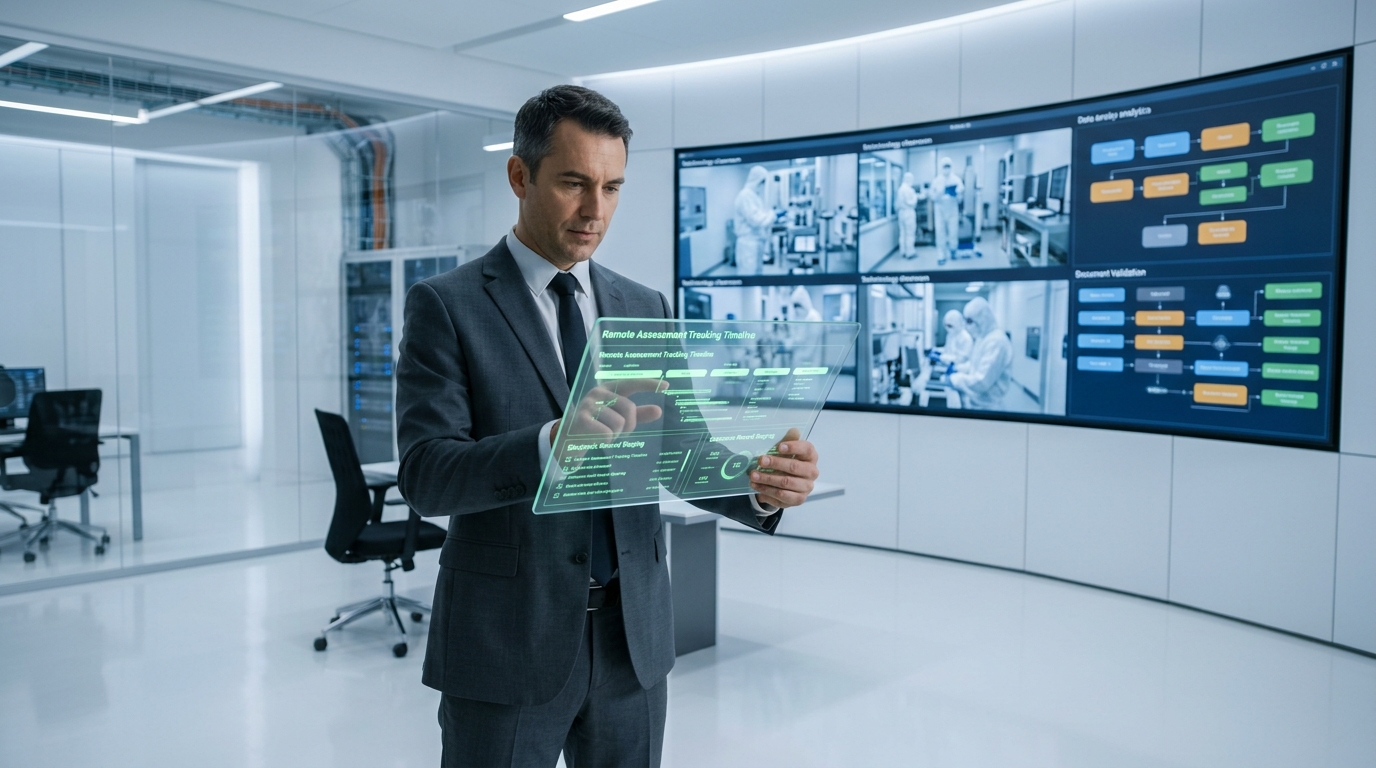
During an active evaluation, the agency requests direct access to your standard quality logs, change controls, and manufacturing histories. Investigators utilize high-definition video feeds to conduct remote facility walkthroughs, observing localized processing steps from centralized command spaces. Therefore, your digital architecture must be built to support rapid record retrieval. Any lag during the remote document handshake will lead investigators to question your facility’s operational control.
- Mandatory Timelines: Facilities must deliver requested electronic files within compressed, pre-established administrative windows.
- Scope Definition: The agency will provide a clear tracking log outlining the exact product lines or batches under review.
- Technology Protocols: Virtual assessments require secure, high-definition streaming pipelines that protect proprietary manufacturing steps.
The FDA Inspection Lifecycle: From Form 482 to Warning Letter
Thought Leadership: Navigating the Digital Compliance Paradigm
Industry Perspective & Expert Strategic Analysis
In the competitive life sciences environment, managing FDA remote regulatory assessments effectively serves as a core indicator of corporate resilience. For biotechnology sponsors, clinical innovators, and specialized contract manufacturing platforms, your virtual data presentation reflects your true quality maturity. The business impact of a poorly managed remote audit is severe, routinely causing immediate application disruptions, delayed approval timelines, and damaged vendor contracts. Therefore, long-term strategic value lies in moving beyond old manual architectures to embed a permanent, fully validated electronic framework across all functional manufacturing layers.
Key Challenges & Technological Opportunities
The dominant challenge across decentralized biotechnology operations involves the “Data Lineage Interoperability Gap.” Many organizations currently struggle to compile disparate analytical logs from separate international contract laboratories under compressed review timelines. However, this administrative hurdle creates an incredible opportunity for the deployment of automated data assembly engines. By transitioning to fully integrated cloud quality systems, companies can generate comprehensive compliance summaries automatically. This advanced capability transforms FDA remote regulatory assessments from a stressful data chase into a smooth display of your continuous technical control.
Compliance Considerations for Executive Decision-Makers
Senior leadership must recognize that the federal inspectorate evaluates virtual record streams with the exact same intensity applied during physical visits. Investigators look for clear evidence that your executive quality unit maintains absolute operational independence from standard commercial production pressures. If your digital system reveals uninvestigated processing exceptions or unlogged user access changes, the agency will flag the facility for immediate on-site enforcement. Compliance demands that your data management platforms maintain pristine tracking paths, ensuring that every electronic signature remains completely verifiable during remote checks.
How FDA Inspects mRNA and Advanced Therapy Manufacturing Facilities
Dissecting Electronic Batch Records Remotely
The primary target during a virtual data evaluation involves the forensic breakdown of your master production records. Investigators use digital analytics to scan your electronic logs, looking for unexplained processing deviations or unauthorized calculation adjustments. Under the strict guidelines of modern FDA remote regulatory assessments, your electronic batch records must demonstrate flawless chronological alignment.
Investigators will cross-reference your digital batch signatures directly against your localized automated equipment timestamps. If a processing operator enters calibration data hours after a shift concludes, the database trail will flag the entry as non-contemporaneous. Furthermore, the agency will evaluate how your quality unit reviews and signs off on these records virtually. Maintaining total electronic traceability under 21 CFR Part 11 parameters is the only way to satisfy the agency’s data integrity expectations.
How FDA Investigators Review Batch Records During Drug Inspections
Managing the Remote Document Review Room
Surviving a virtual check requires the implementation of a highly structured back-room logistics unit. Even though investigators are not physically sitting in your facility conference room, your hosting team must operate with absolute precision. You must establish a dedicated digital staging environment where documents undergo internal review before being uploaded to the official federal portal.
Every record request must be logged, tracked, and assigned to a specific technical subject matter expert immediately. The internal review unit must check the file for clear pagination, verified electronic signatures, and proper redaction of proprietary corporate data. Delivering clean, well-organized records to the virtual portal quickly demonstrates to the investigator that your organization possesses total operational control.
- Staging Environment: Use a secure, isolated cloud space to review requested files internally before final submission.
- Scribe Tracking: Document every question asked via the virtual chat portal to predict the investigator’s next target area.
- Expert Allocation: Assign complex analytical or validation file requests to specific scientists for rapid verification.
How to Prepare Employees for FDA Investigator Interviews
The Demands of Virtual Lab and Equipment Checks
The reach of a virtual audit extends deeply into your quality control laboratories and mechanical infrastructure rooms. During formal FDA remote regulatory assessments, investigators will routinely demand raw chromatography files, instrument calibration histories, and system validation metrics. They use advanced file viewing software to look for hidden data deletions or unrecorded analytical re-tests.
- Audit Trail Reviews: Investigators scan the metadata logs of your laboratory instruments to ensure no raw tests were omitted.
- Maintenance Synchronicity: Your records must prove that your processing machinery underwent scheduled validation before production began.
- Software Compliance: All digital systems used to track batch inputs must be fully validated under automated software assurance frameworks.
FDA Inspection Classification Database: How to Research a Facility Before an Audit
The Strategic Pathway to Hybrid Audit Readiness
The ongoing execution of virtual assessments has altered the baseline requirements for global biotechnology compliance. To maintain market continuity, your organization must transition away from traditional, manual data practices completely. True readiness is achieved when your quality systems are natively digital, transparent, and audit-ready every single day of the year.
By embedding automated document control, establishing secure remote streaming capabilities, and training your workforce to interact effectively via digital panels, you can navigate these audits smoothly. Evolving your compliance framework to match the agency’s virtual capabilities is the most effective strategy for protecting your therapeutic pipeline. As we move forward, the biotech companies that master the electronic handshake will emerge as leaders in global operational excellence.
Frequently Asked Questions (FAQs)
1. What is the main objective of an FDA remote regulatory assessment? The primary goal is to evaluate a facility’s data, quality systems, and manufacturing logs remotely to ensure continuous compliance with cGMP standards without requiring a physical site visit.
2. Are biotechnology companies legally required to participate in an RRA? While the agency introduces these assessments under voluntary frameworks, refusing a remote request is a critical red flag that usually triggers an immediate on-site inspection or a halt on pending product approvals.
3. How long do we have to upload documents during a remote evaluation? The agency enforces strict, compressed timelines for remote requests, often requiring companies to upload verified electronic records within 24 to 48 hours of the official prompt.
4. Can an FDA remote regulatory assessment result in a formal Form 483? No, the agency does not issue a standard Form 483 after a remote assessment. Instead, they deliver a formal “Request for Evaluation” or a “List of Contentious Observations” that requires a rapid written response.
5. How do investigators perform facility walkthroughs during a virtual audit? Investigators utilize secure, high-definition live streaming cameras managed by on-site operators to examine cleanroom boundaries, personnel behaviors, and mechanical setups in real-time.
6. What happens if a contract manufacturer fails a remote data check? An RRA failure at a contract manufacturing site impacts the sponsor immediately, stalling your regulatory submissions and forcing an extensive quality investigation across your entire supply chain network.
References & Citations
- FDA Guidance for Industry – Conducting Remote Regulatory Assessments: FDA Official Portal – The definitive administrative manual outlining the official field procedures for remote document requests and hybrid audits.
- FDA 21 CFR Part 11 – Electronic Records and Electronic Signatures: Government Publishing Office – The baseline federal regulation establishing the strict security and validation criteria for digital logs during remote audits.
- FDA Investigations Operations Manual (IOM) Chapter 5 – Field Parameters: FDA ORA Manual – Official guidelines directing how agency investigators select, review, and evaluate manufacturing records remotely.
- ICH Q10 – Modern Pharmaceutical Quality Systems: ICH Quality Guidelines – International consensus frameworks governing corporate management responsibilities, data transparency lifecycles, and global supplier tracking metrics.
- ORA Global Enforcement Action and Remote Inspection Data Dashboard: FDA Data Portal – Public tracking database highlighting the real-time statistical distribution of cGMP violations uncovered during remote facility checks.
Secure Your Biotech Success with Elite Compliance Strategies
Successfully managing the complexities of modern biotechnology manufacturing requires more than a basic checklist; it demands a deep, proactive understanding of evolving FDA remote regulatory assessments protocols. We help you eliminate critical technical gaps across your facility network by providing the advanced engineering expertise, electronic validation architectures, and strategic oversight necessary to protect your commercial assets. Our comprehensive platform bridges the communication divide between life sciences sponsors and global manufacturing partners, converting complex federal requirements into transparent, actionable quality metrics. Whether you are optimizing your cloud quality systems for rapid record retrieval or constructing a high-stakes response to an official administrative data inquiry, you can find the strategic guidance and expert solutions required to drive business success right here. Join FDA inspection today to ensure your processing operations maintain an unblemished compliance score and your products reach the market with total regulatory confidence.