
Data Integrity During FDA Inspections: The Questions Investigators Ask Most
The Digital Shift in Regulatory Oversight
As we navigate through 2026, the Food and Drug Administration has fundamentally changed its approach to facility audits. The focus has moved from simple physical observations to a deep, technical analysis of how information is generated and stored. An FDA data integrity inspection is now a standard part of almost every site visit, whether it is a routine GMP audit or a pre-approval inspection. Investigators no longer just look at the final results; they reconstruct the entire lifecycle of a data point to ensure it remains accurate and untampered.
For manufacturers, this means that “good enough” record-keeping is a relic of the past. The agency utilizes advanced forensic data tools to scan electronic systems for deletions, backdating, and orphaned files. To survive this level of scrutiny, your organization must maintain a state of perpetual readiness. This article explores the specific questions investigators ask, the technical pillars of data integrity, and the strategic steps required to ensure a successful audit outcome.
How FDA One-Day Inspections Impact Biologics Manufacturers in 2026
Understanding the ALCOA+ Framework
The foundation of every FDA data integrity inspection remains the ALCOA+ principles. Investigators use these criteria to determine if your data is Attributable, Legible, Contemporaneous, Original, and Accurate. In 2026, the “Plus” (Complete, Consistent, Enduring, and Available) has become even more critical due to the prevalence of cloud-based storage and complex integrated systems.
Investigators will ask questions designed to test these pillars. For example, they may ask: “Who performed this specific test, and can you prove they were the only person logged into the system at that time?” This question targets the “Attributable” requirement. If your system allows shared logins or generic passwords, your FDA data integrity inspection will likely result in a major finding.
- Attributable: Every action must be linked to a specific, uniquely identified individual.
- Contemporaneous: Data must be recorded at the exact time the work is performed.
- Original: The first recording of data (the raw data) must be preserved without alteration.
Common Documentation Failures Found During FDA Inspections
Electronic Audit Trails: The Primary Focus
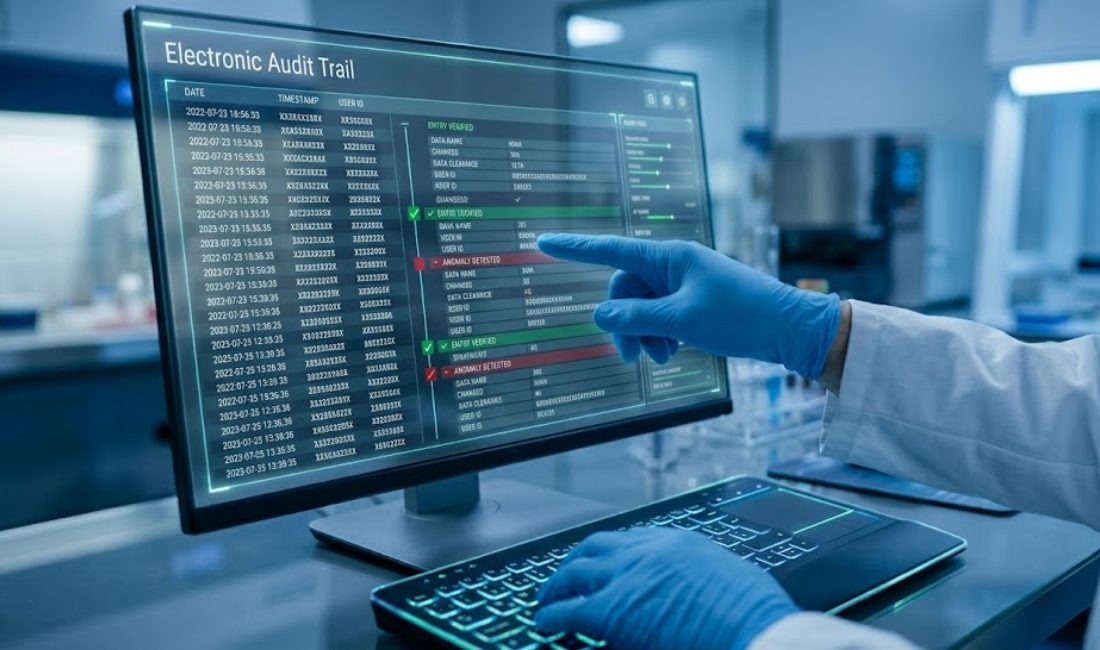
In 2026, the electronic audit trail is the first document an investigator requests during an FDA data integrity inspection. They want to see the “story” behind your results. A common question asked is: “Can you show me the audit trail for this batch and explain why there are three aborted test runs before the final passing result?”
If your laboratory personnel are “testing into compliance”—running unofficial samples until they achieve a desired result—the audit trail will expose this practice. Investigators are trained to look for gaps in sequence numbers and unauthorized deletions of data files. Maintaining a transparent, unedited audit trail is the only way to prove to the agency that your results are trustworthy.
What FDA Investigators Look for in Laboratory Records
Strategic Insights: Data as a Business Asset
Industry Perspective & Business Impact
The landscape of 2026 has elevated data from a mere record to a strategic business asset. During an FDA data integrity inspection, the quality of your data reflects the quality of your management oversight. For sponsors and manufacturers, the business impact of a data integrity failure is catastrophic. It doesn’t just lead to a Form 483; it can trigger a complete loss of trust, leading to product recalls, injunctions, and a permanent stain on the company’s reputation.
Key Challenges & Future Opportunities
The primary challenge in 2026 is managing the “Legacy System Gap.” Many firms still operate older equipment that does not have modern audit trail capabilities. However, this creates an opportunity for “Digital Transformation.” By upgrading to integrated, cloud-native QMS and LIMS platforms, firms can automate compliance and reduce the human error factor. This modernization makes an FDA data integrity inspection much smoother and provides leadership with real-time visibility into operational risks.
Compliance Considerations for Decision-Makers
Leadership must understand that data integrity starts at the top. Investigators will legally ask: “How does senior management ensure that production pressures do not lead to data manipulation?” If you cannot provide evidence of a “No-Blame Culture” where employees feel safe reporting errors, the FDA will assume your data is at risk. Compliance in 2026 requires active management engagement in the quality metrics.
FDA Launches New “One-Day Inspectional Assessment” Program: What Industry Should Know
Common Questions Regarding User Access Levels
Investigators spend significant time reviewing who has “Administrative” rights to your systems. During an FDA data integrity inspection, you will almost certainly hear: “Why does the lab manager have the ability to delete or modify raw data files?” The FDA expects a strict separation of duties.
The person who generates the data should never be the person who has the power to delete it. Furthermore, the quality unit must have independent oversight of the system’s backend to ensure that administrative privileges are not being abused. Failure to manage user access is one of the most common reasons for a data-related Warning Letter.
Lessons from Recent FDA Warning Letters in Pharmaceutical Manufacturing
The Risk of “Orphaned” and “Shadow” Data
“Shadow data” refers to records kept outside of the formal quality system, such as unofficial spreadsheets or paper notebooks. During an FDA data integrity inspection, investigators will search for these hidden records. They may ask: “Do you have any secondary logs or ‘draft’ notebooks used to record weights before they are entered into the formal system?”
If an investigator finds a sticky note with a measurement that doesn’t match the formal batch record, your data’s integrity is instantly compromised. The FDA requires all data—including “failed” or “draft” versions—to be part of the official record. Transparency is the only defense during an FDA data integrity inspection.
Why Contract Testing Laboratories Receive FDA Warning Letters
Conclusion: Rebuilding Trust Through Transparency
An FDA data integrity inspection is essentially an audit of a company’s honesty. In 2026, the technology exists to make data manipulation nearly impossible, yet failures continue to occur due to poor culture and inadequate oversight. By focusing on the ALCOA+ principles, maintaining rigorous audit trails, and empowering your quality unit, you can navigate these inspections with confidence.
Frequently Asked Questions (FAQs)
1. What is the first thing an investigator looks for in an FDA data integrity inspection? The investigator usually requests the electronic audit trails for high-risk batches and laboratory instruments to check for deletions or aborted runs.
2. Does “Testing into Compliance” always lead to a Warning Letter? Yes, the practice of re-testing a sample until a passing result is achieved without a valid scientific investigation is considered a major violation of data integrity.
3. Can I use paper records in 2026? While paper is legal, the FDA prefers electronic systems because they provide a more robust audit trail that is harder to manipulate.
4. What is the ALCOA+ framework? It is a set of standards (Attributable, Legible, Contemporaneous, Original, Accurate, etc.) used to evaluate the quality and reliability of data.
5. How often should we review our own audit trails? The FDA expects a “risk-based” review frequency, but generally, audit trails for critical batches should be reviewed before the batch is released.
6. What happens if an investigator finds “Shadow Data”? This is treated as a major finding because it suggests that the formal quality system is not capturing all relevant information, leading to potential data manipulation.
References & Citations
- FDA Guidance on Data Integrity and GMP Compliance: FDA Official Link – The definitive agency guidance on maintaining data integrity in regulated manufacturing.
- PIC/S Guidance on Data Integrity for GxP Facilities: PIC/S Link – International standards that the FDA uses to harmonize data oversight globally.
- 21 CFR Part 11 – Electronic Records and Signatures: FDA CFR Link – The legal requirement for all electronic data systems used in FDA-regulated industries.
- ISPE GAMP 5 Guide – A Risk-Based Approach to Compliant GxP Systems: ISPE Link – Industry best practices for validating computer systems and ensuring data integrity.
- FDA 483 Observation Data Dashboard (2026 Trends): FDA Data Dashboard – Public data showing the prevalence of data integrity citations in the current year.
Master Your Data Integrity and FDA Readiness
The regulatory demands of 2026 require more than just a reactive approach to manufacturing; they demand a culture of continuous excellence. Successfully navigating an FDA Inspection involves a strategic alignment between your digital architecture and your quality goals. We help you eliminate the critical gaps in your FDA data integrity inspection readiness by providing the technical expertise and proactive oversight necessary to protect your brand and your data assets. Our approach ensures that every electronic record and audit trail meets the highest standards of transparency and ALCOA+ compliance. Whether you are upgrading your LIMS or preparing for a high-intensity site visit, you can find the strategic guidance and expert solutions required to drive business success right here. Join us today to ensure your manufacturing data remains a source of strength and regulatory confidence.