
How FDA Detects Data Integrity Manipulation in Laboratories
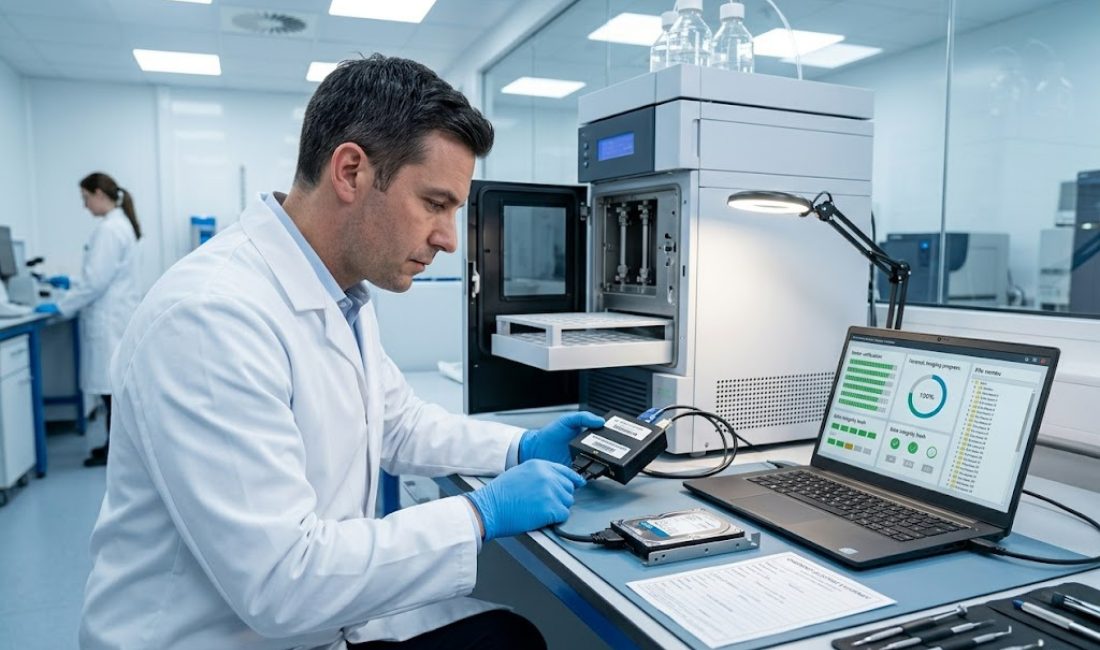
The Forensic Shift in Laboratory Regulatory Audits
Modern regulatory inspections have transitioned from simple document reviews to sophisticated forensic investigations. Today, the way the FDA Detects Data Integrity manipulation involves looking far beyond the printed report or the final summary table. Investigators recognize that laboratory data represents the most vulnerable point for intentional or accidental results tampering. Consequently, they now utilize advanced digital tools and forensic techniques to uncover “hidden” activities that a standard Quality Unit might miss. For QA directors and laboratory managers, understanding these detection methods is the only way to safeguard a facility’s reputation.
The agency operates under the assumption that if the raw electronic data does not match the final report, the product is adulterated. As outlined in the FDA Guidance on Data Integrity and Compliance with CGMP, data must be attributable, legible, contemporaneous, original, and accurate (ALCOA+). If an investigator identifies even a small discrepancy in an electronic record, they will expand the audit scope to include every system in the building. Successfully defending your laboratory requires a proactive commitment to total data transparency and validated electronic controls.
Audit Trail Deep Dives and Metadata Analysis
The audit trail serves as the primary tool used when the FDA Detects Data Integrity gaps. An audit trail acts as a “digital diary” that records every single action taken within a software system. Investigators now perform deep-dives into these trails to look for unauthorized deletions, modified timestamps, or deactivated security features. They specifically check if an analyst logged in as an “Administrator” to change system clocks or bypass integration parameters. If the audit trail shows that a user modified a result three times before reporting it, the investigator will demand a scientific justification.
Furthermore, investigators analyze “metadata”—the data about the data. Metadata includes information like who performed the test, what instrument was used, and exactly when the file was created. If a laboratory technician claims they performed a four-hour test in only thirty minutes, the metadata will reveal the truth. This forensic approach is a cornerstone of How FDA Investigators Conduct GMP Inspections. By comparing the system logs against the physical logbooks, investigators can easily spot inconsistencies that suggest data manipulation or “backdating.”
Identifying “Orphan Data” and Hidden Folders
A common method used when the FDA Detects Data Integrity manipulation involves searching for “orphan data.” These are electronic files that exist on an instrument’s hard drive but are not linked to any official batch record or laboratory report. Investigators often find these files in folders labeled “Test,” “Demo,” “Practice,” or “Trial.” In a compliant environment, there is no such thing as a “practice” run with a real sample. Every injection must be accounted for and included in the final quality assessment.
If an investigator finds a failing result in an orphan folder that the firm did not report, they will cite the company for “Testing into Compliance.” This practice involves running a sample multiple times until a passing result is achieved, while ignoring the failures. Understanding Top FDA Data Integrity Violations in Pharmaceutical Manufacturing highlights how often this specific detection method leads to Warning Letters. Your Quality Unit must perform regular “orphan data” audits to ensure that every byte of data on every instrument is legitimate.
The Role of System Access Controls
Investigators look closely at user access levels to determine if manipulation is possible. If every lab analyst has “Delete” or “Edit” privileges, the system lacks the necessary controls to guarantee data integrity. The FDA expects a strict hierarchy where only authorized IT or Quality personnel can modify system configurations. During an audit, the investigator will ask to see the user access matrix. They will check if former employees still have active accounts or if multiple analysts share a single password.
Shared credentials are a major red flag because they destroy “Attributability.” If a result is changed under a shared “Admin” account, the agency cannot know which individual was responsible. This lack of accountability is a frequent finding in FDA Inspection Preparation for Medical Device Companies and pharmaceutical labs alike. To prevent this, firms must implement biometric logins or complex password requirements that link every action to a specific, unique user.
Forensic Interviews and Behavioral Detection
Detection is not limited to digital files; investigators also use specialized interview techniques. They often ask the same question to different employees at different times to see if the answers remain consistent. For example, an investigator might ask a chemist how they handle a system crash during a run. If the chemist’s answer contradicts the official SOP, or if different chemists give different answers, it indicates a “shadow” process. These unscripted moments are where the FDA Detects Data Integrity culture failures.
Investigators also observe body language and the environment on the production floor. If a technician appears overly nervous or tries to “block” the investigator’s view of a screen, it triggers a deeper search. This behavioral analysis is a vital part of FDA Inspection Preparation for Biologics Manufacturers, where process complexity provides more opportunities for shortcuts. A well-trained staff that understands the “why” behind the rules is the best defense against these psychological detection methods.
Analyzing Chromatography Integration Parameters
In analytical laboratories, “Integration” is a high-risk area for manipulation. Analysts can manually “adjust” the peaks on a chromatogram to make a failing result appear passing. When the FDA Detects Data Integrity issues in the lab, they often look for “Manual Integration” that lacks a scientific justification. Investigators will review the “Integration Logs” to see how many times an analyst tinkered with the baselines or peak widths.
If a lab has a high rate of manual integration, the FDA will assume the analysts are “Integrating into Compliance.” To combat this, firms must have a strict SOP that defines when manual integration is allowed and requires a second-person review for every instance. Implementing a regular How to Conduct an Internal GMP Audit Before an FDA Inspection program allows you to review these integration trends yourself. By identifying “problem analysts” or “problem methods” early, you can retrain your staff before the FDA identifies the same patterns.
Static vs. Dynamic Data Evaluations
The FDA distinguishes between “static” data, such as a paper printout, and “dynamic” data, which is the original electronic record. A paper printout only shows a snapshot of the result; it does not show the audit trail or the integration parameters. Therefore, the FDA now requires investigators to review the dynamic electronic records. If a firm only provides paper records during an audit, the investigator will consider the inspection “delayed or hindered,” which can lead to an immediate Import Alert.
[Image comparing a static paper report versus a dynamic electronic record with audit trails]
Maintaining dynamic records requires robust data backup and archiving systems. Investigators will check if you can “restore” a file from five years ago and open it in its original dynamic format. This level of technical readiness is a core part of FDA Inspection Preparation for Food and Dietary Supplement Facilities, where long-term stability data is critical. If your IT systems cannot produce the dynamic data upon request, the integrity of your entire stability program is called into question.
The Quality Unit’s Responsibility in Data Oversight
The Quality Unit (QU) must act as the first line of defense against data manipulation. The FDA expects the QU to perform periodic, independent reviews of electronic data and audit trails. If the QU only reviews the final “Summary Report,” they are not doing their job. Investigators will ask the Quality Manager: “How do you know this data is real if you never looked at the audit trail?” A lack of Quality Unit oversight is one of the most common reasons for regulatory failure.
The QU must have the technical expertise to understand the software systems they are auditing. They should also be empowered to investigate any “red flags,” such as a high rate of aborted runs or frequent “system errors” that happen just before a sample fails. By taking ownership of data integrity, the Quality Unit proves to the FDA that the company is capable of self-regulation. This proactive oversight is a hallmark of a mature Quality Management System that prioritizes transparency and truth.
Remediation: What to Do When Manipulation is Found
If an internal audit or an FDA inspection uncovers data manipulation, the response must be swift and absolute. The firm must conduct a “Data Retrospective Review,” which involves hiring a third-party expert to look at years of past data to determine the scope of the problem. You must identify every batch impacted and assess the risk to patient safety. A “hiding” or “narrow” response to a data integrity finding will almost certainly result in a Warning Letter and a total loss of trust from the agency.
Remediation often involves “cleaning house.” This may include replacing laboratory management, upgrading legacy equipment that lacks audit trails, and implementing a new “Culture of Integrity” training program. The goal is to prove to the FDA that you have removed the “root cause” of the dishonesty. While expensive and painful, a transparent remediation plan is the only way to save a facility’s license to operate in the global pharmaceutical market.
Final Readiness: The Data Integrity Checklist
As you prepare for an inspection, your laboratory should undergo a final “Data Integrity Sweep.” This includes verifying that all instruments have their “Sleep” and “Screen Lock” functions enabled to prevent unauthorized access. Ensure that all waste bins are checked for discarded “scrap paper” or unofficial records. Furthermore, verify that all analysts can explain the ALCOA+ principles and know how to report a data integrity concern without fear of retaliation.
The final layer of preparation involves ensuring that your IT department is available during the inspection to help the investigator navigate the software. A smooth, transparent demonstration of your electronic systems builds immense confidence. By showing the investigator that you have nothing to hide and that your systems are “hardened” against manipulation, you turn a high-risk forensic audit into a successful demonstration of compliance.
Conclusion
The way the FDA Detects Data Integrity manipulation is constantly evolving, becoming more technical and forensic with each passing year. By understanding the tools they use—from audit trail analysis to orphan data searches—laboratories can build a defense based on transparency and validated controls. Data integrity is not a “project” to be completed; it is a continuous commitment to the truth. Facilities that prioritize honest data and robust Quality Unit oversight will not only pass their inspections but will also ensure the safety and efficacy of the products they provide to patients worldwide.
FAQs
1. What is the difference between data integrity and data quality? Data quality refers to the accuracy of the result, while data integrity refers to the assurance that the data has remained unaltered and complete throughout its entire lifecycle.
2. Can a laboratory use paper records in 2026? Yes, but the FDA views the electronic record as the “original.” If you generate electronic data, you must maintain and review the dynamic electronic record, not just a paper printout.
3. What is “Testing into Compliance”? This is the illegal practice of running a sample multiple times and only recording the result that passes, while intentionally deleting or hiding the failing results.
4. How often should we review audit trails? For batch-release data, audit trails should be reviewed with every batch. For general system logs, a risk-based periodic review (e.g., monthly or quarterly) is recommended.
5. What is “Metadata” in a lab setting? Metadata is the context surrounding a result. It includes timestamps, user IDs, instrument IDs, and processing methods that prove the result is legitimate.
6. Does a data integrity violation always lead to a Warning Letter? Not always, but it is highly likely. If the FDA finds evidence of intentional fraud or a systemic lack of control, a Warning Letter or Import Alert is the standard response.
References
- FDA 21 CFR Part 11 – Electronic Records and Signatures – The primary regulation governing the security and reliability of electronic records in the life sciences.
- FDA Data Integrity Questions and Answers Guidance – The official agency document clarifying expectations for data lifecycle management and ALCOA+ principles.
- WHO Annex 5: Guidance on Good Data and Record Management – The international standard for maintaining consistent and accurate documentation across global manufacturing sites.
- PIC/S PI 041-1 Good Practices for Data Management – A comprehensive toolkit for inspectors and industry to implement risk-based data governance systems.
- MHRA GxP Data Integrity Guidance – UK regulatory guidance that provides detailed examples of forensic data audit expectations.
Forward-thinking laboratory managers and Quality Directors proactively identify these digital vulnerabilities by conducting a mock FDA inspection led by former agency investigators. To ensure your laboratory systems remain compliant and to build authority around your inspection defense, explore expert FDA Inspection Readiness and Gap Analysis services at FDA Inspection. Using these professional assessments ensures your data remains beyond reproach in the eyes of any forensic investigator.